Tempo Training: Controlling Every Phase of the Rep
8 min read · May 2025 · by Manikanta Sirumalla
Tempo Training: Controlling Every Phase of the Rep
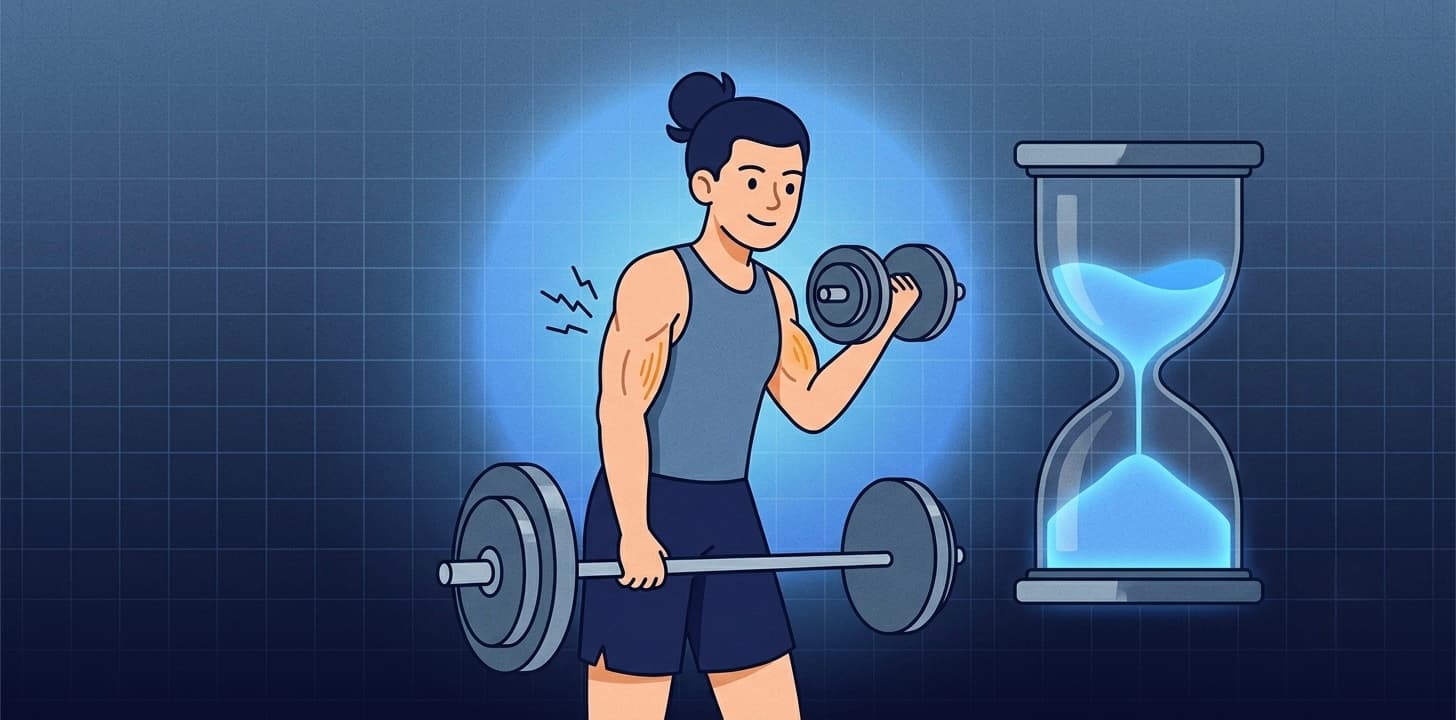
Most people in the gym perform reps at whatever speed feels natural: fast on the way up, uncontrolled on the way down, no pause anywhere. This default rep speed is not inherently wrong, but it leaves a powerful training variable untouched. Tempo training assigns a specific duration to every phase of every rep, giving you precise control over how long your muscles spend under load, what type of contraction dominates, and which adaptation you are prioritizing.
How to Read Tempo Notation
Tempo is written as four numbers separated by hyphens. Each number represents the duration in seconds of one phase of the repetition. The format is always the same regardless of the exercise:
X-X-X-X = Eccentric – Bottom Pause – Concentric – Top Pause
For example, a 3-1-2-0 tempo means:
| Phase | Duration | Description |
|---|---|---|
| Eccentric (lowering) | 3 seconds | The controlled descent, lowering the bar to your chest on a bench press, descending into a squat |
| Bottom pause | 1 second | A dead stop at the bottom position: eliminates the stretch reflex |
| Concentric (lifting) | 2 seconds | The lifting phase, pressing the bar off your chest, standing up from the squat |
| Top pause | 0 seconds | No pause at lockout: immediately begin the next rep |
A single rep at 3-1-2-0 tempo takes 6 seconds. A set of 8 reps takes 48 seconds. Compare this to the typical "1-0-1-0" tempo most people default to, where the same 8 reps take just 16 seconds. That is a three-fold difference in time under tension from the same number of reps at the same weight.
Special Notation
- X in the concentric position means "explosive": lift as fast as possible while maintaining control
- 0 means no deliberate pause (transition immediately)
- Numbers above 5 are rare and typically reserved for extreme eccentric training protocols
Common tempo prescriptions and their applications:
| Tempo | Total per Rep | Best For |
|---|---|---|
| 2-0-1-0 | 3 sec | General strength training, compounds |
| 3-1-2-0 | 6 sec | Hypertrophy, technique work |
| 4-1-1-0 | 6 sec | Eccentric emphasis, muscle damage |
| 3-0-X-0 | ~4 sec | Strength-speed development |
| 5-2-1-0 | 8 sec | Eccentric overload, rehab |
| 2-0-2-2 | 6 sec | Constant tension, isolation work |
The Three Phases of Muscular Contraction
Understanding tempo requires understanding the three types of muscle contraction that occur during every rep.
Eccentric (Lengthening)
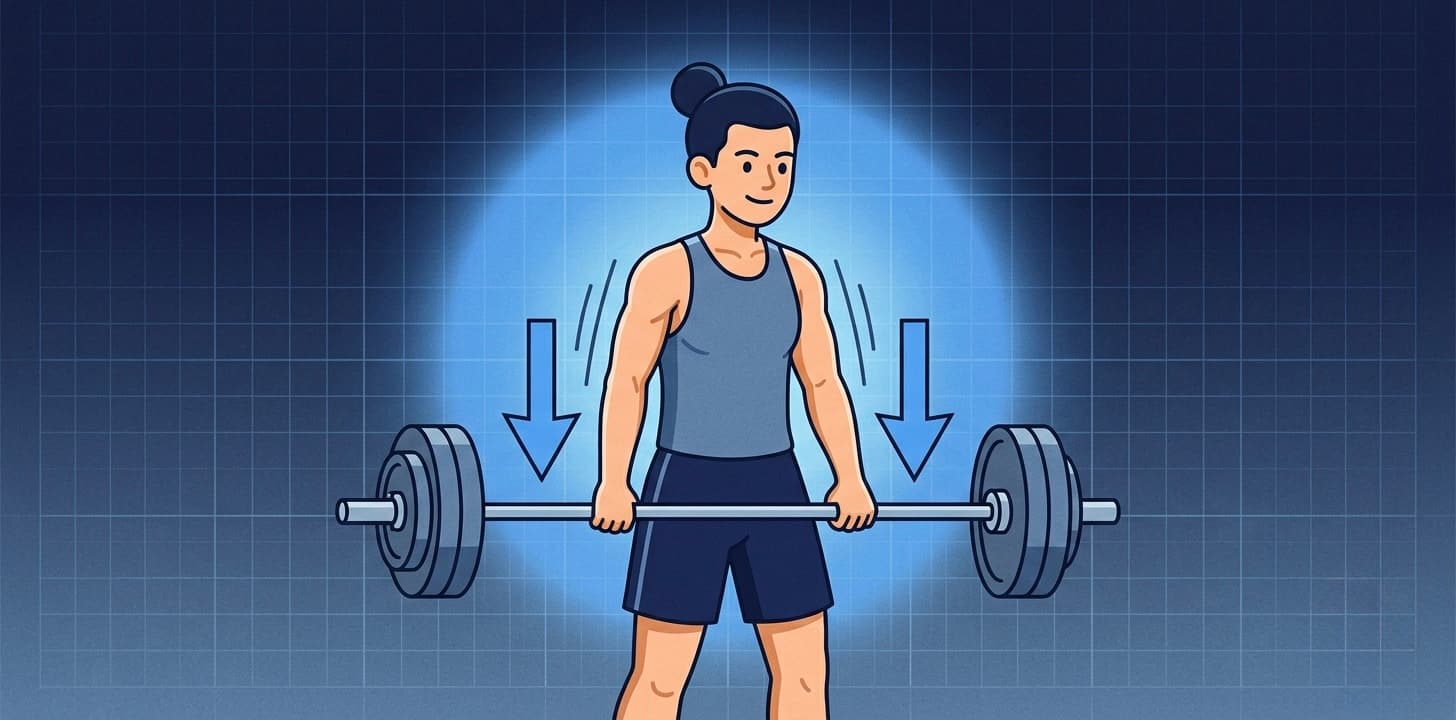
The muscle produces force while lengthening: lowering the bar to your chest on a bench press, descending into a squat, lowering a dumbbell during a curl. Your muscles are stronger eccentrically than concentrically: you can lower approximately 20-40% more weight than you can lift. This is why the descent should always be controlled: you have the capacity to control it, and doing so maximizes the training stimulus.
Eccentric contractions produce the highest mechanical tension per motor unit and cause the most muscle fiber damage (primarily in type II fibers). Research by Schoenfeld et al. (2017) demonstrated that emphasizing the eccentric phase (3-4 seconds) produced greater hypertrophy than performing reps at a natural speed, when total volume was equated. Slow eccentrics are one of the most reliable tools for muscle growth.
Isometric (Static Hold)
The muscle produces force without changing length: pausing at the bottom of a squat, holding the bar at your chest during a bench press, or maintaining a dead hang. Isometric pauses serve two primary functions in tempo training:
-
Eliminating the stretch reflex. When you descend quickly into a squat and immediately reverse direction, the stretch-shortening cycle (elastic energy stored in tendons and the myotatic reflex) contributes to the concentric portion. A 1-2 second pause at the bottom dissipates this stored energy, forcing the muscles to generate 100% of the concentric force from scratch. This is why paused squats feel dramatically harder than touch-and-go squats at the same weight.
-
Reinforcing position. Pausing at specific joint angles forces you to maintain proper mechanics under load. If your squat collapses at the bottom, a 2-second pause at the bottom will expose and correct the weakness because you cannot hold a bad position for 2 seconds under load.
Concentric (Shortening)
The muscle produces force while shortening: pressing the bar off your chest, standing up from a squat, curling the dumbbell upward. Concentric intent matters more than concentric speed. Research consistently shows that intending to move the weight as fast as possible, even if the actual bar speed is slow due to heavy load, recruits more high-threshold motor units than deliberately moving slowly.
This is a critical distinction. A slow eccentric followed by an explosive concentric (tempo: 3-0-X-0) is one of the most effective tempo prescriptions for strength development. The slow eccentric maximizes time under tension and muscle damage, while the explosive concentric maximizes motor unit recruitment and rate of force development.
How Tempo Manipulates Training Adaptations
For Hypertrophy
Longer tempos (3-1-2-0 or 4-0-2-0) increase time under tension per set, which increases metabolic stress: one of the three primary mechanisms of muscle growth alongside mechanical tension and muscle damage. A meta-analysis by Schoenfeld, Ogborn, and Krieger (2015) found that rep durations between 2-8 seconds (total) produced similar hypertrophy, but very fast reps (under 2 seconds total) and very slow reps (over 10 seconds total) were both inferior.
The practical hypertrophy range for tempo is a total rep duration of 4-8 seconds, with the eccentric phase comprising at least 2 seconds.
For Strength
Strength is about producing maximal force, which requires maximal motor unit recruitment. The concentric phase should be performed with maximal intent (X or 1 second). Eccentric tempos of 2-3 seconds provide enough control to maintain technique without accumulating excessive fatigue. A typical strength-focused tempo is 2-0-X-0 or 3-0-X-0.
Paused reps (adding a 1-2 second isometric at the sticking point) are valuable for strength because they eliminate momentum and build starting strength from a dead stop. Paused squats, paused bench press, and paused deadlifts are staples of powerlifting training for this reason.
For Technique Development
Slow tempos (4-1-2-0 or even 5-2-2-0) force you to maintain positional awareness throughout the entire range of motion. When you squat with a 5-second descent, every positional error is amplified. Your knees caving in, your chest dropping, your weight shifting forward: all of these become obvious under slow tempos. This makes tempo training one of the best tools for beginners learning movement patterns and intermediates correcting technical flaws.
Programming Tempo Training
Phase-Based Approach
Structure tempo emphasis across training phases:
Anatomical Adaptation / Technique Phase (weeks 1-3):
- Tempo: 3-1-2-0 or 4-1-2-0
- Load: 50-65% of 1RM
- Purpose: Build positional strength, groove motor patterns
Hypertrophy Phase (weeks 4-8):
- Tempo: 3-0-2-0 or 4-0-1-0
- Load: 65-80% of 1RM
- Purpose: Maximize time under tension and metabolic stress
Strength Phase (weeks 9-12):
- Tempo: 2-0-X-0 or 2-1-X-0
- Load: 80-90% of 1RM
- Purpose: Maximize motor unit recruitment and force production
Load Adjustment
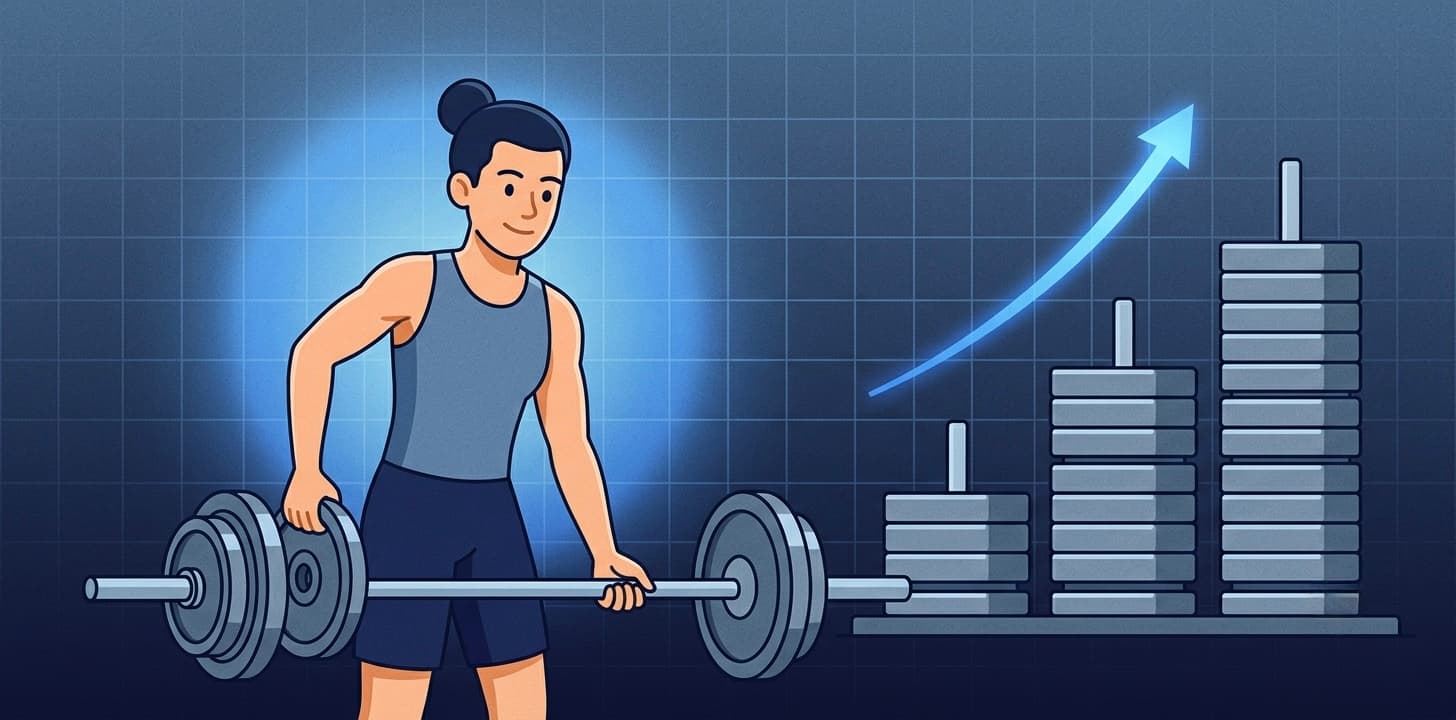
When you introduce tempo for the first time, reduce your working weight by 15-25%. A 3-1-2-0 squat at 225 lbs is significantly harder than a normal-tempo squat at 225 lbs because you have eliminated momentum and the stretch reflex. Start lighter and build back up while maintaining the prescribed tempo.
Where Tempo Has the Biggest Impact
Tempo prescriptions are most valuable for:
- Isolation exercises where controlling the contraction quality is paramount (curls, lateral raises, leg extensions, flyes)
- Compound movements during learning phases where positional awareness matters
- Exercises with a problematic sticking point where a pause at that position builds strength
- Deload weeks where reducing load but increasing tempo maintains a training stimulus without high CNS fatigue
Tempo is least useful for:
- Olympic lifts (clean, snatch, jerk) which are entirely about speed and power
- Plyometric exercises which depend on the stretch-shortening cycle
- Maximal attempts where the only goal is moving the most weight possible
Common Mistakes
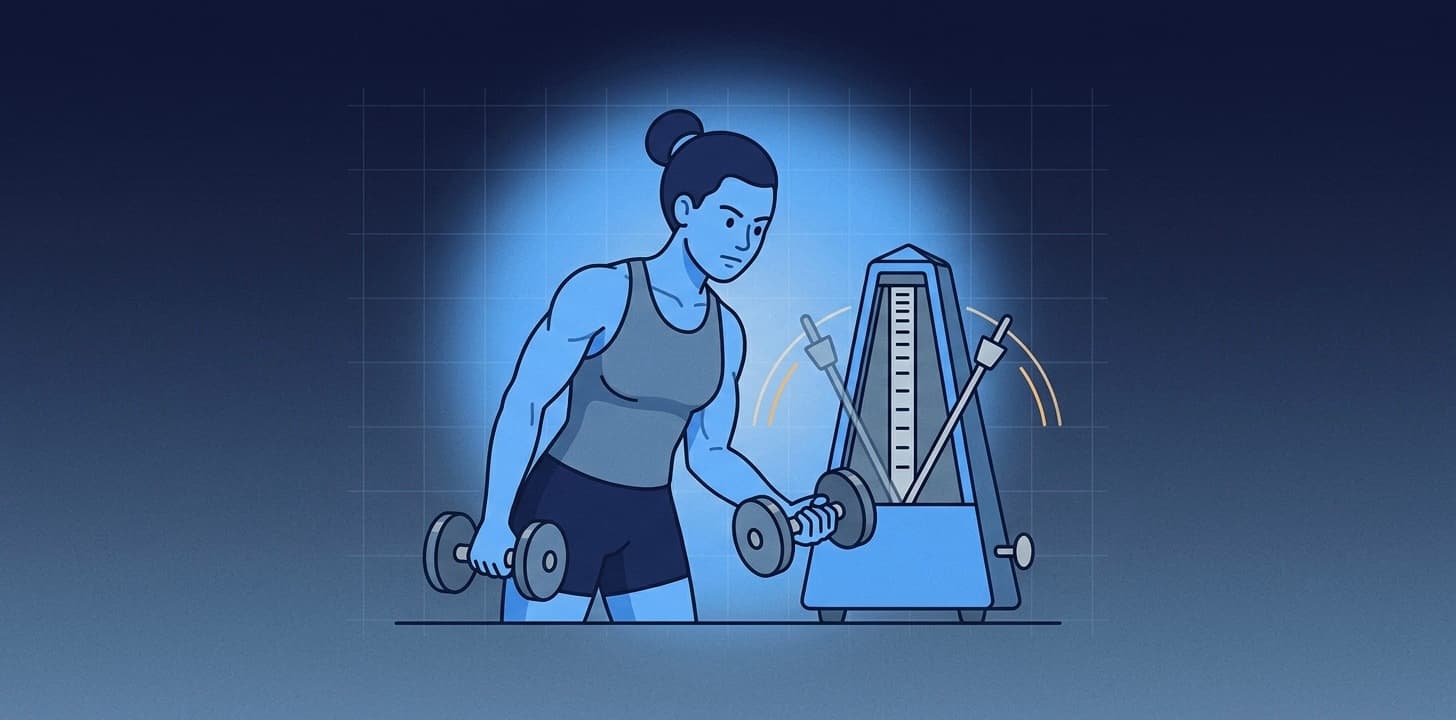
Counting too fast. Most people count "one-two-three" in about 1.5 seconds instead of 3 seconds. Use a metronome app or count "one-Mississippi, two-Mississippi, three-Mississippi" to ensure accurate timing.
Applying the same tempo to every exercise. A 4-second eccentric makes sense on a Romanian deadlift but is unnecessary and potentially dangerous on a power clean. Match tempo to the exercise and the goal.
Ignoring the concentric intent. The eccentric phase gets all the attention in tempo discussions, but concentric intent is equally important. Unless your goal is specifically slow-tempo hypertrophy work on an isolation exercise, always intend to accelerate the concentric phase.