Eccentric Training: The Power of the Negative Rep
9 min read · May 2025 · by Manikanta Sirumalla
Eccentric Training: The Power of the Negative Rep
Every rep has two halves. The concentric phase is the lift, the part most people focus on. The eccentric phase is the lowering, the part most people rush through. This is a mistake, because the eccentric phase is where most of the meaningful muscle adaptation occurs. Your muscles can handle 20-40% more load eccentrically than concentrically. Eccentric contractions produce greater mechanical tension per motor unit, cause more structural disruption to muscle fibers, and preferentially target the fast-twitch fibers that have the greatest potential for growth. Understanding and deliberately training the eccentric phase is one of the highest-leverage adjustments you can make to your program.
The Physiology of Eccentric Contractions
During a concentric contraction, the muscle shortens as actin-myosin cross-bridges cycle to pull the Z-discs closer together. During an eccentric contraction, the muscle lengthens under load: the cross-bridges are forcibly detached as the muscle is stretched. This detachment process requires less metabolic energy than cycling (which is why eccentrics feel "easier" from a cardiovascular standpoint), but it produces higher mechanical forces per cross-bridge.
Several unique physiological responses distinguish eccentric from concentric training:
Greater Motor Unit Recruitment Efficiency
Eccentric contractions require fewer motor units to produce the same force as concentric contractions. This means each active motor unit bears a proportionally higher load, experiencing greater mechanical tension: the primary driver of hypertrophy. Enoka (1996) demonstrated that eccentric actions achieve similar force output with approximately 10-30% fewer motor units activated compared to concentric actions at the same absolute force.
Preferential Fast-Twitch Fiber Recruitment
Research by Nardone et al. (1989) showed that during eccentric contractions, the nervous system selectively recruits high-threshold fast-twitch (type II) motor units, even at relatively low force levels. This is significant because type II fibers have roughly twice the hypertrophic potential of type I fibers. Eccentric training disproportionately stimulates the fibers with the greatest capacity for growth.
Muscle Fiber Lengthening and Sarcomerogenesis
One of the most fascinating adaptations to eccentric training is sarcomerogenesis: the addition of sarcomeres in series (lengthwise) to muscle fibers. Research by Lynn and Morgan (1994) demonstrated that chronic eccentric training increases fascicle length by adding sarcomeres, effectively making the muscle longer. This is distinct from concentric-dominant training, which tends to add sarcomeres in parallel (making fibers wider but not longer).
Longer fascicles improve force production at longer muscle lengths, enhance the muscle's ability to absorb force during deceleration (important for athletic performance and injury prevention), and shift the length-tension curve to the right, meaning peak force occurs at a more stretched position.
This is one reason why the Nordic hamstring curl (a pure eccentric exercise) is the single most effective exercise for preventing hamstring strains. It lengthens the hamstring fascicles, enabling the muscle to produce and tolerate force at the extended positions where strains occur.
Eccentric Training Methods
Slow Eccentrics (Tempo Method)
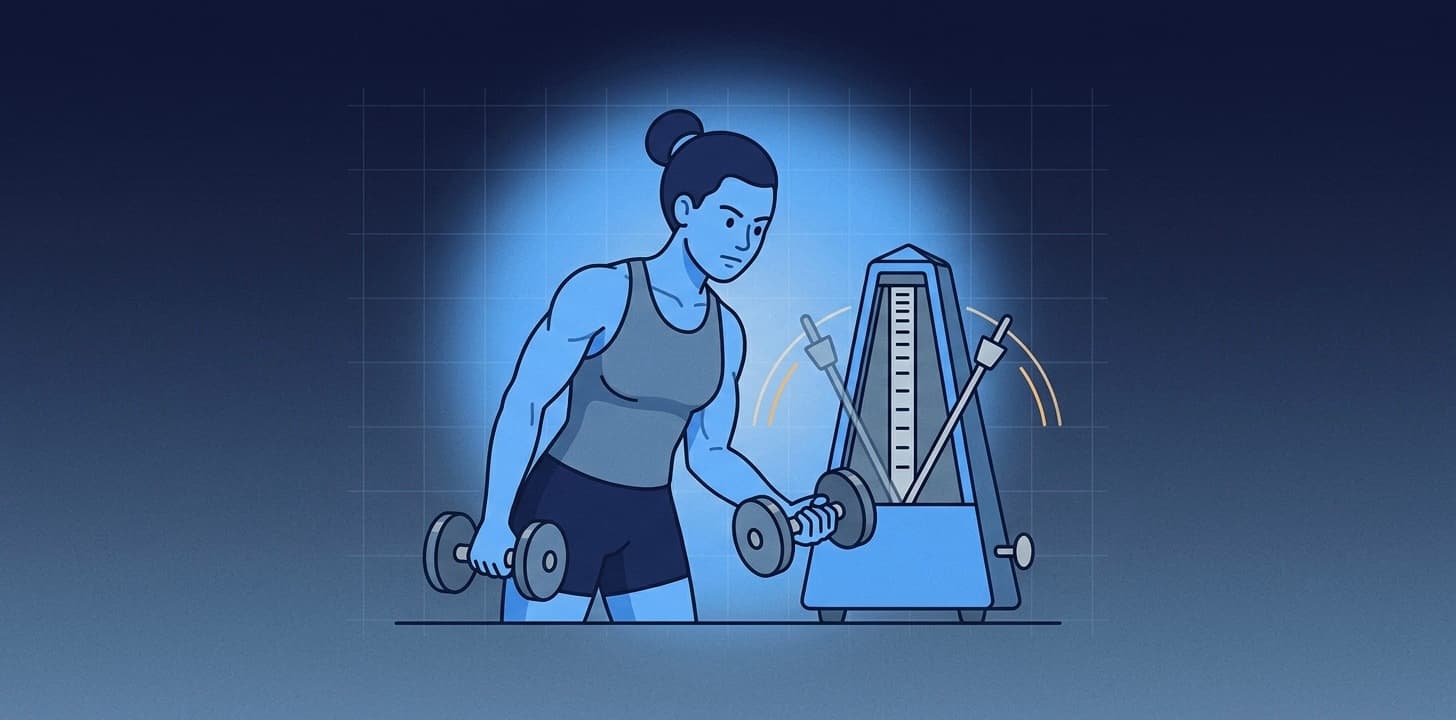
The simplest approach. Prescribe a 3-5 second eccentric phase on any standard exercise. A squat with a 4-second descent, a bench press with a 3-second lowering phase, a Romanian deadlift with a 4-second negative. This method does not require special equipment or a training partner and can be applied to any exercise.
Best for: General hypertrophy, technique refinement, beginners to eccentric training.
Negative Reps (Supramaximal Eccentrics)
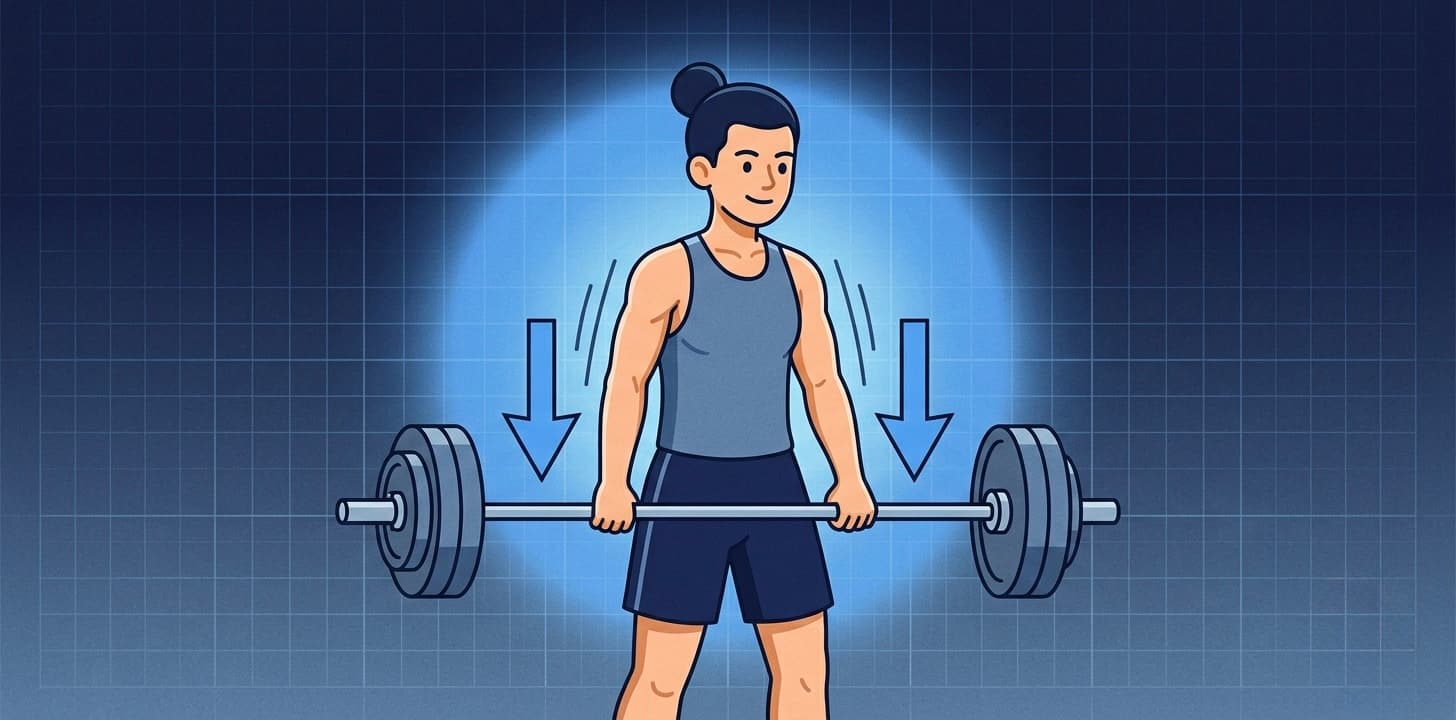
Load the bar with 105-120% of your concentric 1RM. With the help of one or two spotters (or using a power rack with safety pins), lower the weight under control over 3-5 seconds. The spotters help you lift the weight back to the starting position for each rep.
This is true eccentric overload: loading the eccentric phase beyond what you can concentrically lift, exploiting the 20-40% eccentric strength advantage.
Best for: Strength development, breaking plateaus on main lifts, advanced trainees.
Caution: This method generates extreme muscle damage and CNS fatigue. Limit supramaximal eccentrics to 3-5 reps per exercise, once every 1-2 weeks per movement pattern.
2-Up, 1-Down (Bilateral Lift, Unilateral Lower)
Lift the weight with both limbs, lower it with one. For example: leg curl the weight up with both legs, lower it with one leg. Leg press up with both legs, lower with one. Lateral raise up with both arms, lower with one.
This effectively doubles the eccentric load on the working limb without requiring a spotter or special equipment.
Best for: Single-leg and single-arm exercises, machine-based exercises, intermediate trainees.
Nordic Curls
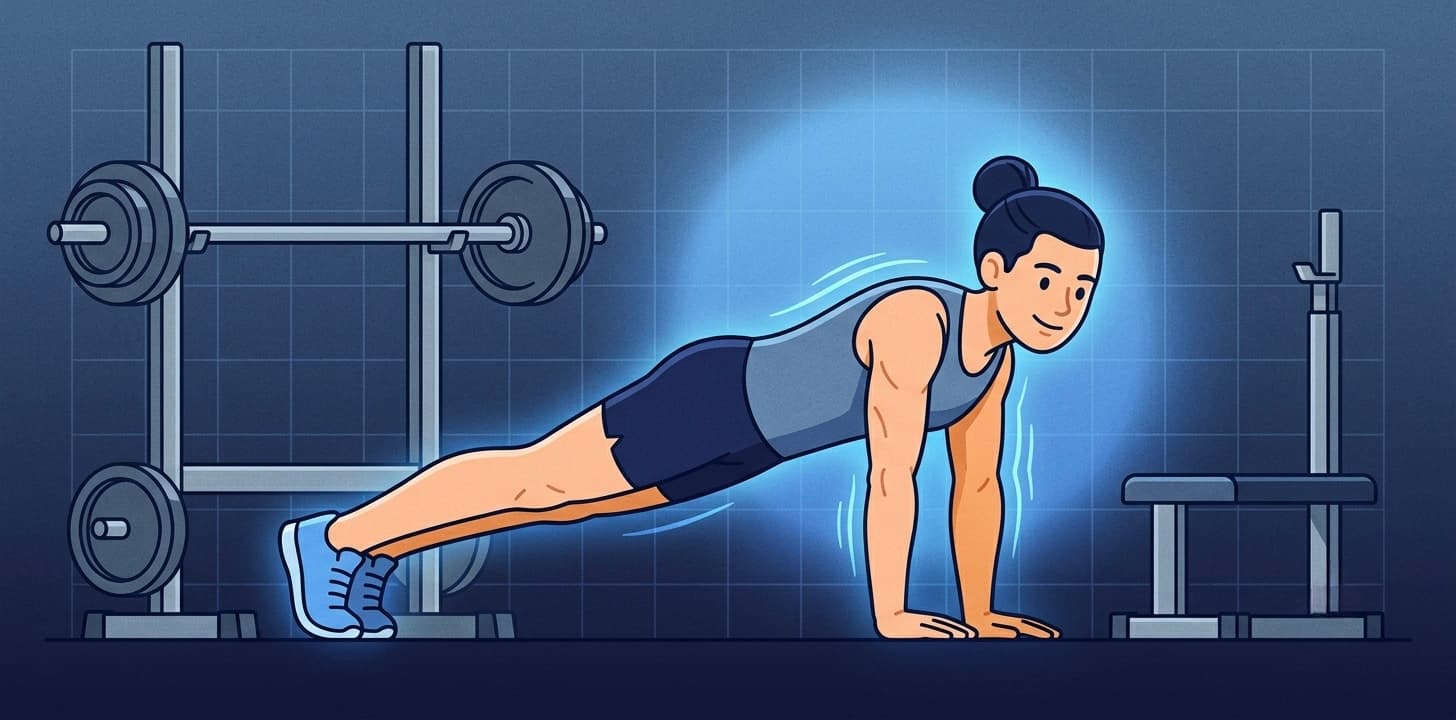
The gold standard of eccentric hamstring training. Kneel on a pad with your ankles secured (under a loaded barbell, a training partner's hands, or a Nordic curl apparatus). Keeping your body rigid from knees to shoulders, slowly lower your torso toward the ground using only your hamstrings to resist the descent. The goal is a controlled 3-5 second descent. Catch yourself with your hands at the bottom and push back up.
Research impact: The FIFA 11+ injury prevention program, which includes Nordic curls, reduced hamstring injuries by 51% in a large-scale meta-analysis (Al Attar et al., 2017). Van der Horst et al. (2015) showed a 65-70% reduction in hamstring injuries in soccer players who performed Nordic curls twice per week.
Best for: Hamstring strength and injury prevention, any athlete who sprints or decelerates.
Eccentric-Accentuated Reps
Attach weight releasers or have a partner place additional plates on the bar for the eccentric phase, then remove them at the bottom so you lift only the base load concentrically. For example: lower 275 lbs eccentrically, lift 225 lbs concentrically. This provides eccentric overload without requiring spotters to assist the concentric phase.
Best for: Powerlifters and advanced trainees with access to weight releasers.
Applications Beyond Hypertrophy
Injury Prevention
Eccentric training is the most evidence-supported modality for preventing soft tissue injuries, particularly:
- Hamstring strains: Nordic curls reduce hamstring injury incidence by 51-70% (see above)
- ACL injuries: Eccentric strengthening of the quadriceps and hamstrings improves the ability to decelerate and absorb landing forces
- Achilles tendinopathy: Alfredson's protocol (3x15 eccentric heel drops, twice daily) remains a first-line treatment for mid-portion Achilles tendinopathy, with 60-90% success rates in clinical trials
Tendon Rehabilitation
Tendons respond to eccentric loading differently than to concentric loading. Eccentric exercise promotes collagen realignment and neovascularization in degenerative tendons. The three most studied eccentric rehab protocols:
| Condition | Protocol | Frequency | Duration |
|---|---|---|---|
| Achilles tendinopathy | 3x15 eccentric heel drops (Alfredson) | 2x daily | 12 weeks |
| Patellar tendinopathy | 3x15 eccentric single-leg squats on decline board | 2x daily | 12 weeks |
| Lateral epicondylitis | 3x15 eccentric wrist extensions (Tyler twist) | 1x daily | 6-8 weeks |
Strength Plateau Breaking
If your bench press has stalled at 275 lbs, your muscles may lack the eccentric capacity to control loads near or above that weight. Incorporating 3-5 second eccentric bench press reps at 285-300 lbs (with a spotter) teaches the nervous system and the musculotendinous unit to handle supramaximal loads, making 275 lbs feel more manageable concentrically.
Programming Eccentric Training
Volume and Frequency Guidelines
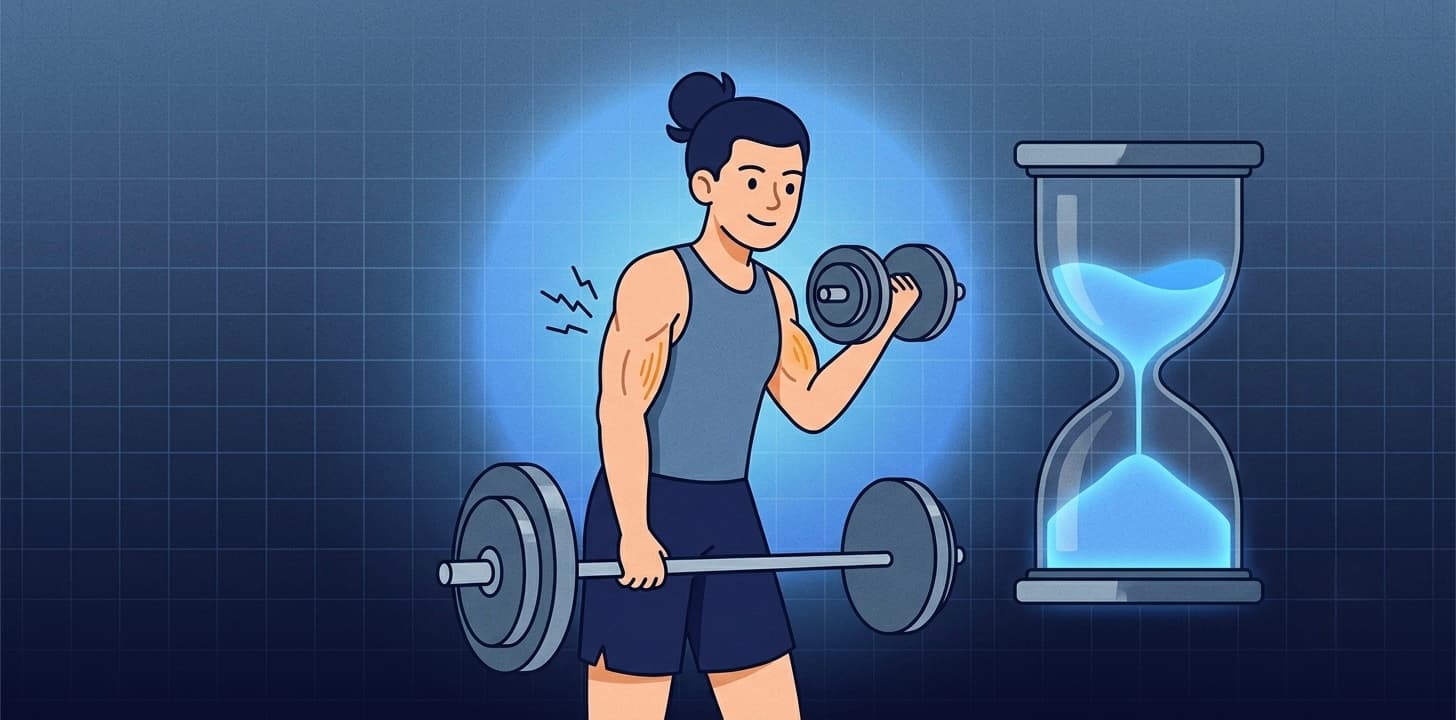
Eccentric training produces significantly more muscle damage than concentric-dominant training. This means recovery demands are higher and volume must be managed carefully.
- Slow eccentrics (3-4 second tempo): Can be used in every session. No special volume adjustments needed: the tempo naturally reduces the number of reps per set at a given load.
- Supramaximal eccentrics: 2-4 sets of 3-5 reps, once per week per movement pattern. Allow 5-7 days before training the same muscle group with heavy eccentrics again.
- Nordic curls (for prevention): 2-3 sets of 5-8 reps, 2x per week. Build up gradually: the first week of Nordics produces severe DOMS that can last 4-5 days.
- Eccentric rehab protocols: Follow the specific protocol guidelines (typically daily or twice daily at low intensities).
Phase Placement
Eccentric-focused training works best during:
- Hypertrophy blocks: Where the additional muscle damage and mechanical tension complement the high-volume growth stimulus
- Preparatory phases: Before a strength or peaking block, to build eccentric capacity that will support heavier loads
- Deload transitions: Light eccentric work (slow tempos at reduced loads) can be a useful deload strategy that maintains muscle quality
Avoid heavy eccentric training during:
- Peaking phases: The muscle damage will impair recovery and peak performance
- Competition weeks: DOMS from eccentric training takes 48-72 hours to peak and 5-7 days to fully resolve
- Concurrent high-volume phases: If you are already at MRV, adding eccentric overload will push you past it
Common Mistakes
Ignoring the eccentric entirely. Dropping the weight on every rep (letting gravity do the work during deadlifts, bouncing the bar off the chest on bench press) eliminates the eccentric stimulus. Even if you are not formally doing "eccentric training," control the descent on every rep of every exercise. Two seconds minimum.
Too much too soon. Eccentric training produces more muscle damage than most lifters expect. Starting with 5x5 supramaximal eccentrics with no prior eccentric-focused training history will produce debilitating DOMS that could sideline you for a week. Start with slow eccentrics (3-4 seconds) at your normal working weight before progressing to true eccentric overload.
Not adjusting overall volume. If you add eccentric-focused work, something else in your program needs to decrease. Eccentric stress counts toward your total recoverable volume, often at a higher "cost" per set than standard training.