The Mind-Muscle Connection: Neuroscience Meets the Weight Room
8 min read · May 2025 · by Manikanta Sirumalla
The Mind-Muscle Connection: Neuroscience Meets the Weight Room
You have probably heard a coach say "squeeze the muscle" or "feel it in your chest." This instruction, directing conscious attention to the working muscle, is the mind-muscle connection. For decades, it was dismissed as bro science. Then researchers started attaching EMG electrodes to lifters, and the data told a more nuanced story. The mind-muscle connection is real, measurable, and useful, but only in specific contexts.
The Neuroscience of Voluntary Muscle Activation
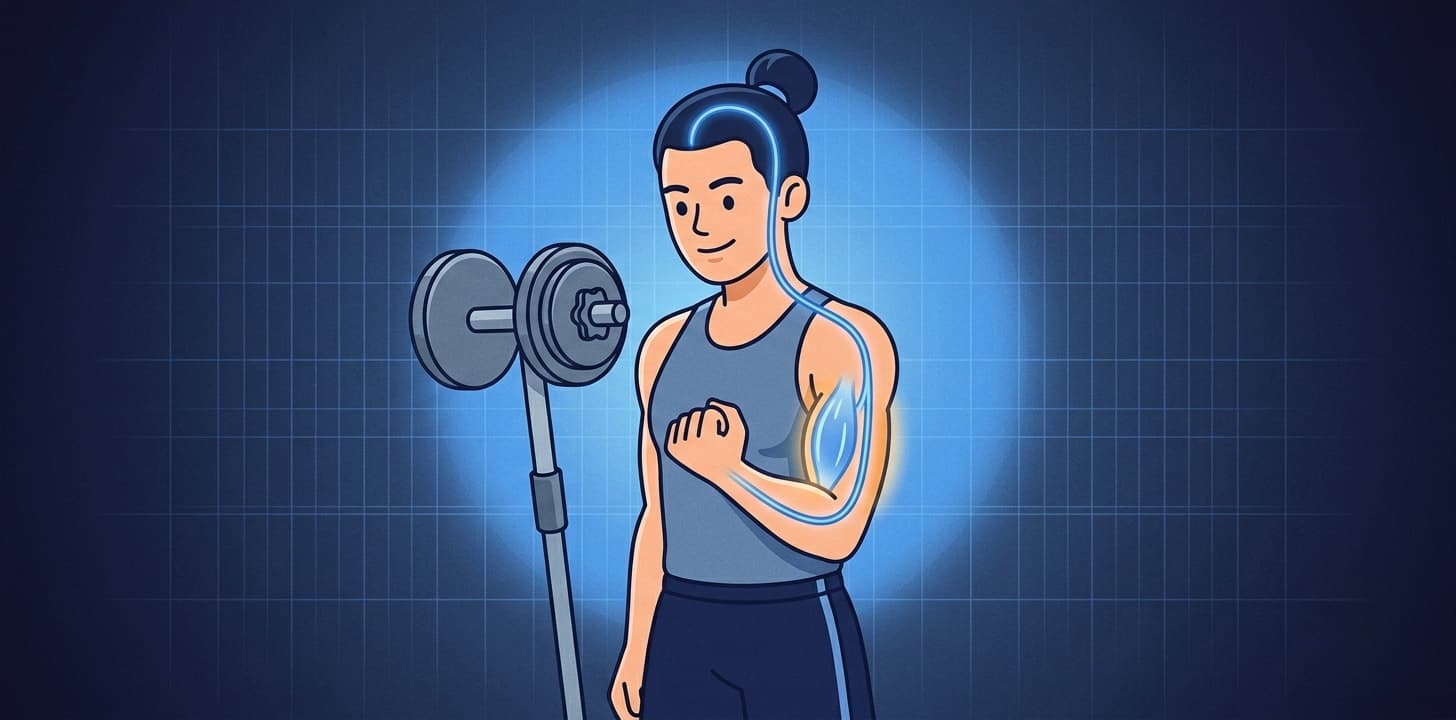
Every voluntary muscle contraction begins in the motor cortex of your brain. The motor cortex sends electrical signals down corticospinal tracts to motor neurons in the spinal cord, which then fire the muscle fibers attached to them. A single motor neuron and all the muscle fibers it innervates form a motor unit: the smallest functional unit of movement.
When you lift a weight, your nervous system recruits motor units in a predictable order. Small, slow-twitch motor units fire first (Henneman's size principle). As the demand increases, larger fast-twitch motor units are recruited. The total force your muscle produces depends on two factors: how many motor units are recruited and how frequently they fire (rate coding).
Here is where attention comes in. Research by Calatayud et al. (2016) demonstrated that when trained lifters consciously focused on "squeezing" the target muscle during bench press at 20-60% of 1RM, EMG activity in the pectoralis major increased by 9-22% compared to simply pressing the weight. The brain can modulate which muscles contribute to a movement based on where you direct your attention.
This is not placebo. It is selective motor unit recruitment. By focusing on a specific muscle, you bias the neural drive toward that muscle's motor units rather than distributing the load across synergists and stabilizers.
Internal vs. External Focus of Attention
Sports science distinguishes between two types of attentional focus:
Internal focus directs attention to the body itself: the muscles, the limbs, the sensation of contraction. "Squeeze your glutes at the top of the hip thrust" is an internal cue.
External focus directs attention to the outcome of the movement or an environmental target. "Drive the floor away from you" during a squat or "push the bar to the ceiling" during a bench press are external cues.
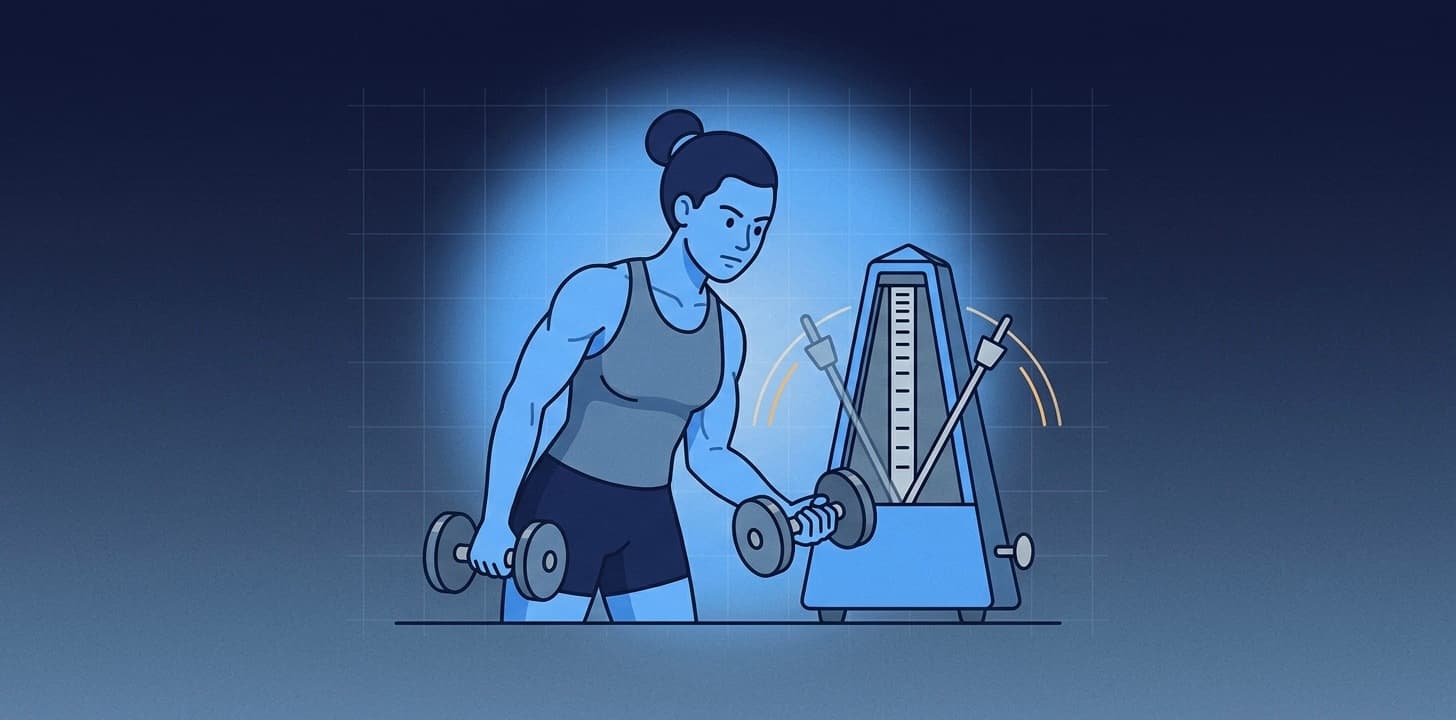
Gabriele Wulf's research, spanning over 100 studies since 1998, consistently shows that external focus produces superior motor performance in tasks involving coordination, speed, balance, and maximal force production. Her constrained action hypothesis explains why: internal focus constrains the motor system by introducing conscious interference into movements that are better executed automatically. External focus allows the body's natural motor patterns to operate without conscious micromanagement.
When Each Focus Works Best
The practical application splits cleanly along a single variable: load intensity.
Use internal focus (mind-muscle connection) when:
- Training at light to moderate loads (below 60-70% of 1RM)
- Performing isolation exercises (curls, lateral raises, flyes, leg extensions)
- The goal is hypertrophy and maximizing muscle activation
- You are trying to "wake up" a lagging muscle group
- Performing warm-up or activation drills
Use external focus when:
- Training at heavy loads (above 80% of 1RM)
- Performing compound movements for strength (squat, deadlift, bench press, overhead press)
- The goal is force production, power, or speed
- Performing athletic movements (jumps, throws, sprints)
- Technique is still being learned: external focus accelerates motor learning
Schoenfeld and Contreras (2016) confirmed this split in their review: at loads above 80% of 1RM, internal focus provides no additional muscle activation benefit because the nervous system is already forced to recruit maximum motor units to handle the load. There is no room for conscious modulation: the weight demands everything the muscle has.
The EMG Evidence
Electromyography (EMG) measures electrical activity in muscles during contraction. Higher EMG amplitude generally indicates greater motor unit recruitment in that muscle.
Key studies supporting the mind-muscle connection:
Calatayud et al. (2016): Trained men performed bench press at 20%, 40%, 60%, and 80% of 1RM with and without internal focus on the pectoralis major. At 20-60% of 1RM, pec activation increased significantly with internal focus. At 80% of 1RM, there was no difference. Importantly, triceps activation decreased when subjects focused on the chest, suggesting a genuine redistribution of neural drive.
Snyder and Fry (2012): Subjects increased lat activation during the lat pulldown by 18% when instructed to "pull with your elbows" (an internal cue targeting the lats) versus simply "pull the bar down." This study highlights that even subtle cue differences can shift muscle contribution.
Marchetti et al. (2018): During Smith machine bench press at 60% of 1RM, focusing on the pecs increased pec EMG by about 9% while decreasing triceps EMG, and vice versa. This confirmed that attentional focus can selectively bias muscle activation within a multi-joint movement.
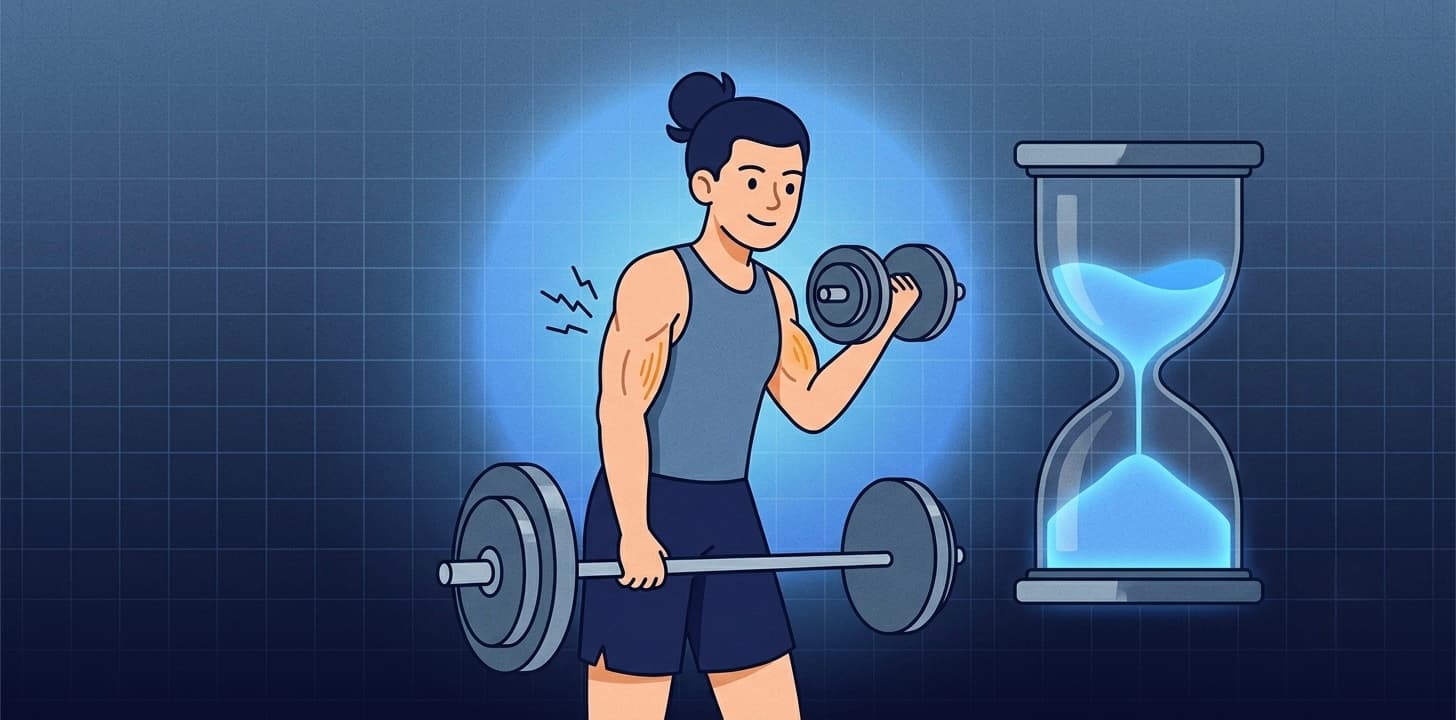
The limitation of EMG studies is that higher activation does not automatically equal more hypertrophy. Muscle growth is driven by mechanical tension, metabolic stress, and total volume, not raw EMG readings. However, if chronic use of internal focus leads to greater muscle activation at a given load, it plausibly contributes to greater mechanical tension on the target muscle over thousands of repetitions across a training career.
Practical Application: Building the Connection
The mind-muscle connection is a skill. Like any skill, it improves with practice and degrades with neglect. Here is how to develop it:
1. Start With Isolation Exercises
Isolation movements are the training ground for internal focus. A bicep curl involves one joint and one primary mover: it is easy to direct attention to the biceps. Practice feeling the stretch at the bottom and the peak contraction at the top. Once you can reliably "feel" the muscle working during curls, transfer that awareness to more complex movements.
2. Use Lighter Loads Initially
Drop the weight to 50-60% of your normal working load and perform slow, controlled reps with maximal focus on the target muscle. This is not a permanent reduction. It is a temporary tool to build the neural pathway. Once the connection is established, you can increase the load while maintaining awareness.
3. Touch the Muscle
Physical touch recruits additional sensory neurons and directs attention more precisely. Place your free hand on the muscle being worked (during single-arm exercises) or have a training partner touch the target muscle during a set. This is one of the most effective tricks for muscles you struggle to "feel," such as the rear delts or the lats.
4. Pause at Peak Contraction
Add a 1-2 second squeeze at the point of maximum contraction. During a cable fly, pause when your hands meet and actively squeeze the chest. During a leg curl, pause when your hamstrings are fully shortened. This pause forces conscious engagement and builds the proprioceptive awareness needed for the mind-muscle connection.
5. Pre-Activation Sets
Before your working sets of a compound movement, perform 1-2 light sets of an isolation exercise for the target muscle. For example, before bench pressing, do 15-20 reps of cable flyes with an internal focus. This "wakes up" the target muscle and makes it easier to feel during the compound movement.
Common Mistakes
Overusing internal focus on heavy compounds. If you are squatting 90% of your max and trying to "feel your quads," you are diverting cognitive resources away from the task that matters most: moving the weight safely. Heavy loads demand external focus.
Confusing soreness with activation. The mind-muscle connection is about real-time contraction quality, not post-workout soreness. DOMS is a poor indicator of muscle activation or growth.
Reducing load too much. There is no mind-muscle benefit at 20% of 1RM with no real tension on the muscle. The sweet spot is 40-70% of 1RM, where the load is meaningful but not so heavy that conscious modulation becomes impossible.