

Training Foundations
The principles every lifter needs before touching a program. Progressive overload, RPE, rest, warm-ups, compound lifts, tempo, and the neuroscience of muscle activation — from first principles.
Chapters
1Progressive Overload: The Only Rule That Matters
If you're not progressively overloading, you're not progressing. Here's how to apply the most important principle in strength training.
 2
2The 10 Best Compound Exercises (And How to Do Them)
Compound movements build the most muscle in the least time. Here are the 10 you should master, with form cues, common mistakes, and variations.
 3
3RPE Training: How to Autoregulate Your Workouts
RPE lets you adjust training intensity based on how you actually feel, not just what the spreadsheet says. Here's how to use it properly.
 4
4How to Warm Up Properly (And Why Most People Skip It)
Eight to twelve minutes of proper warm-up can improve your performance by 5-10% and dramatically reduce injury risk. Here's the protocol.
 5
5Rest Days: How Many You Need and When to Take Them
Recovery isn't laziness, it's where adaptation happens. Here's how to structure rest days, deload weeks, and active recovery.
 6
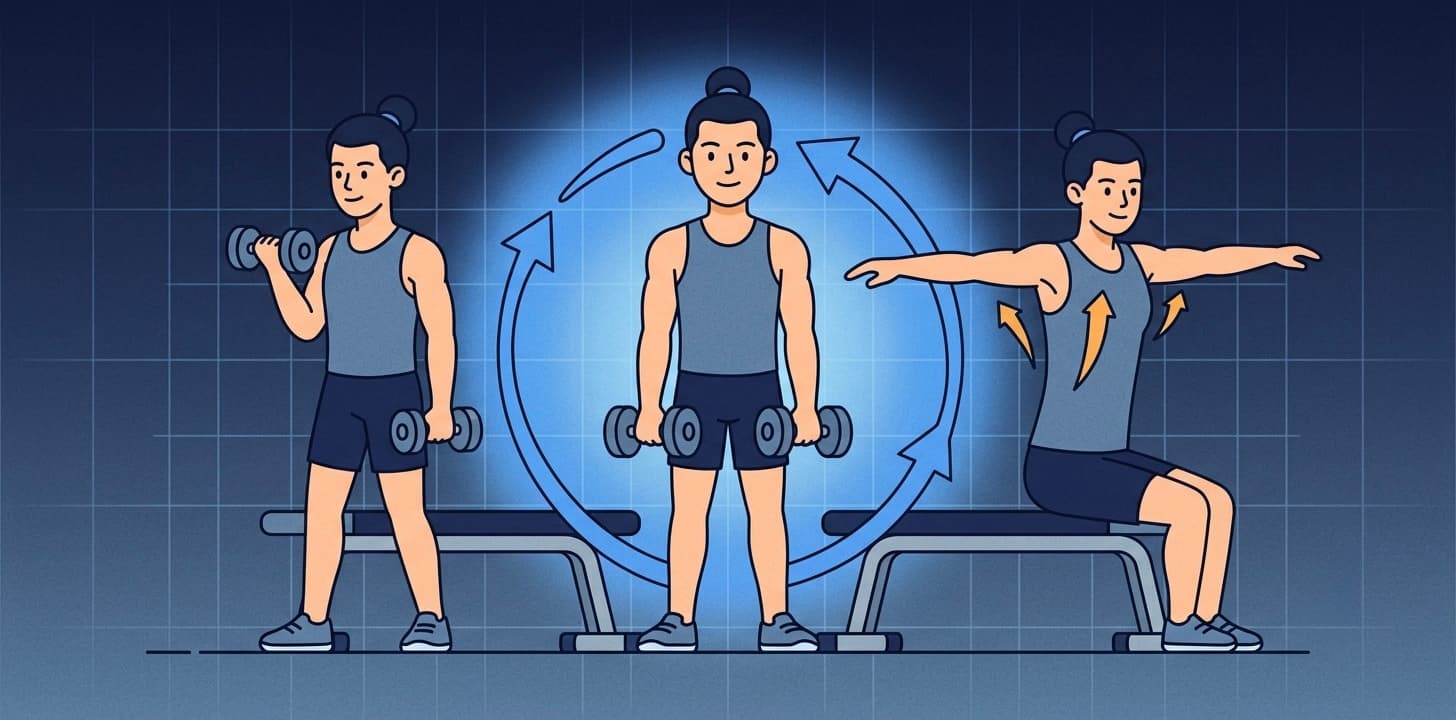
6Supersets, Drop Sets, and Giant Sets: When to Use Each One
Advanced set techniques can slash your workout time and boost hypertrophy: if you use them correctly. Here's when each one actually makes sense.
 7
7The Mind-Muscle Connection: Neuroscience Meets the Weight Room
The mind-muscle connection is more than gym folklore. EMG research confirms that internal focus of attention increases muscle activation, but only in the right context. Here's when to use it and when to ignore it.
 8
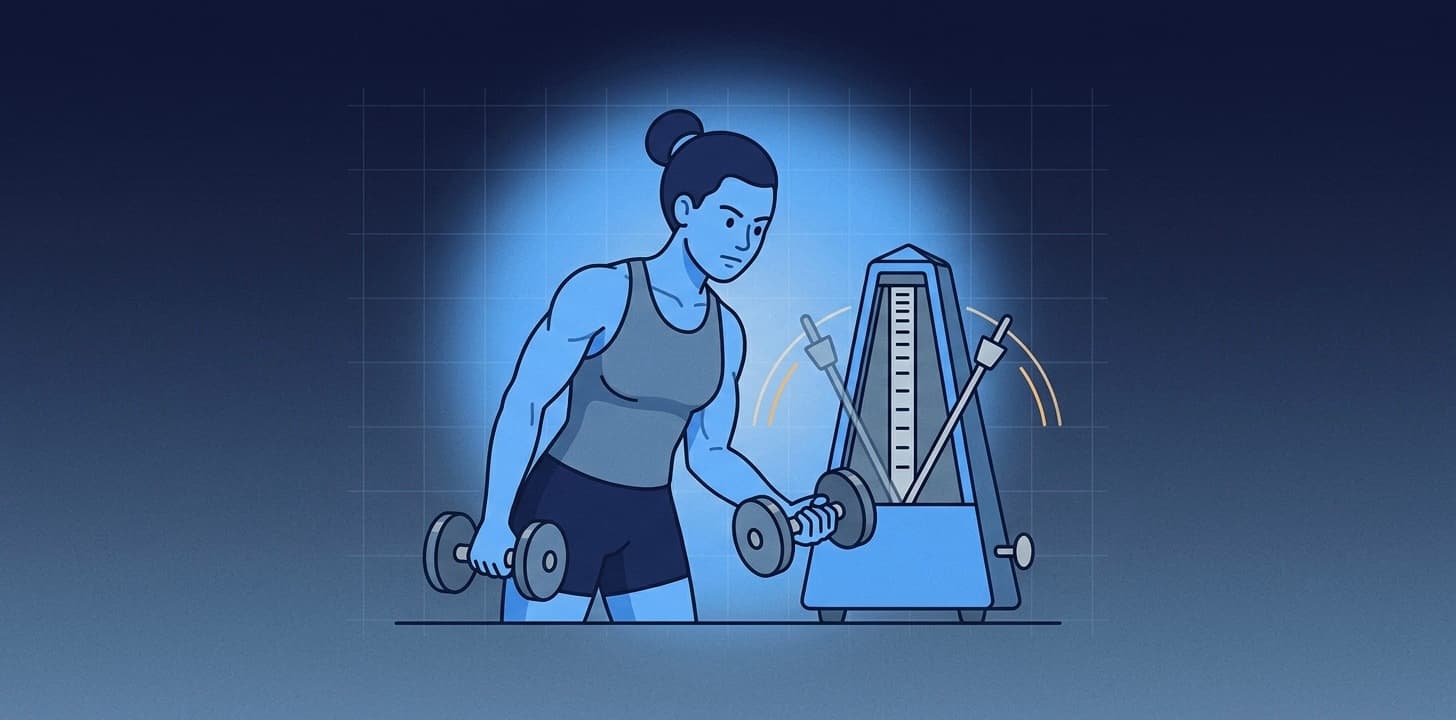
8Tempo Training: Controlling Every Phase of the Rep
Tempo prescriptions tell you exactly how fast to lower, pause, lift, and lock out every rep. Learn how to read tempo notation, when to use slow eccentrics vs explosive concentrics, and how tempo manipulates time under tension for better results.
 9
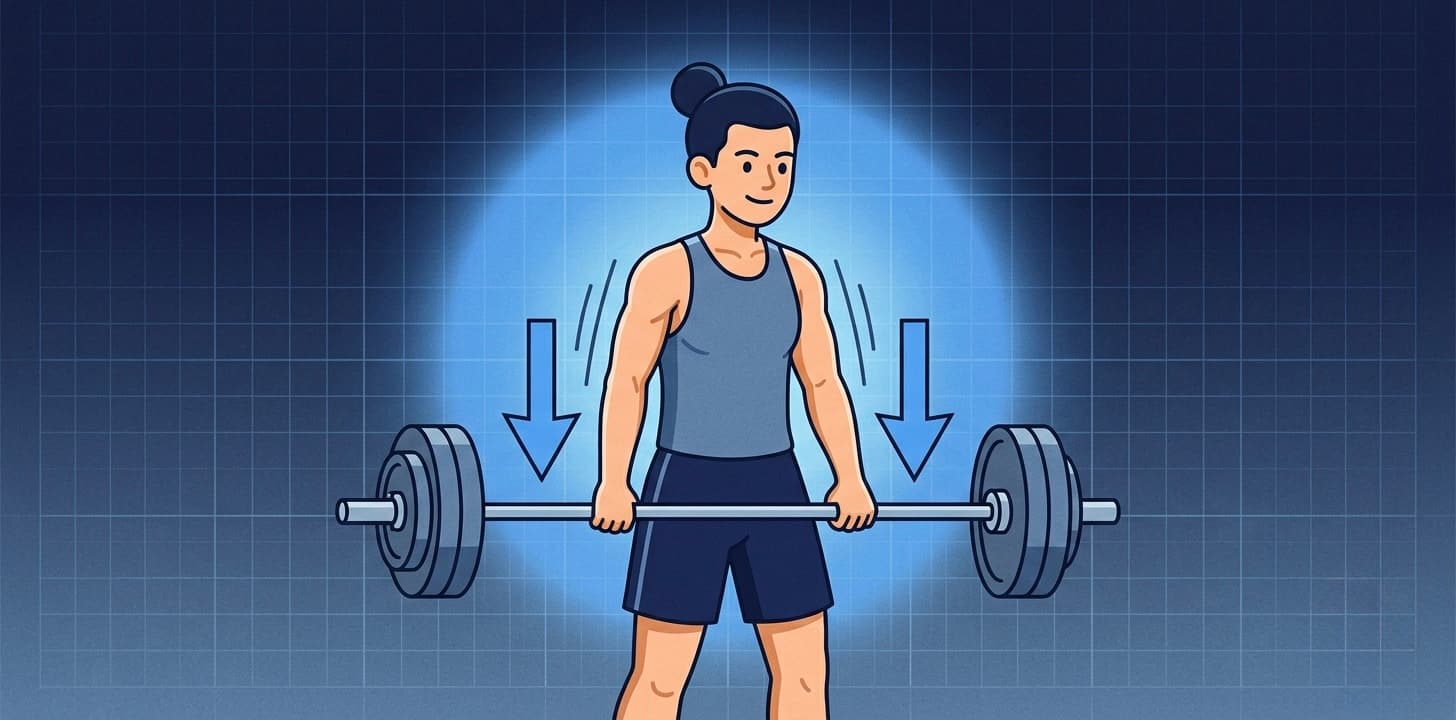
9Eccentric Training: The Power of the Negative Rep
Your muscles are 20-40% stronger during the lowering phase than the lifting phase. Eccentric training exploits this asymmetry to produce superior muscle growth, strength gains, and injury resilience. Here's the science and the programming.
 10
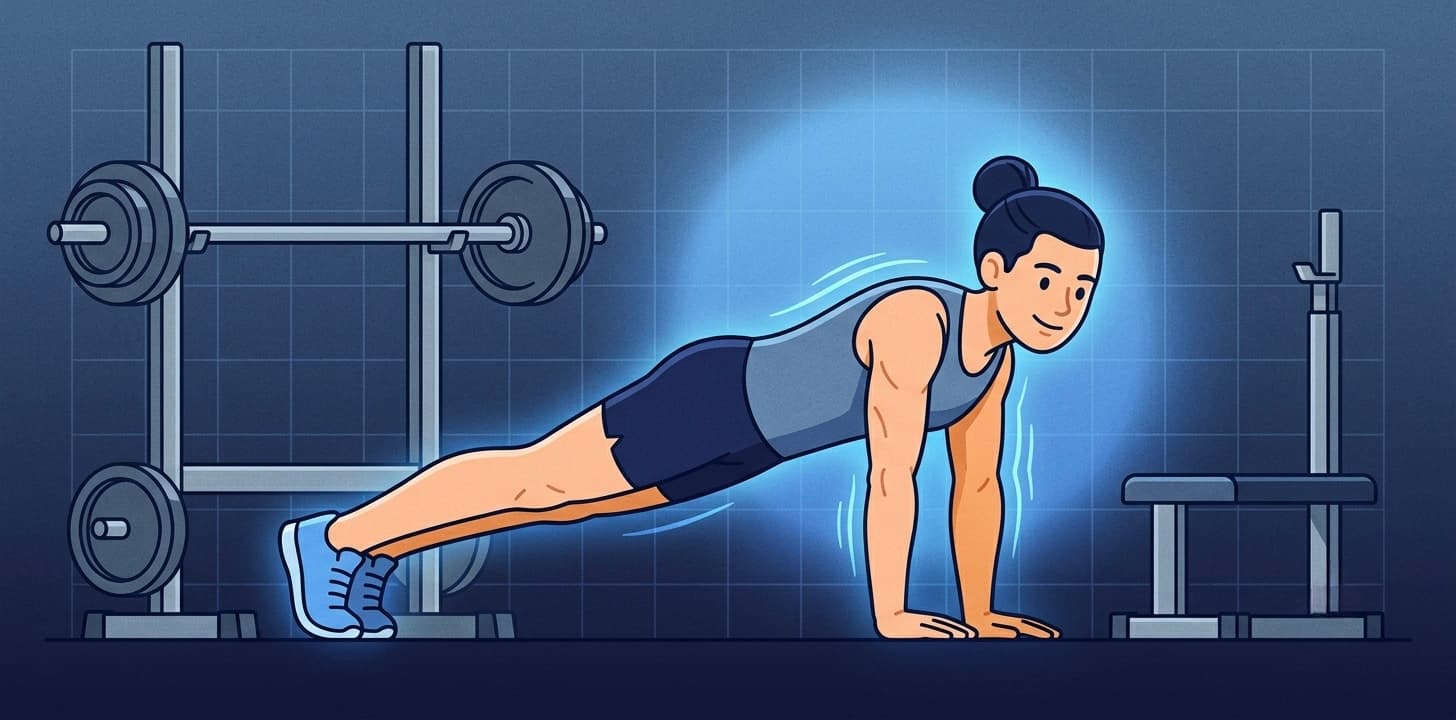
10Isometric Training: Building Strength Without Moving
Isometric contractions, holding a position under load without movement, are one of the oldest and most underused training methods. Learn the difference between yielding and overcoming isometrics, joint angle specificity, and how to program isometrics for strength, rehab, and plateaus.
 11
11Time Under Tension: What the Research Actually Says
Time under tension is one of the most discussed (and most misunderstood) concepts in resistance training. Here's what TUT actually is, what the research shows about its role in hypertrophy, and when manipulating it is genuinely useful.
 12
12Training Volume: Finding Your Minimum, Maximum, and Sweet Spot
Volume is the primary driver of hypertrophy, but more is not always better. Learn the MEV/MAV/MRV framework, how to find your personal volume landmarks, and how to avoid junk volume that generates fatigue without stimulating growth.
 13
13Strength vs. Hypertrophy: Programming for the Outcome You Want
Strength and hypertrophy are related but distinct adaptations that respond to different training variables. Learn how rep ranges, intensity, and volume interact, and how to periodize between strength and hypertrophy phases for maximum results.
 14
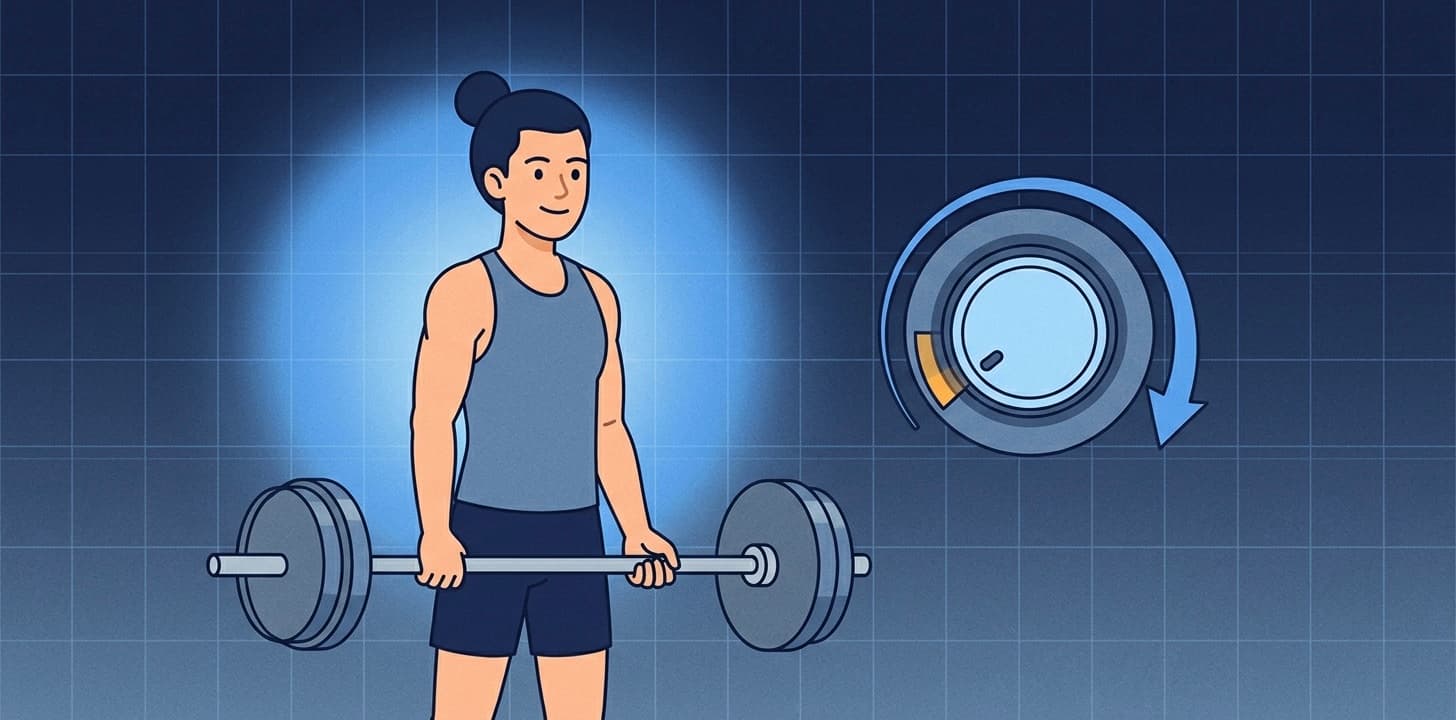
14The Deload Week: Why Training Less Makes You Stronger
A deload is a planned reduction in training stress that allows accumulated fatigue to dissipate, revealing the fitness you have built. Learn when to deload, how to structure one, and why skipping deloads sabotages long-term progress.
Ready to apply what you've learned?
RepTrack Pro puts this science to work — AI-powered plans, precision nutrition, and real-time tracking.
Download RepTrack Pro