Waist-to-Hip Ratio: A Better Health Marker Than BMI
8 min read · May 2025 · by Manikanta Sirumalla

Waist-to-Hip Ratio: A Better Health Marker Than BMI
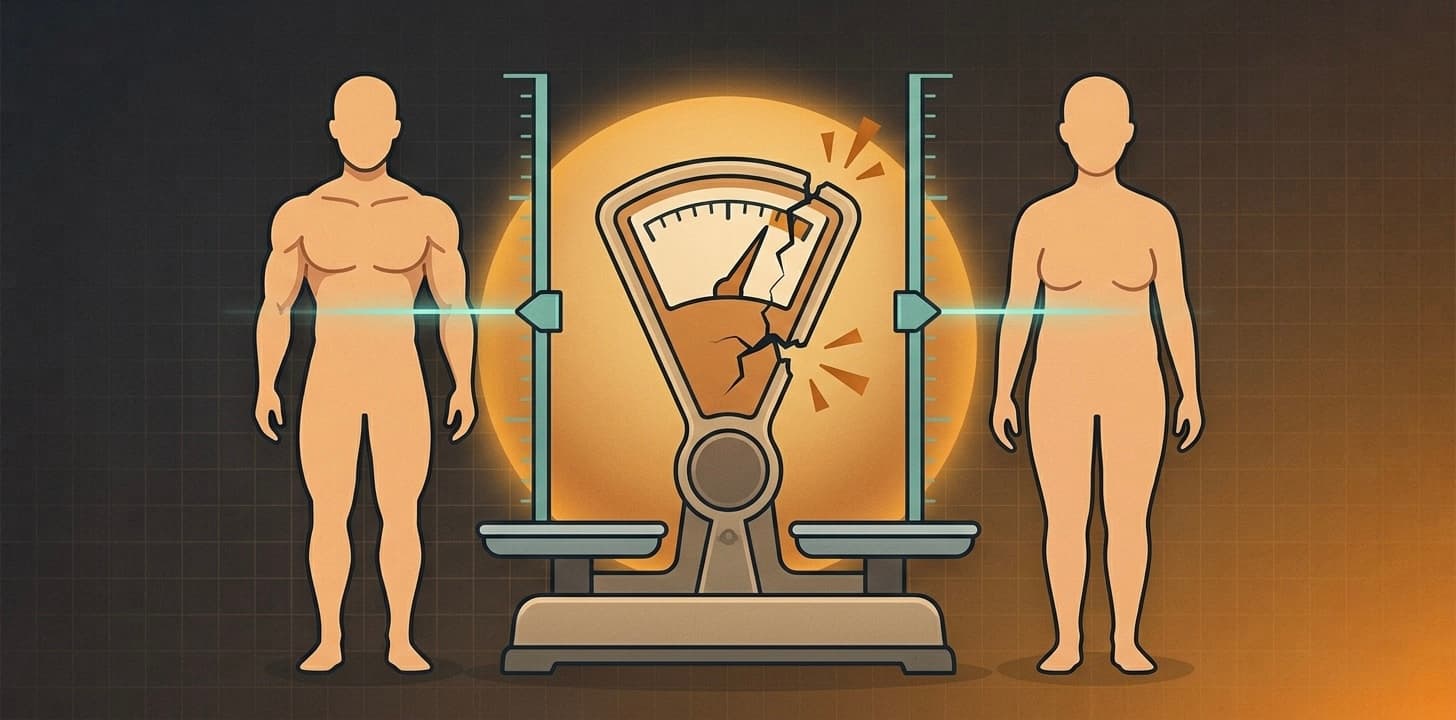
BMI divides your weight by your height squared and calls it a day. It cannot tell the difference between a 200 lb bodybuilder and a 200 lb sedentary office worker at the same height. It cannot tell you where your fat sits. And where your fat sits matters enormously for your health. Waist-to-hip ratio (WHR) does what BMI cannot: it captures fat distribution, and fat distribution is one of the strongest predictors of cardiovascular disease, metabolic syndrome, and all-cause mortality.
What Waist-to-Hip Ratio Is
WHR is exactly what it sounds like: the circumference of your waist divided by the circumference of your hips.
WHR = Waist Circumference / Hip Circumference
A man with a 34-inch waist and 40-inch hips has a WHR of 0.85. A woman with a 28-inch waist and 38-inch hips has a WHR of 0.74.
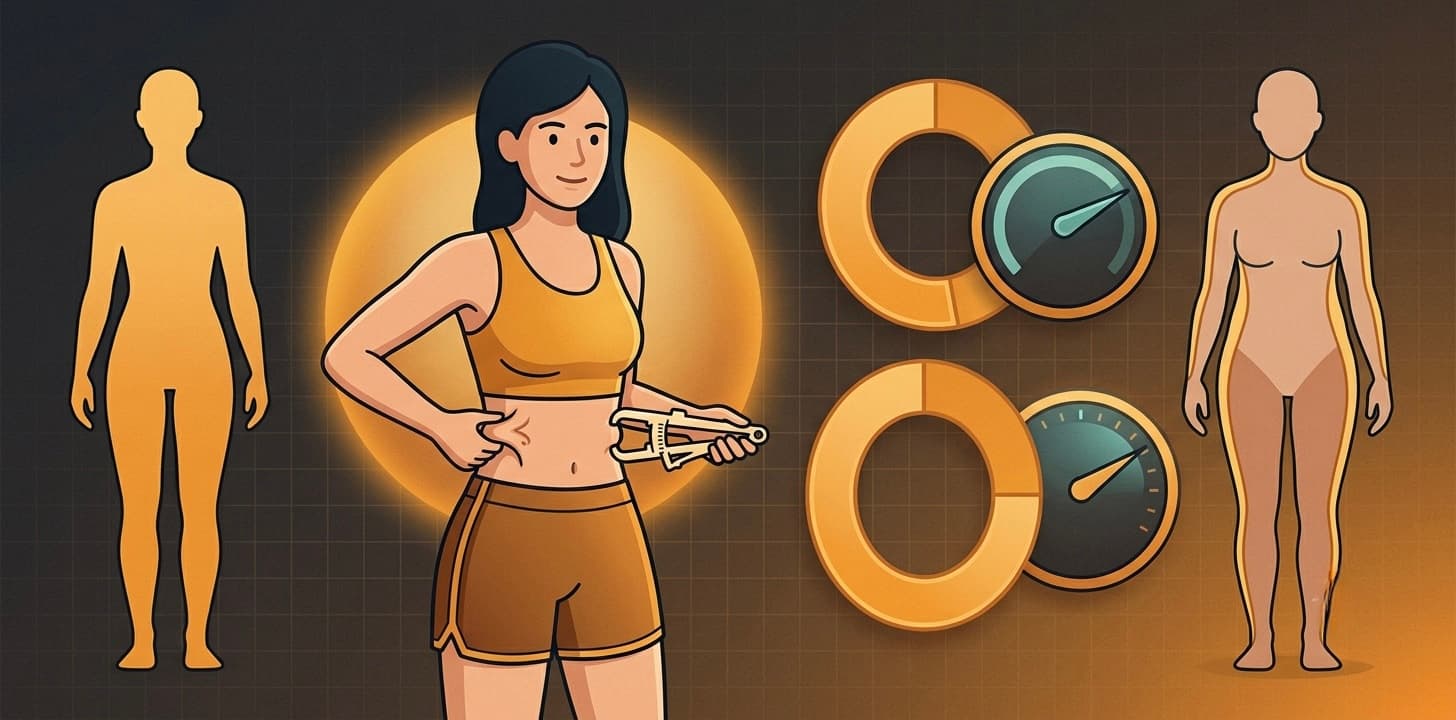
The ratio captures the relative distribution of fat between your abdominal region (android fat) and your hip/gluteal region (gynoid fat). A higher WHR means more fat is concentrated around your midsection relative to your hips: the pattern most strongly associated with metabolic disease.
How to Measure Correctly
Measurement accuracy depends entirely on technique. Inconsistent landmarks produce inconsistent data, which produces useless trends. Follow this protocol precisely.
Waist Measurement
- Stand upright with feet together and arms at your sides
- Locate the top of your iliac crest (the bony ridge at the top of your hip bone) by pressing your fingers into your side
- Place the tape measure horizontally at the level of the iliac crest: this is typically at or just below the navel
- The tape should be snug but not compressing the skin
- Take the measurement at the end of a normal exhalation: do not suck in your stomach and do not push it out
- Read the measurement to the nearest 0.5 cm or 0.25 inch
The WHO protocol specifies the midpoint between the lowest rib and the iliac crest as the waist landmark. The NHANES protocol uses the top of the iliac crest. Either is valid: just be consistent across all measurements.
Hip Measurement
- Stand upright with feet together
- Place the tape measure at the widest point of your buttocks: the maximum posterior protrusion of the gluteal muscles
- The tape should be horizontal all the way around, not angled
- Read the measurement to the nearest 0.5 cm or 0.25 inch
Common Measurement Errors
- Measuring waist at the narrowest point. In lean individuals, the narrowest point may be above the iliac crest, giving a falsely low reading. Use a bony landmark, not a visual one.
- Measuring over clothing. Always measure on bare skin or over a single thin layer.
- Compressing the tape. A tight tape underestimates circumference. The tape should touch the skin without creating an indentation.
- Measuring after a large meal. Abdominal distension from food and fluid can add 1-3 cm to your waist. Measure first thing in the morning, before eating.
Healthy WHR Ranges
The World Health Organization defines these thresholds based on large epidemiological studies:
Men
| WHR | Risk Category |
|---|---|
| Below 0.90 | Low health risk |
| 0.90 - 0.99 | Moderate health risk |
| 1.00 and above | High health risk |
Women
| WHR | Risk Category |
|---|---|
| Below 0.80 | Low health risk |
| 0.80 - 0.84 | Moderate health risk |
| 0.85 and above | High health risk |
These thresholds vary slightly by ethnicity. South Asian and East Asian populations show elevated metabolic risk at lower WHR values, with some researchers suggesting lowering the "high risk" threshold by 0.05 for these groups.
Waist Circumference Alone
WHR is more informative than waist circumference alone, but waist circumference itself is a powerful independent risk marker:
| Men | Women | |
|---|---|---|
| Increased risk | > 94 cm (37 in) | > 80 cm (31.5 in) |
| Substantially increased risk | > 102 cm (40 in) | > 88 cm (34.5 in) |
WHR vs. BMI: The Evidence
The INTERHEART study (Yusuf et al., 2005), which included 27,098 participants from 52 countries, found that WHR was a stronger predictor of myocardial infarction (heart attack) than BMI. The population attributable risk for the highest WHR quintile was 24.3%: meaning that nearly a quarter of heart attacks in the study population could be statistically attributed to central adiposity as measured by WHR.
A 2020 meta-analysis published in the BMJ, analyzing 72 prospective studies with over 2.5 million participants, concluded:
- A 0.1 unit increase in WHR was associated with a 20% increase in cardiovascular mortality
- WHR was more strongly associated with cardiovascular death than BMI, even after adjusting for overall adiposity
- The association held across all BMI categories: meaning that people with a "normal" BMI but high WHR still had elevated risk
This is critical. A person with a normal BMI (22-24) but a high WHR can be at greater cardiovascular risk than someone with an "overweight" BMI (26-28) but a healthy WHR. BMI misses these individuals entirely. WHR catches them.
Why Fat Distribution Matters More Than Total Fat
Not all fat is metabolically equivalent. Subcutaneous fat (the fat under your skin that you can pinch) is relatively benign. It serves as energy storage and insulation. Visceral fat (the fat surrounding your abdominal organs) is metabolically active in harmful ways.
Visceral fat:
- Secretes inflammatory cytokines (TNF-alpha, IL-6) that promote systemic inflammation
- Produces resistin, which impairs insulin sensitivity
- Drains directly into the portal vein, flooding the liver with free fatty acids and contributing to non-alcoholic fatty liver disease (NAFLD)
- Is strongly correlated with insulin resistance, dyslipidemia, hypertension, and atherosclerosis
WHR serves as a practical proxy for visceral fat accumulation. A high WHR almost always reflects elevated visceral fat, because visceral fat preferentially accumulates in the abdominal cavity, increasing waist circumference while hip circumference remains relatively stable.
WHR and Body Composition Goals
For fitness-focused individuals, WHR adds a health dimension to pure aesthetics. You can be lean (low body fat percentage) and still have a suboptimal WHR if your remaining fat is centrally distributed.
Tracking WHR Over Time
Measure WHR monthly alongside other body composition metrics. During a cut, WHR typically improves (decreases) as abdominal fat is mobilized preferentially. During a bulk, monitor WHR to ensure fat gain is not disproportionately abdominal.
What Improves WHR
- Fat loss. Reducing overall body fat reduces abdominal fat. Visceral fat is often the first depot mobilized during a caloric deficit, meaning WHR often improves early in a cutting phase.
- Resistance training. Building gluteal and hip musculature can increase hip circumference from lean tissue, reducing WHR even without fat loss. Exercises like squats, hip thrusts, and Romanian deadlifts target this region.
- Aerobic exercise. Moderate-intensity aerobic exercise (150+ minutes per week) preferentially reduces visceral fat, as demonstrated in a 2011 meta-analysis by Vissers et al.
- Reducing refined carbohydrates and alcohol. Both are associated with increased visceral fat deposition. Alcohol is particularly associated with android fat storage: the "beer belly" is not a myth.
- Sleep. Short sleep duration (under 6 hours) is independently associated with increased visceral fat accumulation and higher WHR, per a 2022 study in JAMA Network Open.
The Bottom Line
Your scale tells you how much you weigh. Your BMI adjusts that for your height. Neither tells you where your fat sits. WHR answers the question that matters most for your health: is your fat stored in the relatively harmless subcutaneous depots around your hips and limbs, or is it concentrated in your abdominal cavity where it actively promotes disease?
A tape measure, thirty seconds, and one division problem. That is all it takes to get a health metric that outperforms BMI in every major epidemiological study ever conducted. Measure it. Track it. Act on it.