Body Recomposition: How to Build Muscle and Lose Fat at the Same Time
10 min read · May 2025 · by Manikanta Sirumalla
Body Recomposition: How to Build Muscle and Lose Fat at the Same Time
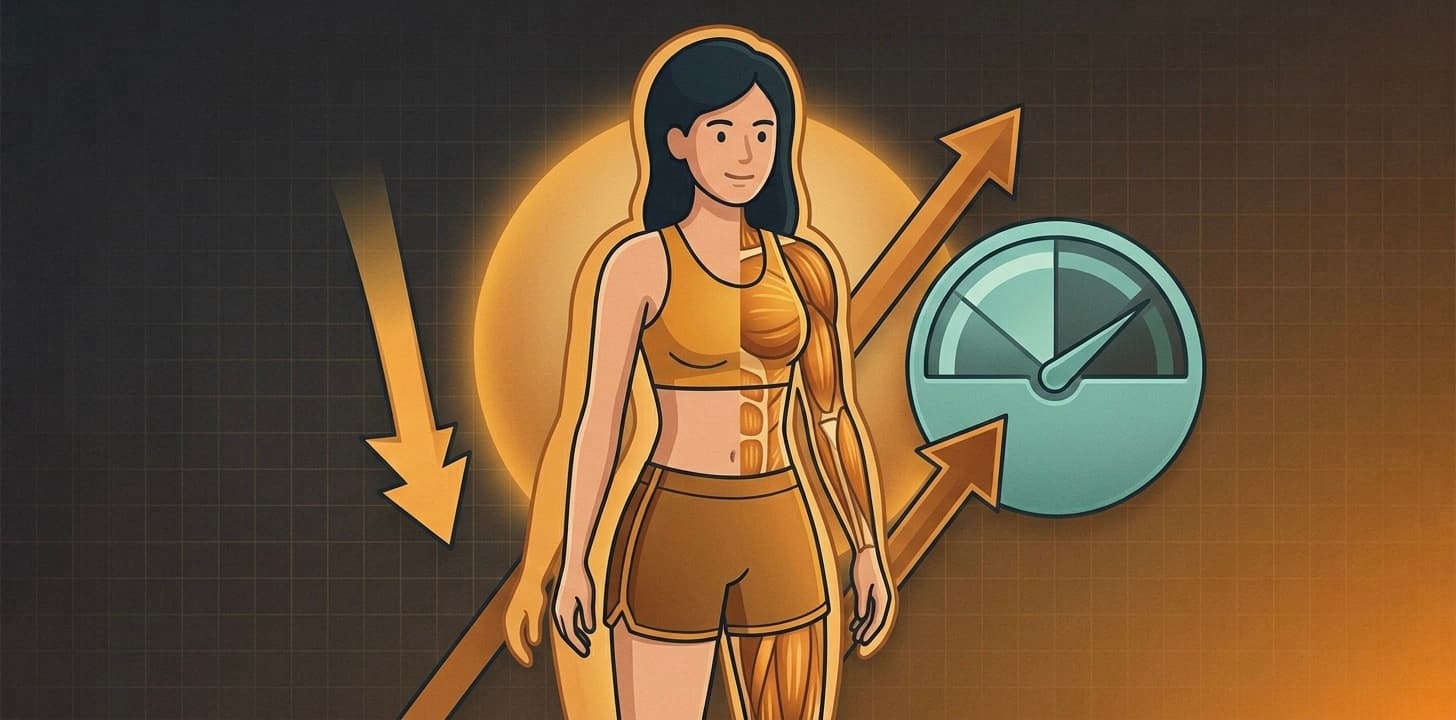
The standard advice says you have to choose: bulk to build muscle, then cut to lose fat. Two distinct phases, two different calorie targets, months of cycling back and forth. But body recomposition (simultaneously gaining lean tissue while losing adipose tissue) is not a myth. It is a documented physiological phenomenon. The catch is that it does not work equally well for everyone, and the conditions have to be right.
What Body Recomposition Actually Means
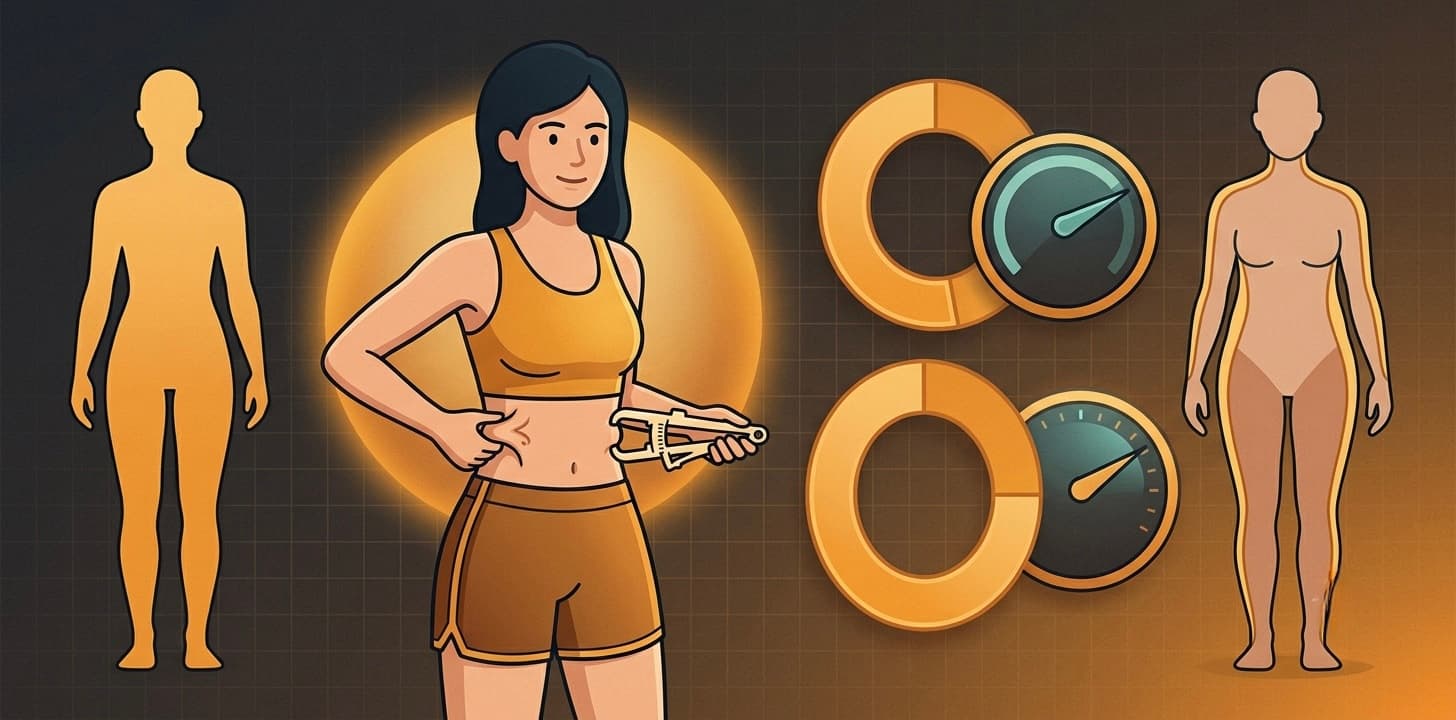
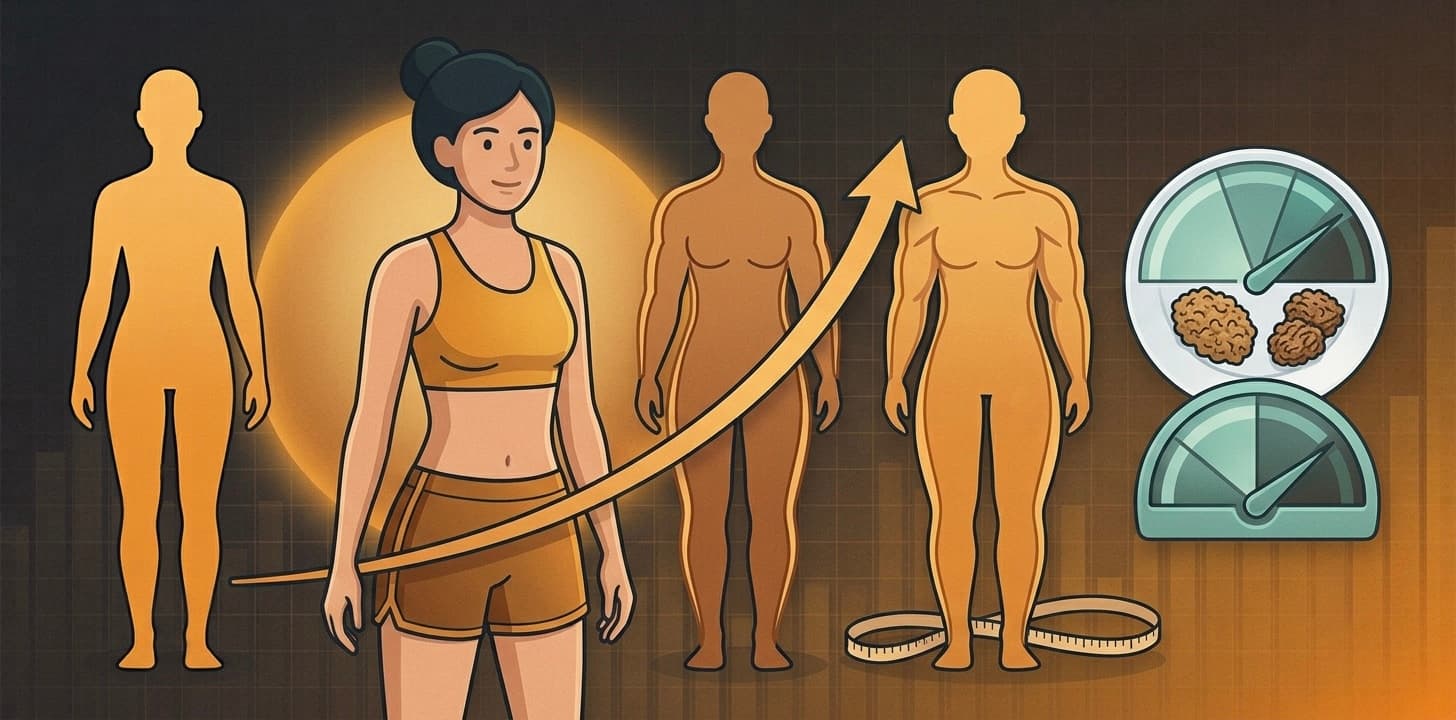
Body recomposition means your body fat percentage decreases while your lean mass increases, even if your scale weight stays roughly the same or changes very little. You are not just losing weight or just gaining weight. You are changing the composition of the weight you carry.
A 180 lb person at 25% body fat has 45 lbs of fat and 135 lbs of lean mass. After a successful recomp, they might still weigh 180 lbs but sit at 20% body fat: now carrying 36 lbs of fat and 144 lbs of lean mass. They lost 9 lbs of fat and gained 9 lbs of muscle. The scale saw nothing. Body composition analysis sees everything.
This is why tracking body fat percentage and fat-free mass matters far more than tracking scale weight during a recomp.
Who Can Actually Recomp?
Body recomposition is real, but the magnitude of the effect depends heavily on who you are. Research consistently identifies four populations that respond best.
1. Beginners (Untrained Individuals)
Novice lifters experience "newbie gains": a period where the neuromuscular system is so sensitized to resistance training that muscle protein synthesis is dramatically elevated. A 2020 study by Barakat et al. in the Strength and Conditioning Journal found that untrained individuals can gain 1-1.5% of body weight in lean mass per month while simultaneously losing fat, even at maintenance calories or a mild deficit.
The mechanism: untrained muscle has a low threshold for the anabolic stimulus. Almost any resistance training is novel enough to trigger robust muscle protein synthesis. Combined with adequate protein, the body can redirect energy from fat stores toward muscle tissue.
2. Returning Lifters (Muscle Memory)
People who previously trained and built muscle, then took time off, can regain lost muscle faster than building it fresh. This phenomenon (myonuclear retention, or "muscle memory") was demonstrated in research by Gundersen (2016). The myonuclei acquired during initial training persist even after muscle atrophies, allowing faster regrowth when training resumes.
A returning lifter can often recomp effectively for 3-6 months before the effect plateaus.
3. Overfat Individuals
People carrying significant excess body fat (above 25% for men, above 35% for women) have large energy reserves that the body can mobilize to support muscle growth. In this population, a moderate caloric deficit combined with high protein and resistance training produces reliable body recomposition. A 2016 study by Longland et al. in the American Journal of Clinical Nutrition showed that overweight young men on an aggressive 40% caloric deficit gained 2.6 lbs of lean mass over 4 weeks while losing 10.6 lbs of fat, but only when protein was set to 1.1 g/lb.
4. Athletes Using Performance-Enhancing Drugs
This population recomps easily because exogenous hormones dramatically elevate muscle protein synthesis rates. This article focuses exclusively on natural trainees.
The Calorie Setup for Recomposition
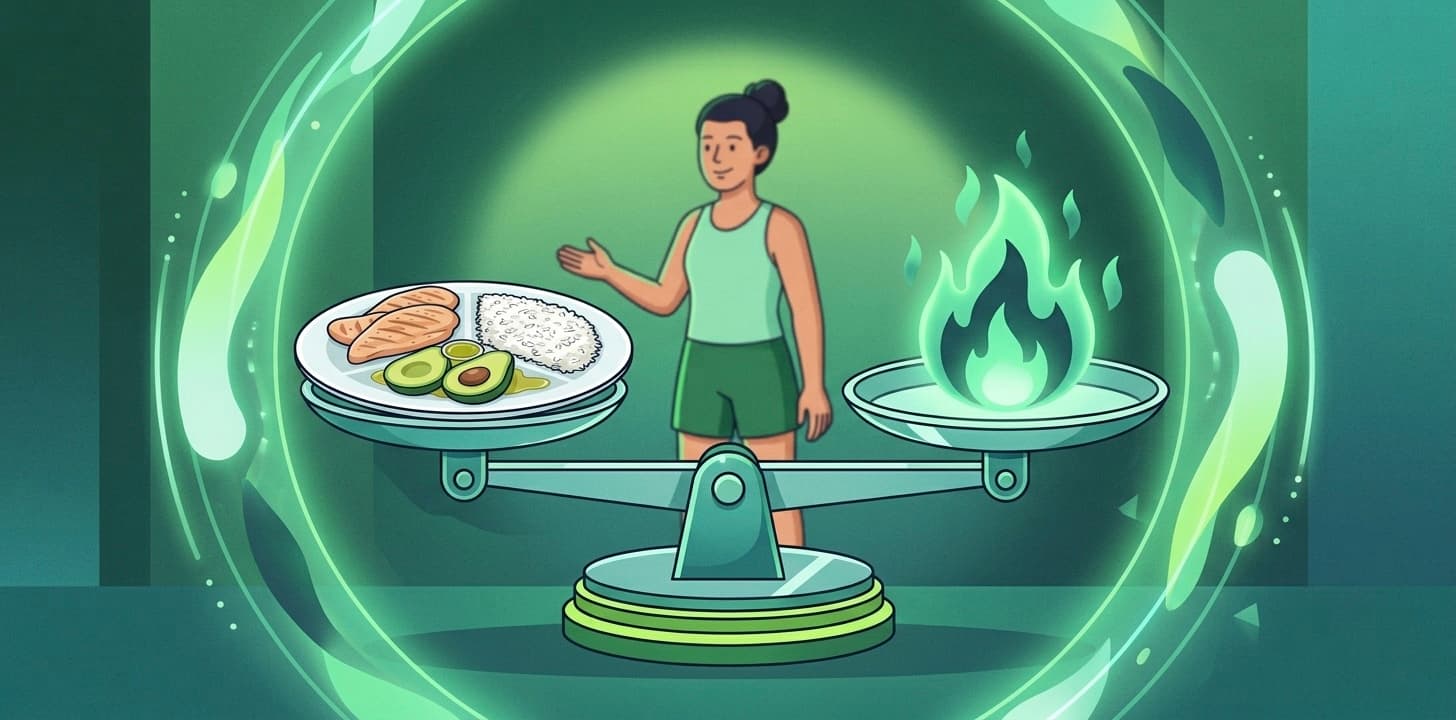
The traditional recomp calorie target is maintenance: eating exactly at your TDEE. The idea is that with sufficient protein and training stimulus, the body will use stored fat to fuel the energetic cost of muscle growth.
However, more recent research suggests that a slight deficit of 5-15% below TDEE can actually produce better recomp results for overfat individuals, while beginners may benefit from maintenance or even a very slight surplus of 5-10%.
Calorie Guidelines by Population
| Population | Calorie Target | Rationale |
|---|---|---|
| Untrained beginner (lean) | Maintenance to +10% TDEE | Maximize newbie gains without adding unnecessary fat |
| Untrained beginner (overfat) | -10% to -20% TDEE | Leverage body fat stores to fuel muscle growth |
| Returning lifter | Maintenance to -10% TDEE | Muscle memory allows growth even in a mild deficit |
| Trained intermediate | Maintenance | Recomp will be slow; patience required |
Protein: The Most Critical Variable
Protein intake is the single biggest determinant of whether a recomp succeeds or fails. During recomposition, protein needs are higher than during a standard bulk because the body must simultaneously repair and build muscle tissue while mobilizing fat.
Target: 1.0-1.2 g per pound of body weight per day.
This is higher than the standard bulking recommendation of 0.8-1.0 g/lb. The Longland et al. study mentioned above directly demonstrated this: the high-protein group (1.1 g/lb) gained lean mass while the moderate-protein group (0.55 g/lb) gained none, despite identical caloric deficits and training programs.
Distribute protein across 4-5 meals, with 30-40 g per meal, to maximize muscle protein synthesis throughout the day. The leucine threshold of 2.5-3 g per meal must be met consistently.
Remaining Macros
- Carbohydrates: 1.5-2.5 g per pound of body weight. Carbs fuel your training and support recovery. Skimping on carbs during a recomp compromises workout quality, which undermines the training stimulus you need.
- Fat: 0.3-0.4 g per pound of body weight. Maintain hormonal function with adequate dietary fat. Do not drop below 20% of total calories from fat.
Training for Recomposition
The training stimulus is what signals your body to build muscle rather than simply maintaining existing tissue. Without progressive overload, a recomp becomes just a slow, inefficient cut.
Principles
-
Resistance training 3-5 days per week. Full-body or upper/lower splits work well for beginners. More advanced lifters can use push-pull-legs or similar splits.
-
Volume: 10-16 working sets per muscle group per week. Since you are not in a large surplus, recovery capacity is not maximized. Start at the lower end and increase only if you are recovering well.
-
Intensity: RPE 7-9 on working sets. Each set should be taken within 1-3 reps of failure. Stopping at RPE 5-6 does not generate sufficient mechanical tension to drive hypertrophy.
-
Progressive overload is mandatory. Add weight, reps, or sets over time. If your training is not progressing, the recomp stimulus is insufficient.
-
Include compound movements as the foundation. Squats, deadlifts, bench press, rows, overhead press, and pull-ups recruit the most muscle mass per movement and generate the strongest systemic anabolic response.
Cardio During a Recomp
Moderate cardio (2-3 sessions of 20-30 minutes per week) supports cardiovascular health and can modestly increase energy expenditure without impairing recovery. Avoid excessive cardio (daily 60+ minute sessions), which creates too large an energy deficit and can shift the balance from recomposition toward pure catabolism.
Realistic Timelines and Expectations
Body recomposition is slow. The scale will not validate your efforts for weeks or months. This is why body composition tracking (not just weighing yourself) is essential.
Expected Monthly Progress
| Population | Monthly Muscle Gain | Monthly Fat Loss | Net Scale Change |
|---|---|---|---|
| Beginner (overfat) | 1.5-2.5 lbs | 3-5 lbs | -1.5 to -2.5 lbs |
| Beginner (lean) | 1.5-2.0 lbs | 0.5-1.5 lbs | 0 to +0.5 lbs |
| Returning lifter | 1.0-2.0 lbs | 1-3 lbs | -0.5 to -1 lb |
| Trained intermediate | 0.5-1.0 lbs | 0.5-1.0 lbs | ~0 lbs |
For trained intermediates, the recomp rate is so slow that visible changes may take 4-6 months. Most coaches recommend dedicated bulking and cutting phases for this group because the results per unit of time are simply better.
How to Know If Your Recomp Is Working
Since scale weight is unreliable during a recomp, you need other metrics:
- Body fat percentage: measure every 2-4 weeks using a consistent method. A downward trend confirms fat loss.
- Strength progression: if your lifts are increasing, you are likely gaining muscle. Strength is the most accessible proxy for hypertrophy.
- Waist circumference: a shrinking waist strongly indicates fat loss, especially visceral fat reduction.
- Progress photos: taken monthly under the same lighting and conditions. Visual changes accumulate gradually but are unmistakable over 8-12 weeks.
Common Recomp Mistakes
- Eating too little. An aggressive deficit kills the muscle-building side of the equation. If you are losing more than 1% of body weight per week, you are cutting, not recomping.
- Not enough protein. Below 0.8 g/lb, muscle protein synthesis cannot keep pace with the demands of recomposition. Hit 1.0 g/lb minimum.
- Skipping progressive overload. Without a progressive training stimulus, the body has no reason to build new muscle tissue.
- Judging results by the scale. The scale can stay flat for months during a successful recomp. Trust body fat measurements, strength gains, and the mirror.
- Trying to recomp when it is not appropriate. If you are an experienced lifter at 14% body fat, a dedicated bulk-cut cycle will produce better results in less time. Recomp is not the optimal strategy for everyone.