Visceral Fat: Why It's Dangerous and How to Lose It
9 min read · May 2025 · by Manikanta Sirumalla
Visceral Fat: Why It's Dangerous and How to Lose It
Not all body fat is created equal. The fat you can pinch on your arms, thighs, and around your hips (subcutaneous fat) is metabolically relatively benign. It stores energy, insulates your body, and cushions your tissues. But deep inside your abdominal cavity, wrapped around your liver, intestines, kidneys, and pancreas, sits a different kind of fat. Visceral adipose tissue (VAT) is metabolically active, hormonally disruptive, and inflammatory. It is the single most dangerous type of fat in the human body.
What Visceral Fat Is
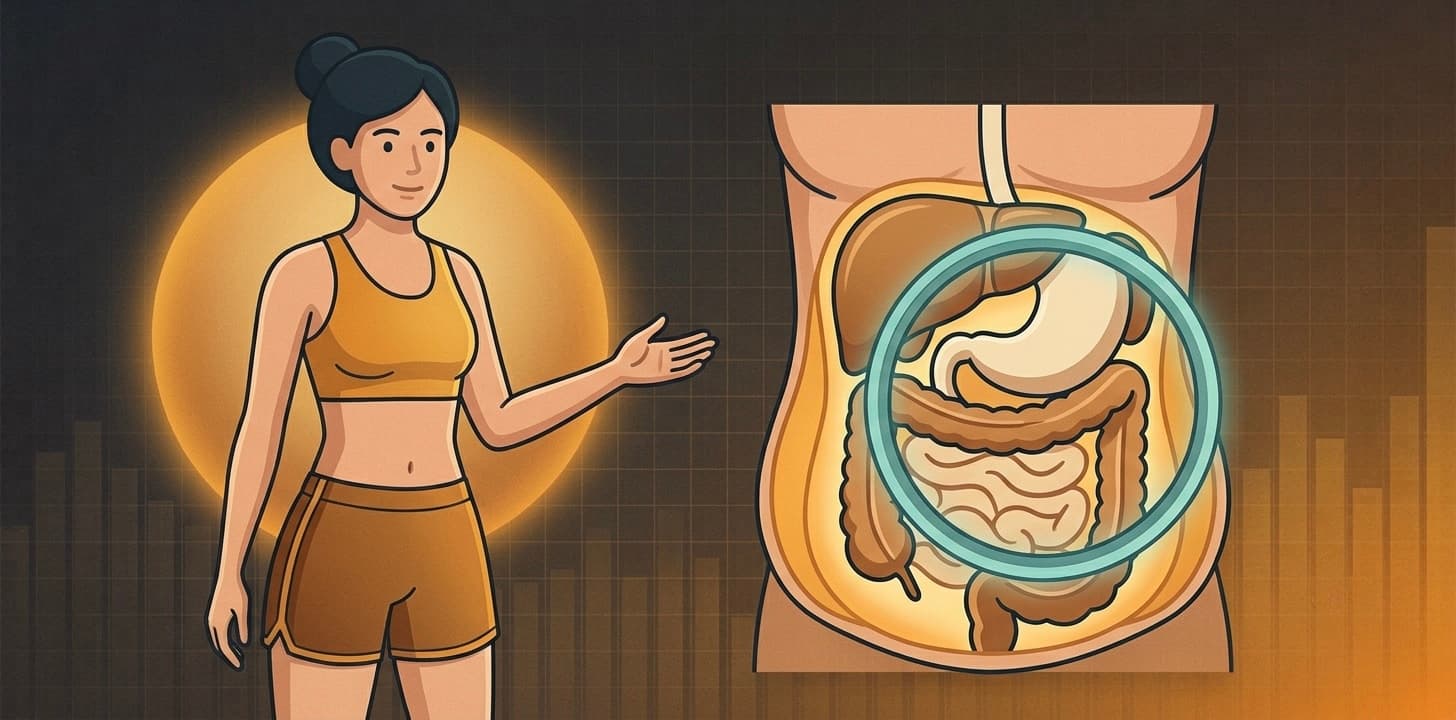
Visceral fat is adipose tissue stored within the peritoneal cavity, the space inside your abdomen that houses your organs. Unlike subcutaneous fat, which sits between your skin and muscle wall, visceral fat is located behind the abdominal muscles and around the organs themselves.
You cannot see it directly. You cannot pinch it. A person with a hard, distended belly (as opposed to soft, pinchable belly fat) likely has significant visceral fat deposits pushing the abdominal wall outward from behind the muscle layer.
Everyone carries some visceral fat. It cushions and insulates the organs and serves as a short-term energy reserve. The problem begins when visceral fat accumulates beyond physiological necessity, typically when total body fat rises, physical activity drops, diet quality declines, or some combination of all three.
Why Visceral Fat Is Dangerous
Subcutaneous fat is largely a passive storage depot. Visceral fat is an active endocrine organ. It produces and secretes hormones, cytokines, and other bioactive molecules that directly affect your metabolic health.
1. Inflammatory Cytokine Production
Visceral fat secretes pro-inflammatory molecules including tumor necrosis factor-alpha (TNF-alpha), interleukin-6 (IL-6), and monocyte chemoattractant protein-1 (MCP-1). These cytokines promote chronic low-grade inflammation throughout the body, a state that underpins atherosclerosis, type 2 diabetes, and certain cancers.
A 2007 study in the journal Diabetes found that visceral fat produces 2-3 times more IL-6 than subcutaneous fat on a per-gram basis. Since IL-6 drives C-reactive protein (CRP) production in the liver (a primary biomarker of systemic inflammation), visceral fat directly raises inflammatory markers that clinicians use to assess cardiovascular risk.
2. Insulin Resistance
Visceral fat produces resistin, a hormone that impairs insulin receptor sensitivity in muscle and liver cells. It also releases excess free fatty acids directly into the portal vein, the blood vessel that delivers blood from the intestines to the liver. This flood of free fatty acids overwhelms the liver's lipid metabolism, promotes hepatic insulin resistance, and drives the development of non-alcoholic fatty liver disease (NAFLD).
The cascade looks like this:
Visceral fat accumulation → excess free fatty acids to liver → hepatic insulin resistance → increased glucose output → systemic hyperinsulinemia → further fat storage → worsening insulin resistance
This is a self-reinforcing loop. The more visceral fat you accumulate, the more insulin resistant you become, and the more your body preferentially stores new fat as visceral fat.
3. Cardiovascular Disease
The MESA (Multi-Ethnic Study of Atherosclerosis) study, following 6,814 participants over 10 years, found that CT-measured visceral fat was independently associated with cardiovascular events even after adjusting for BMI, total body fat, and traditional risk factors. For every standard deviation increase in visceral fat, the risk of cardiovascular events increased by 22%.
Visceral fat promotes cardiovascular disease through multiple pathways: systemic inflammation damages arterial endothelium, dyslipidemia (elevated triglycerides, reduced HDL) promotes plaque formation, and hypertension from insulin resistance increases cardiac workload.
4. Hormonal Disruption
In men, excess visceral fat increases aromatase enzyme activity, which converts testosterone to estradiol (a form of estrogen). This can reduce testosterone levels by 10-40% in men with significant visceral obesity, impairing muscle building, mood, libido, and metabolic rate.
In women, visceral fat is associated with elevated androgen levels and can contribute to polycystic ovary syndrome (PCOS) symptoms, menstrual irregularity, and infertility.
How to Measure Visceral Fat
Clinical Methods
CT scan (computed tomography): The research gold standard. A single CT slice at the L4-L5 vertebral level quantifies visceral fat area in cm2. Visceral fat area above 100 cm2 is the established threshold for elevated metabolic risk. However, CT involves significant radiation and is expensive. It is used primarily in research.
MRI (magnetic resonance imaging): Equivalent accuracy to CT without radiation exposure. Expensive and not widely accessible for routine body composition assessment.
DEXA scan: Modern DEXA systems include algorithms that estimate visceral fat in the android region. While not as precise as CT or MRI, DEXA-derived VAT estimates correlate strongly with CT measurements (r = 0.93) and are far more accessible. A DEXA scan every 8-12 weeks can track visceral fat trends effectively.
Proxy Measurements
Waist circumference: The simplest and most practical proxy. In men, a waist circumference above 102 cm (40 inches) is strongly associated with excess visceral fat. In women, the threshold is 88 cm (34.5 inches). See the waist-to-hip ratio guide for measurement protocol.
Waist-to-hip ratio (WHR): WHR above 0.90 in men or 0.85 in women indicates disproportionate abdominal fat storage, which correlates with elevated visceral fat.
BIA devices: Some consumer BIA devices (smart scales) report a "visceral fat rating" or "visceral fat level." These are rough estimates based on algorithms using impedance data, age, sex, and weight. They are not accurate in absolute terms but can track trends if used consistently.
Who Is at Risk for Excess Visceral Fat?
Several factors increase visceral fat accumulation:
- Sedentary lifestyle. Physical inactivity is one of the strongest predictors of visceral fat accumulation, independent of total calorie intake.
- High refined carbohydrate and sugar intake. Fructose, in particular, is preferentially metabolized by the liver and promotes visceral fat deposition when consumed in excess.
- Alcohol consumption. Chronic alcohol intake is strongly associated with visceral fat storage. The "beer belly" phenomenon is driven by visceral, not subcutaneous, fat.
- Chronic stress. Cortisol, the primary stress hormone, promotes visceral fat deposition. Studies show that individuals with chronically elevated cortisol store 2-5 times more visceral fat than those with normal cortisol levels.
- Poor sleep. Sleeping fewer than 6 hours per night is associated with a 32% increase in visceral fat accumulation over 5 years, per a 2022 study published in the Journal of the American College of Cardiology.
- Genetics. Some individuals are genetically predisposed to store fat viscerally rather than subcutaneously. South Asian and East Asian populations tend to accumulate more visceral fat at lower total body fat percentages.
- Age. Visceral fat tends to increase with age, especially after age 40, due to declining hormone levels and reduced physical activity.
- Male sex. Men accumulate visceral fat more readily than premenopausal women, who tend to store fat subcutaneously in the gynoid pattern. After menopause, women's fat distribution shifts toward the android pattern.
How to Reduce Visceral Fat
The good news: visceral fat is highly responsive to intervention. It is often the first fat depot mobilized during a caloric deficit, meaning health improvements from visceral fat reduction precede visible changes in subcutaneous fat.
1. Caloric Deficit
A sustained caloric deficit of 300-500 calories below TDEE produces consistent visceral fat loss. Research shows that visceral fat decreases proportionally more than subcutaneous fat during the early stages of weight loss. In a 2009 study by Chaston and Dixon, subjects lost 5-10% of their total body weight and experienced disproportionate visceral fat reduction: visceral fat decreased by 20-30% even when total fat mass only decreased by 10-15%.
2. Aerobic Exercise
Aerobic exercise is the single most effective exercise modality for visceral fat reduction. A landmark 2011 study by Slentz et al. compared aerobic exercise, resistance training, and the combination in overweight adults:
- Aerobic exercise alone reduced visceral fat by 8.1%
- Resistance training alone had no significant effect on visceral fat
- Combined aerobic + resistance reduced visceral fat by 7.4%
The dose that matters: 150-300 minutes per week of moderate-intensity aerobic activity (brisk walking, cycling, swimming) or 75-150 minutes of vigorous activity (running, rowing, HIIT).
3. Resistance Training
While resistance training alone does not significantly reduce visceral fat, it is essential for maintaining lean mass during fat loss and for long-term metabolic health. Muscle tissue increases resting metabolic rate and improves insulin sensitivity, both of which indirectly support visceral fat reduction over time.
Combine both modalities: 3-4 resistance training sessions plus 2-3 aerobic sessions per week.
4. Dietary Strategies
- Protein: High protein intake (0.8-1.0 g/lb body weight) preserves lean mass during a deficit and has a higher thermic effect than carbs or fat.
- Fiber: Soluble fiber intake is inversely associated with visceral fat. A 2012 study found that for every 10 g increase in daily soluble fiber, visceral fat accumulation decreased by 3.7% over 5 years. Target 25-35 g of total fiber daily.
- Reduce added sugars. Excess sugar, especially fructose from sweetened beverages, promotes visceral fat deposition. Eliminating sugar-sweetened drinks is one of the highest-impact dietary changes you can make.
- Moderate alcohol. Chronic alcohol consumption is strongly associated with visceral fat. Reducing or eliminating alcohol consistently reduces waist circumference and visceral fat markers.
- Mediterranean-style eating patterns. Diets rich in olive oil, vegetables, legumes, fish, and whole grains are associated with lower visceral fat, likely through combined effects of fiber, anti-inflammatory polyphenols, and omega-3 fatty acids.
5. Lifestyle Factors
- Sleep 7-9 hours per night. Sleep deprivation increases cortisol and ghrelin while decreasing leptin, creating a hormonal environment that promotes visceral fat storage.
- Manage stress. Chronic psychological stress elevates cortisol, which directly promotes visceral fat deposition. Meditation, therapy, and lifestyle adjustments that reduce chronic stress have been shown to reduce cortisol and modestly reduce visceral fat.
Monitoring Your Progress
Since visceral fat is invisible from the outside, you need proxy measurements:
- Waist circumference: monthly. A decreasing waist is the most practical indicator of visceral fat loss.
- WHR: monthly. Should decrease as visceral fat drops.
- DEXA scan: every 8-12 weeks if accessible. Provides the most accurate non-research visceral fat measurement.
- Blood markers: every 3-6 months. Fasting glucose, insulin, triglycerides, HDL cholesterol, and CRP all improve as visceral fat decreases. These are the clinical confirmation that your metabolic health is improving.
Visceral fat is a problem you can measure, target, and solve. It responds to the fundamentals: eat at a moderate deficit, move consistently, prioritize sleep, and manage stress. The health benefits are profound and appear well before your physique changes visibly.