The Skinny Fat Solution: Fix Your Body Composition
10 min read · May 2025 · by Manikanta Sirumalla
The Skinny Fat Solution: Fix Your Body Composition
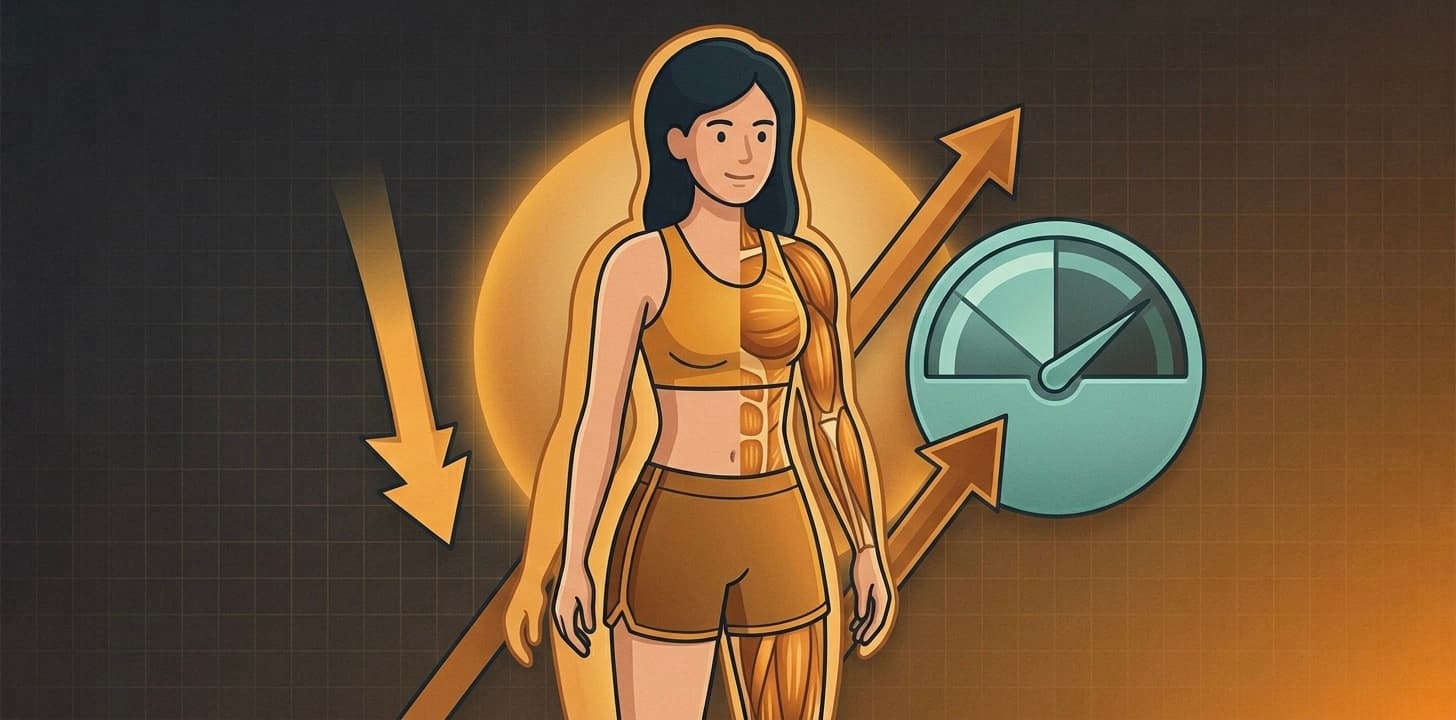
You step on the scale and the number looks fine. Your BMI is in the "normal" range. But you have no visible muscle definition, your midsection is soft, and you look worse in a t-shirt than your weight would suggest. This is the "skinny fat" phenotype, clinically known as normal weight obesity, and it is one of the most frustrating body composition states to be in.
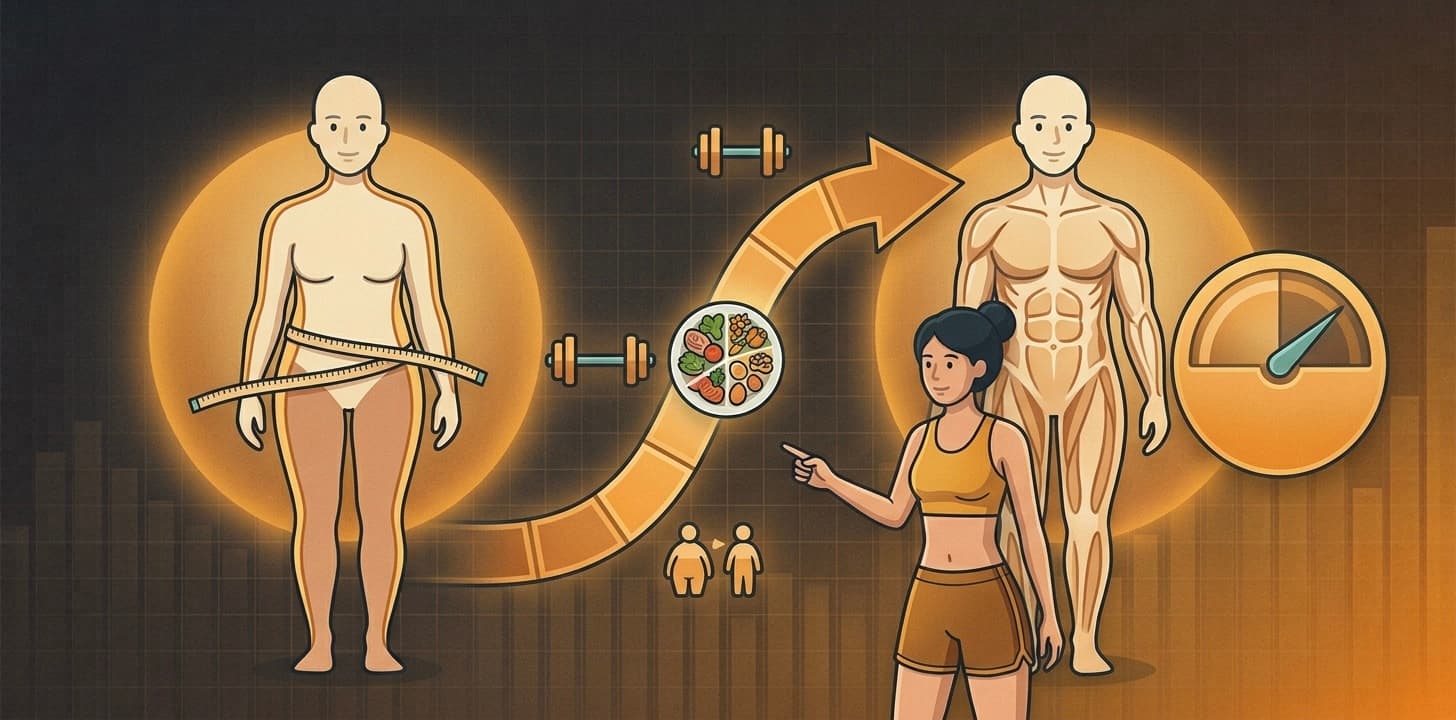
The good news: it is entirely fixable. The fix requires understanding why it happened, making the right strategic decisions about cutting versus bulking, and following a specific training and nutrition protocol. The bad news: the standard advice, "just eat less" or "just lift weights", is incomplete and can actually make things worse if applied incorrectly.
What "Skinny Fat" Actually Means
The skinny fat phenotype is characterized by:
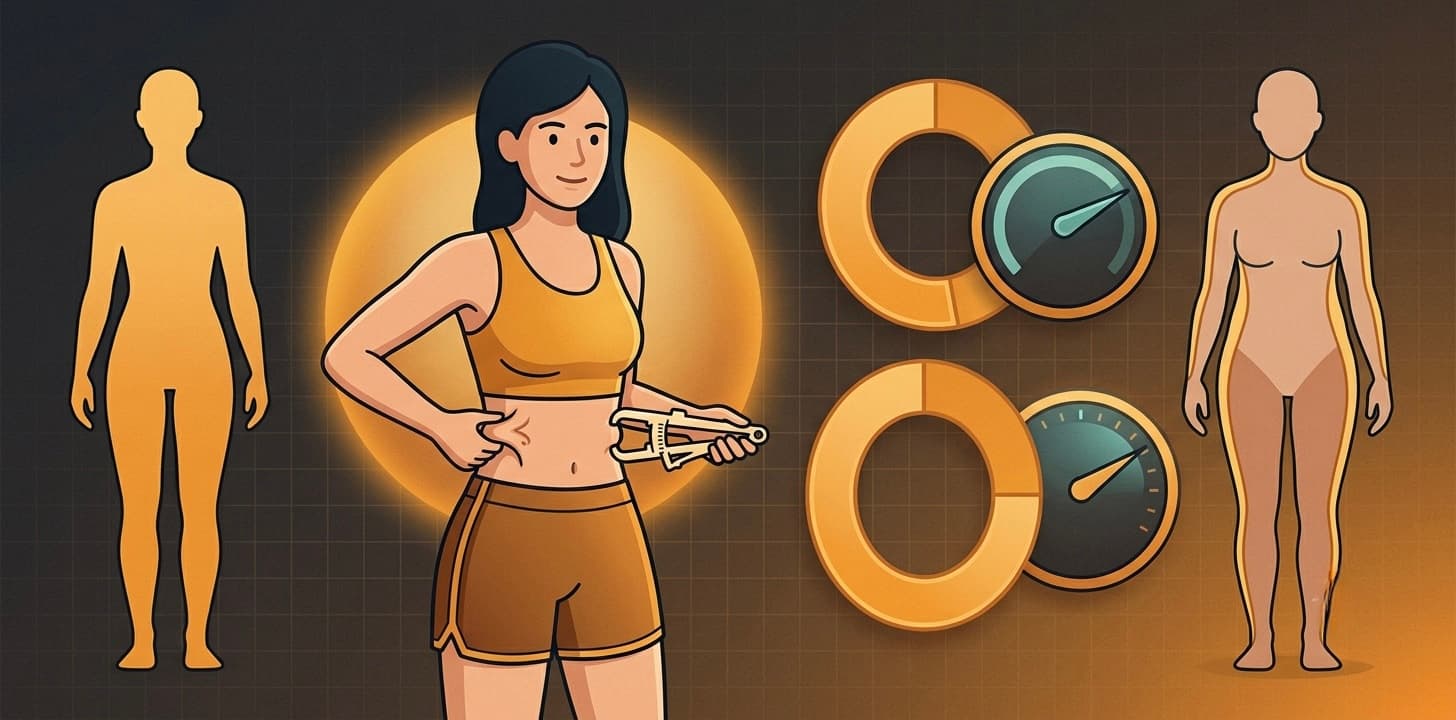
- Normal BMI (18.5-24.9) but elevated body fat percentage, typically above 20% in men or above 30% in women
- Low muscle mass relative to frame size (low fat-free mass index)
- Minimal visible muscle definition despite not being overweight
- Soft, undefined midsection with disproportionate abdominal fat storage
In clinical terms, this is called "normal weight obesity" (NWO) or "metabolically obese, normal weight" (MONW). A 2008 study by Romero-Corral et al. found that approximately 30% of people with a normal BMI had body fat percentages that classified them as obese. These individuals had significantly higher rates of metabolic syndrome, cardiovascular disease markers, and insulin resistance than normal-weight individuals with healthy body fat levels.
The metabolic risks are real. A 2014 study in the European Heart Journal found that normal-weight individuals with central adiposity (the skinny fat pattern) had the highest mortality risk of any BMI/fat distribution combination, higher even than people classified as obese by BMI.
Why It Happens
The skinny fat phenotype is not random. It results from a predictable combination of factors:
1. Sedentary Lifestyle Without Resistance Training
The human body adapts to the demands placed on it. If you sit at a desk all day and your most demanding physical activity is walking to your car, your body has no reason to maintain significant muscle mass. Muscle is metabolically expensive: it costs your body 6-10 calories per pound per day just to maintain. Without a stimulus that signals "this muscle is needed," your body gradually sheds it.
Sarcopenia, age-related muscle loss, begins as early as age 25-30 and accelerates if unopposed by resistance training. You lose approximately 3-8% of your muscle mass per decade without intervention. By age 40, a sedentary person may have lost 10-20% of their peak muscle mass.
2. Inadequate Protein Intake
The average sedentary adult in Western countries consumes about 0.5-0.7 g of protein per pound of body weight, sufficient for survival but inadequate for maintaining optimal muscle mass, especially when combined with no resistance training. Without both the anabolic stimulus (training) and the raw material (protein), muscle atrophy is inevitable.
3. Chronic Cardio Without Resistance Training
People who do only cardiovascular exercise (running, cycling, elliptical) without resistance training often develop a skinny fat physique. Cardio burns calories and can reduce body fat, but it provides minimal stimulus for muscle growth. In a caloric deficit with only cardio, the body will catabolize both fat and muscle for energy. The result is weight loss without composition improvement.
4. Repeated Crash Dieting
Aggressive caloric restriction without adequate protein or resistance training preferentially burns muscle. Each crash diet cycle costs lean tissue. When the person inevitably regains weight (which happens in over 80% of cases), the regained weight is predominantly fat. After several cycles, the person weighs the same but has significantly more fat and less muscle: the textbook skinny fat trajectory.
The Big Decision: Cut First or Build First?
This is the most debated question in the skinny fat community, and the answer depends on your starting body fat percentage.
If Your Body Fat Is Above 20% (Men) or 30% (Women): Start With a Mild Cut
At higher body fat percentages, your body is in a poor position for nutrient partitioning. Excess calories are more likely to be stored as fat than directed toward muscle growth. A moderate deficit (15-20% below TDEE) for 8-12 weeks will:
- Reduce body fat to a more favorable range for muscle building
- Improve insulin sensitivity, which enhances nutrient partitioning
- Trigger body recomposition since you are a beginner (you will gain some muscle even in a deficit)
During this cut:
- Protein: 1.0-1.2 g per pound of body weight (higher than standard to protect lean mass and support muscle growth)
- Deficit: 15-20% below TDEE (no more aggressive, you need calories to support the training stimulus)
- Duration: 8-12 weeks, then transition to a lean bulk
If Your Body Fat Is Below 20% (Men) or 28% (Women): Start With a Lean Bulk
If you are already relatively lean but lack muscle, cutting further will just make you smaller without improving your physique. You need to add tissue. A lean surplus of 10-15% above TDEE (approximately 200-350 extra calories per day) provides the raw materials for muscle growth.
During this bulk:
- Protein: 0.8-1.0 g per pound of body weight
- Surplus: 10-15% above TDEE
- Duration: 12-16 weeks, monitoring body fat with waist measurements every 2 weeks
- End when body fat reaches 18-20% (men) or 28-30% (women)
The Recomp Option
If your body fat is in the middle range (16-20% for men, 25-30% for women), a body recomposition at maintenance calories is a viable option. As a beginner lifter, you can simultaneously gain muscle and lose fat at maintenance calories for 3-6 months before needing to commit to a dedicated bulk or cut. This approach is slower but avoids the psychological discomfort of gaining fat (bulking) or feeling smaller (cutting).
The Training Protocol
Regardless of whether you are cutting, bulking, or recomping, the training protocol is the same. Resistance training is the non-negotiable foundation.
Program Structure
Frequency: 3-4 days per week of full-body or upper/lower resistance training. Full-body programs work exceptionally well for beginners because they hit each muscle group 2-3 times per week, maximizing the frequency of muscle protein synthesis stimulation.
Exercise Selection: Build your program around compound movements that recruit multiple large muscle groups:
| Exercise | Primary Muscles | Why It Matters |
|---|---|---|
| Barbell or dumbbell squat | Quads, glutes, core | Largest muscle groups, highest hormonal response |
| Deadlift or Romanian deadlift | Posterior chain, back | Builds the entire backside of the body |
| Bench press or push-ups | Chest, shoulders, triceps | Upper body pressing foundation |
| Barbell or dumbbell row | Back, biceps | Builds the lats and upper back for visual width |
| Overhead press | Shoulders, triceps | Creates upper body structure |
| Pull-ups or lat pulldown | Back, biceps | Vertical pulling for back development |
Volume: 8-12 working sets per muscle group per week to start. As a beginner, you do not need, and cannot recover from, high volumes. Increase volume by 1-2 sets per muscle group every 2-3 weeks as your recovery capacity develops.
Intensity: Every working set should be taken to within 2-3 reps of failure (RPE 7-8). Sets that end at RPE 5-6 are warm-up sets, not working sets. The muscle needs to be challenged close to its limit to trigger the adaptive response.
Progressive overload: Add weight, reps, or sets each week. Without progressive overload, the body has no reason to build new muscle. A beginner can typically add 2.5-5 lbs to upper body lifts and 5-10 lbs to lower body lifts every 1-2 weeks for the first several months.
Cardio
Include 2-3 sessions of 20-30 minutes of moderate cardio per week for cardiovascular health and calorie expenditure. Do not make cardio the centerpiece of your program. Walking 8,000-10,000 steps per day is an excellent baseline that supports fat loss without impeding muscle recovery.
The Nutrition Protocol
Protein Timing and Distribution
Spread your daily protein target across 3-5 meals with at least 25-40 g per meal. This ensures you consistently reach the leucine threshold (2.5-3 g per meal) needed to stimulate muscle protein synthesis.
Good protein sources: chicken breast (31 g per 4 oz), Greek yogurt (17 g per cup), eggs (6 g each), whey protein (25-30 g per scoop), lean beef (28 g per 4 oz), fish (26 g per 4 oz), cottage cheese (14 g per half cup).
Carbohydrate and Fat Balance
- Carbs: 1.5-2.5 g per pound of body weight, prioritized around training sessions
- Fat: 0.3-0.4 g per pound of body weight to support hormonal function
Do not fear carbohydrates. They fuel your training sessions and support recovery. Depleted glycogen stores impair workout performance, which directly reduces the training stimulus driving your body composition change.
Supplements That Actually Help
The list of evidence-based supplements for a skinny fat transformation is short:
- Creatine monohydrate: 5 g daily. The most extensively studied supplement in sports nutrition. Increases intramuscular creatine stores, improving performance on sets of 3-12 reps by 5-10%. Supports lean mass gains.
- Whey protein: as needed to hit daily protein targets. Not magical, just convenient.
- Vitamin D: 2,000-5,000 IU daily if levels are suboptimal (below 30 ng/mL). Vitamin D deficiency is common and can impair muscle protein synthesis and recovery.
Everything else is marginal or unsupported by evidence.
Realistic Timeline
A skinny fat transformation is not a 30-day challenge. It is a 6-18 month process, depending on starting point and consistency.
| Timeline | What to Expect |
|---|---|
| Month 1-2 | Neuromuscular adaptation. Strength increases rapidly but mostly from motor learning. Body composition changes are minimal but measurable. |
| Month 3-4 | Visible muscle development begins. Friends and family start noticing. Waist circumference decreasing, shoulders and arms filling out. |
| Month 5-8 | Significant body composition change. If you started overweight, you may weigh the same but look dramatically different. Strength gains continue. |
| Month 9-12 | The transformation is unmistakable. You have built a foundation of muscle that changes how clothing fits and how you carry yourself. |
| Year 2+ | Refinement phase. Continued muscle growth, targeted development of lagging areas, and fine-tuning body fat through bulk/cut cycles. |
The Mindset Shift
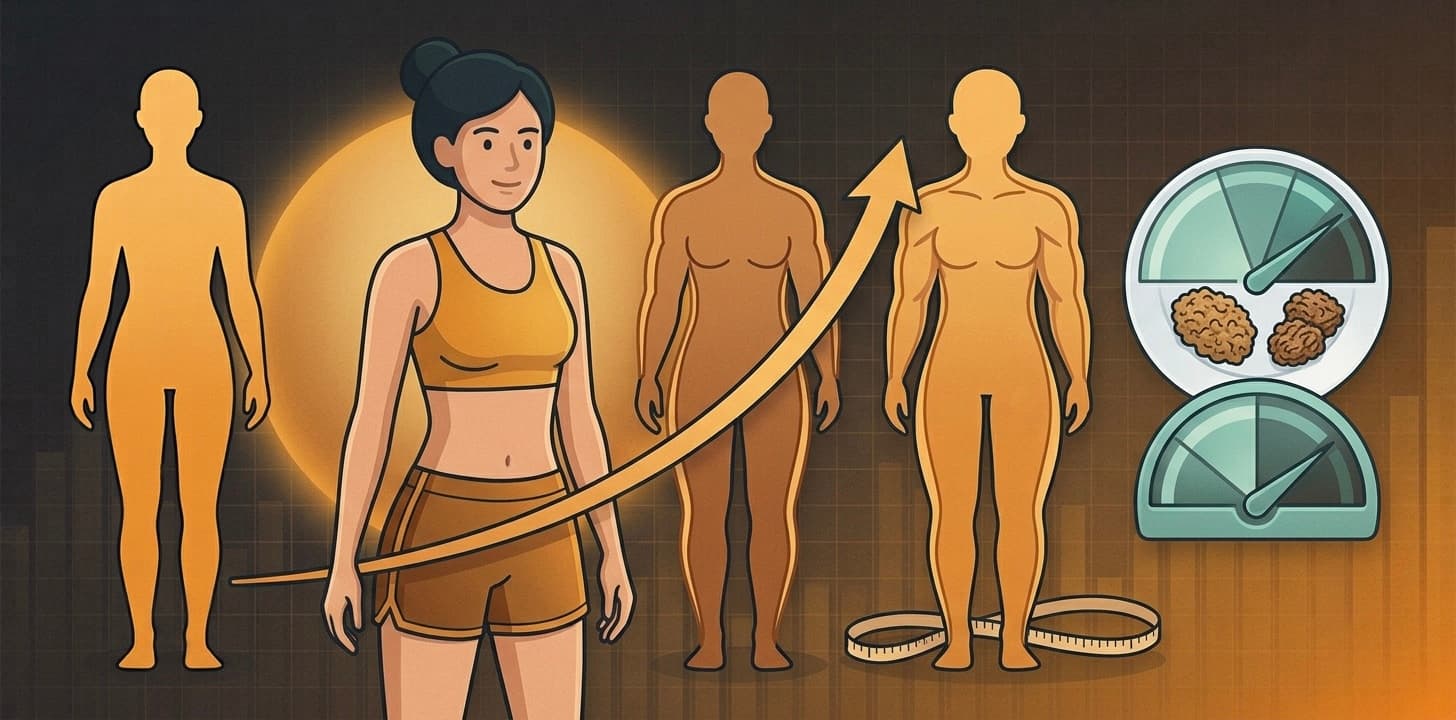
If you are skinny fat, you need to redefine your relationship with the scale. Your weight might stay the same, or even go up, as you improve. That is not failure. That is your body composition shifting in the right direction. Track body fat percentage, waist circumference, progress photos, and strength gains. These metrics tell the truth that your scale cannot.