DEXA Scan Guide: The Gold Standard for Body Composition
9 min read · May 2025 · by Manikanta Sirumalla
DEXA Scan Guide: The Gold Standard for Body Composition
If you want the most accurate, detailed picture of what your body is made of (without submerging yourself in a water tank or stepping into a research laboratory) a DEXA scan is the answer. It is the clinical gold standard for body composition assessment in non-research settings, and it gives you data that no other commercially available method can match.
What DEXA Actually Is
DEXA stands for Dual-Energy X-ray Absorptiometry (sometimes written as DXA). It was originally developed to measure bone mineral density for osteoporosis screening, but researchers quickly realized the same technology could separate soft tissue into fat and lean compartments with remarkable precision.
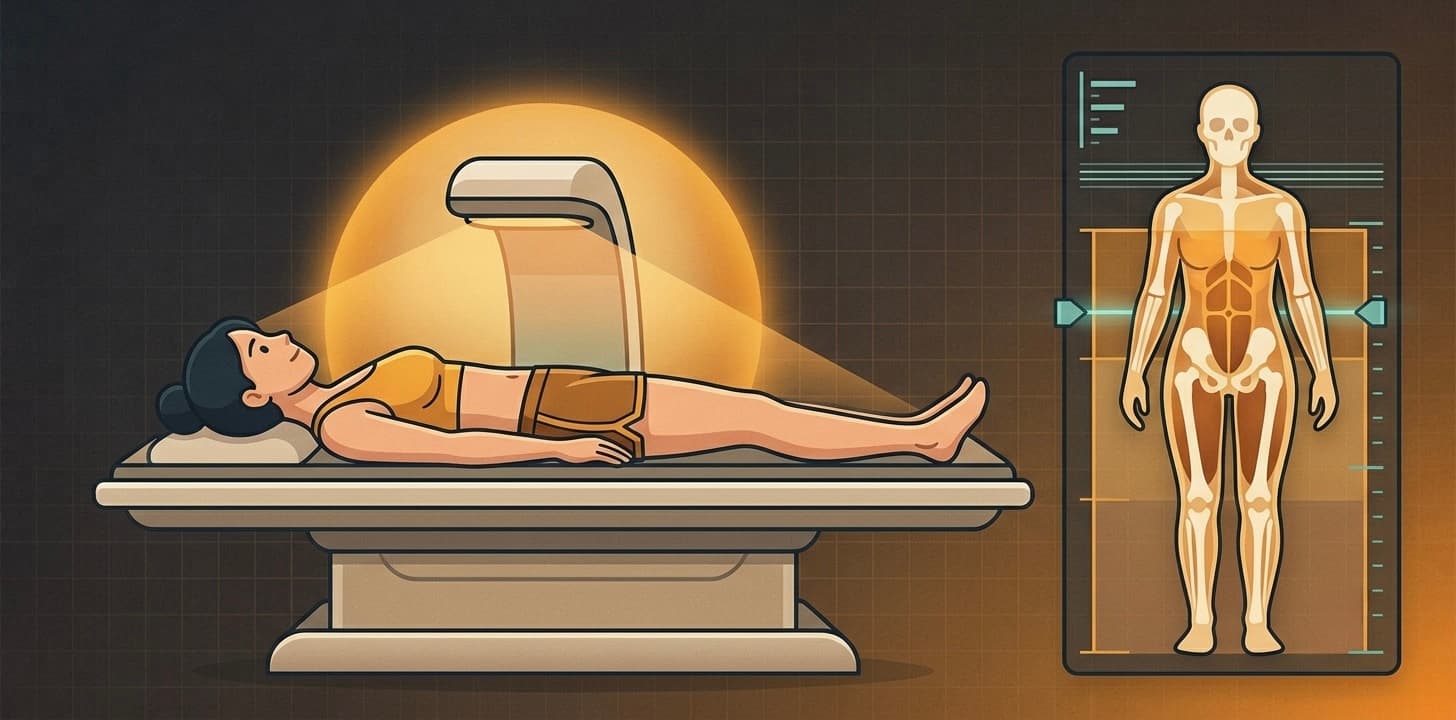
The technology uses two X-ray beams at different energy levels, typically 40 keV and 70-100 keV. As these beams pass through your body, different tissues attenuate (absorb) the energy differently. Bone, which is dense and mineral-rich, attenuates both beams significantly. Lean tissue (muscle, organs, water) attenuates moderately. Fat tissue attenuates the least. By measuring the ratio of attenuation between the two energy levels at every pixel across your body, the software constructs a complete composition map.
The scan itself takes 6-15 minutes. You lie still on a padded table while the scanning arm passes over your body from head to toe. The radiation dose is extremely low: approximately 0.001 mSv per scan, which is about 1/100th of a chest X-ray and less than you receive from natural background radiation in a single day.
What a DEXA Scan Measures
A full DEXA body composition report includes several key metrics:
Total Body Composition
- Total body fat percentage: the proportion of your total mass that is fat tissue
- Total fat mass: the absolute weight of fat in your body (in lbs or kg)
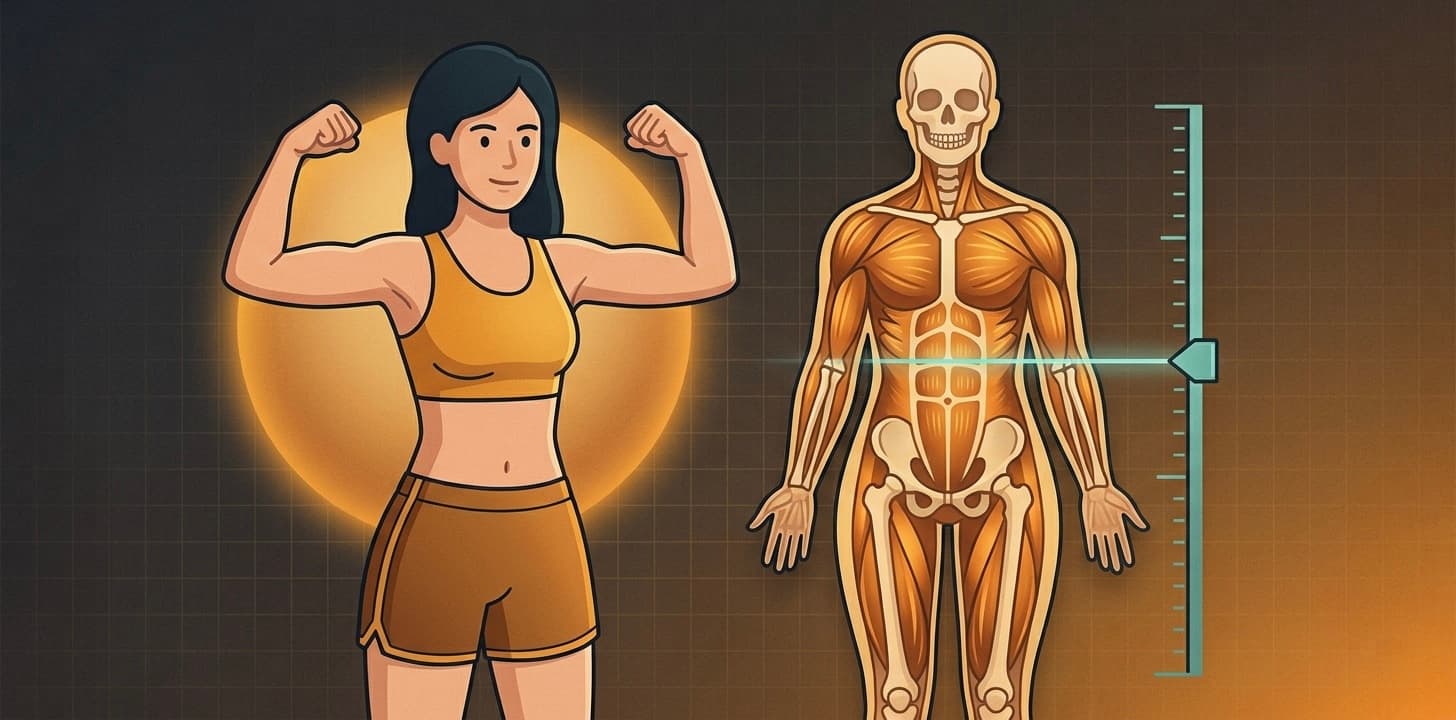
- Total lean mass: the weight of everything that is not fat or bone (muscle, organs, water, connective tissue)
- Bone mineral content (BMC): the weight of your mineral bone mass
- Bone mineral density (BMD): the density of your bones, expressed as g/cm2 and compared to age-matched norms via a T-score and Z-score
Regional Body Composition
This is where DEXA truly differentiates itself. The scan divides your body into anatomical regions, typically arms (left and right), legs (left and right), trunk, android region (waist area), and gynoid region (hip area), and reports fat mass, lean mass, and bone mineral content for each.
This regional data reveals:
- Asymmetries. A significant lean mass difference between left and right limbs may indicate a strength imbalance or incomplete rehabilitation from injury.
- Fat distribution patterns. Android (abdominal) fat is strongly correlated with cardiovascular and metabolic disease risk. Gynoid (hip/thigh) fat is metabolically less harmful.
- Android-to-Gynoid (A/G) ratio. This ratio is one of the most clinically useful metrics on the report. An A/G ratio above 1.0 indicates disproportionate abdominal fat storage and is associated with elevated risk for metabolic syndrome, type 2 diabetes, and cardiovascular disease.
Visceral Adipose Tissue (VAT) Estimation
Many modern DEXA systems (particularly Hologic and GE Lunar models manufactured after 2010) include software that estimates visceral adipose tissue in the android region. This is the deep abdominal fat surrounding your organs, the most metabolically dangerous type of fat. DEXA-derived VAT estimates correlate well with CT-measured visceral fat (r = 0.93 in validation studies), making this a valuable clinical metric.
Accuracy and Precision
Two concepts matter when evaluating any measurement tool: accuracy (how close to the true value) and precision (how repeatable the measurement is).
Accuracy
DEXA's accuracy for total body fat percentage is approximately +/- 1-2%. It tends to slightly overestimate body fat in lean individuals and slightly underestimate it in obese individuals. Compared to the four-compartment model (4C model), the research gold standard that separately measures fat, water, mineral, and protein, DEXA agrees within 1-3% body fat in most validation studies.
Important caveat: different DEXA manufacturers use different algorithms. Hologic systems and GE Lunar systems produce systematically different body fat readings, often 2-4% apart. A Hologic scan might read 18% body fat while a GE Lunar scan of the same person reads 15%. Neither is "wrong": they use different reference databases and attenuation models. This is why you must always compare your results to previous scans done on the same machine.
Precision
DEXA's precision, its ability to detect real changes between scans, is its strongest attribute. The coefficient of variation (CV) for total body fat percentage is 1-2%, meaning that changes of 2% or greater between scans almost certainly reflect real changes rather than measurement noise.
For lean mass, the CV is approximately 1-1.5%. For bone mineral density, it is 1-2%.
Factors That Affect Results
- Hydration status. DEXA categorizes all non-fat, non-bone soft tissue as "lean mass," including water. Being dehydrated can artificially lower lean mass and raise body fat percentage by 1-2%. Being overhydrated does the opposite.
- Recent exercise. Intense exercise causes fluid shifts and glycogen depletion that can alter readings by 1-2%. Avoid training within 12-24 hours of a scan.
- Food and fluid intake. Eat and drink normally in the days before, but get scanned in a fasted state (at least 4 hours without food) for best consistency.
- Time of day. Morning scans tend to produce lower body weight and slightly different hydration profiles than afternoon scans. Be consistent.
- Clothing. Wear lightweight, metal-free clothing. Metal (zippers, underwire, jewelry) creates artifacts on the scan.
How to Get the Most From Your Scan
Pre-Scan Protocol
For maximally consistent results:
- Fast for at least 4 hours before the scan
- Stay normally hydrated (do not overdrink or dehydrate)
- Avoid exercise for 12-24 hours beforehand
- Wear the same lightweight clothing each time
- Use the same facility and scanner for all repeat scans
- Scan at the same time of day
Interpreting Your Results
When you receive your DEXA report, focus on these numbers:
- Total body fat percentage: your headline metric. Compare to healthy ranges.
- A/G ratio: below 1.0 is favorable. Above 1.0 suggests disproportionate android fat.
- VAT mass: if available. Lower is better. VAT above 100 cm2 (or the equivalent mass threshold on your system) is associated with elevated cardiometabolic risk.
- Lean mass index (LMI): lean mass divided by height squared. Useful for assessing muscularity relative to frame size.
- Regional symmetry: compare left and right limb lean mass. Differences greater than 5-10% may warrant targeted training.
DEXA vs. Other Body Composition Methods
DEXA vs. Bioelectrical Impedance Analysis (BIA)
BIA sends a small electrical current through the body and measures resistance. It is fast, cheap, and available in consumer smart scales. However, BIA accuracy is +/- 3-8% body fat, heavily influenced by hydration status, and algorithms vary wildly between manufacturers. DEXA is more accurate, more precise, and provides regional data that BIA cannot.
When to use BIA instead: For weekly trend tracking at home. BIA's absolute accuracy is poor, but its trend data is useful if you test under consistent conditions.
DEXA vs. Skinfold Calipers
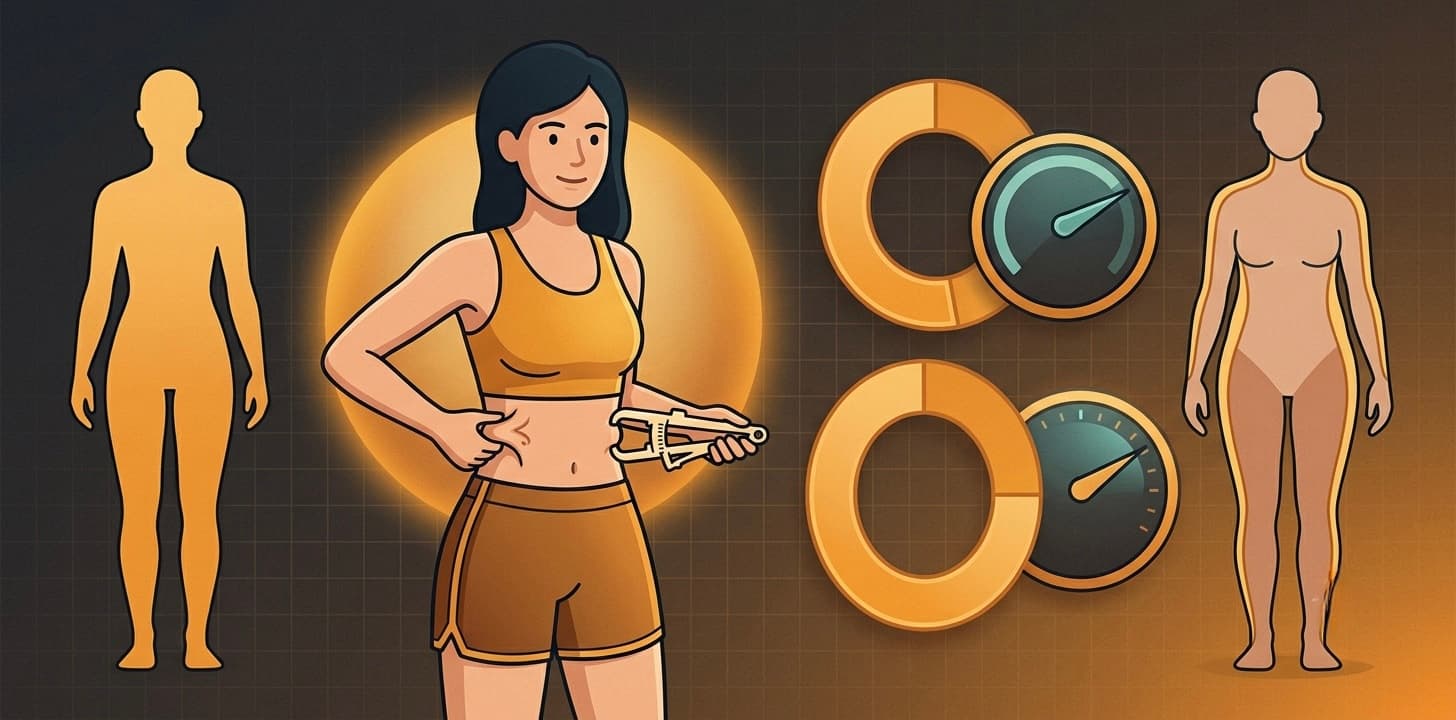
Calipers measure subcutaneous fat at specific sites and use population-specific equations to estimate total body fat. Accuracy is +/- 3-5% and is highly operator-dependent. Calipers only measure subcutaneous fat: they miss visceral fat entirely. DEXA measures all fat depots and provides regional breakdowns.
When to use calipers instead: For frequent progress checks between DEXA scans. A skilled technician can provide useful trend data every 2-4 weeks at minimal cost.
DEXA vs. Hydrostatic (Underwater) Weighing
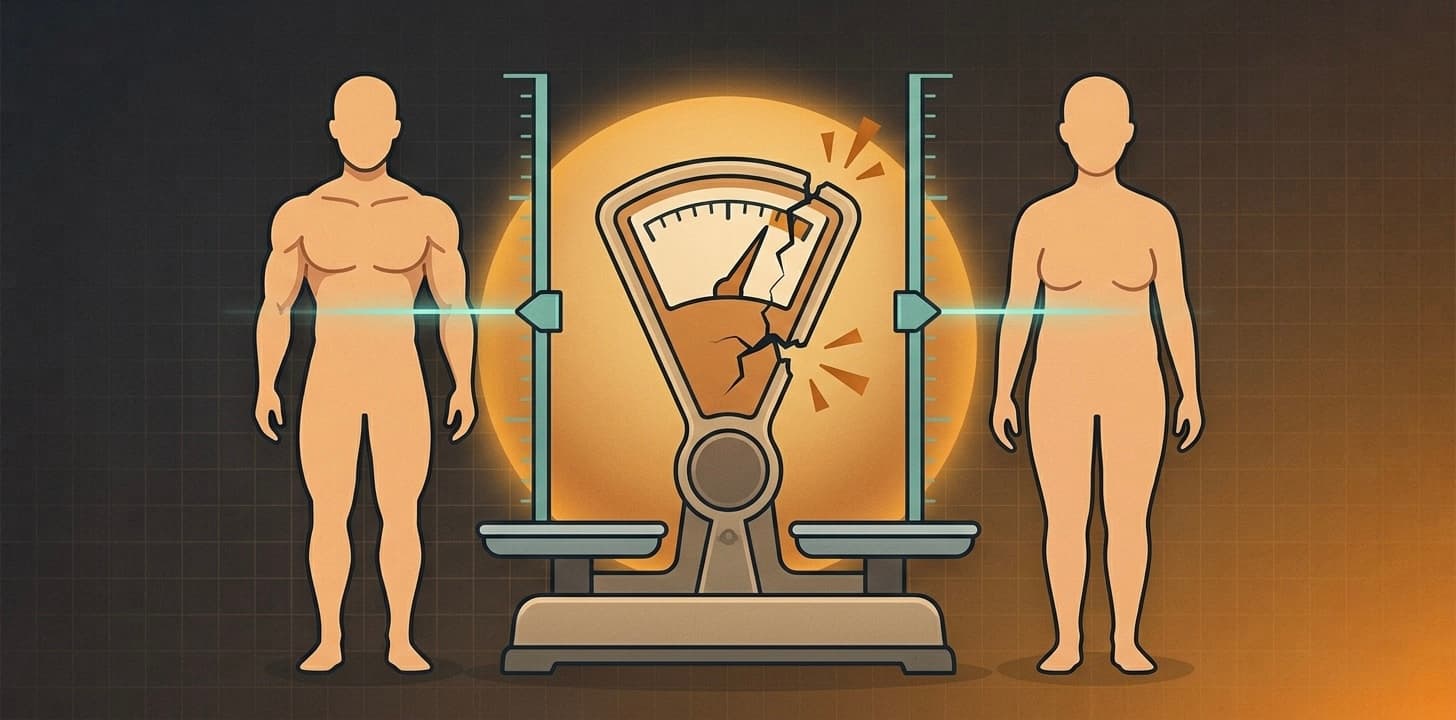
Hydrostatic weighing was the previous gold standard. It estimates body density by comparing your weight on land to your weight submerged in water. Body fat is then calculated from body density using the Siri equation. Accuracy is +/- 2-3% body fat.
The limitations: it requires complete submersion and full exhalation (which many people find uncomfortable), it provides no regional data, it cannot distinguish bone from lean tissue, and it assumes a fixed bone mineral density, which varies significantly between individuals.
DEXA is superior in accuracy, comfort, and data richness. Hydrostatic weighing is largely obsolete for body composition assessment outside of research settings.
Comparison Summary
| Method | Accuracy | Precision | Regional Data | VAT Estimate | Cost |
|---|---|---|---|---|---|
| DEXA | +/- 1-2% | Excellent | Yes | Yes | $75-150 |
| BIA (clinical) | +/- 3-5% | Moderate | Limited | No | $50-100 |
| BIA (consumer) | +/- 4-8% | Low-Moderate | No | No | $20-200 |
| Calipers | +/- 3-5% | Operator-dependent | No | No | $10-30 |
| Hydrostatic | +/- 2-3% | Good | No | No | $75-150 |
How Often to Get Scanned
For most fitness-focused individuals, a DEXA scan every 8-12 weeks is optimal. Body composition changes meaningfully over months, not weeks. Scanning more frequently than every 6 weeks risks detecting noise rather than signal.
A reasonable schedule:
- Baseline scan at the start of a new training or nutrition program
- Follow-up scan 8-12 weeks later to assess initial response
- Periodic scans every 3-4 months during ongoing training
- Transition scans when switching between bulking, cutting, or maintenance phases
What DEXA Cannot Tell You
DEXA is powerful but not omniscient. It cannot distinguish between muscle tissue and organ tissue within the "lean mass" compartment. It cannot tell you muscle fiber type distribution. It does not measure intramuscular fat with high precision. And it provides a snapshot, a single point in time that must be contextualized within your training, nutrition, and lifestyle.
The value of DEXA is not in any single scan. It is in the longitudinal data: tracking how your body composition changes across months and years in response to the training and nutrition choices you make. That trend is what transforms raw data into actionable intelligence.