German Volume Training: The 10x10 Hypertrophy Method
9 min read · May 2025 · by Manikanta Sirumalla
German Volume Training: The 10x10 Hypertrophy Method
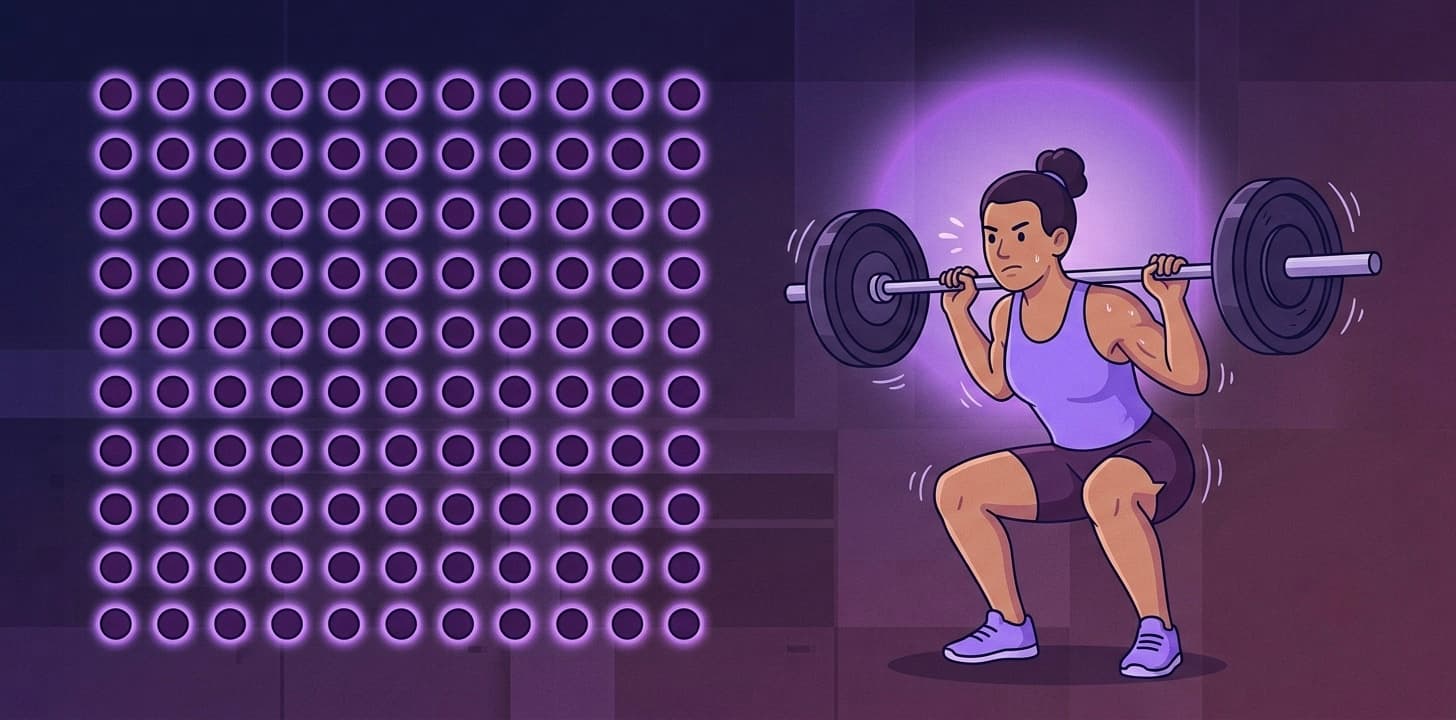
Ten sets. Ten reps. One exercise. Sixty seconds of rest. If that sounds like a recipe for suffering, you understand German Volume Training. GVT, also known as the 10x10 method, is one of the most brutally effective hypertrophy programs ever designed. It works by subjecting a single muscle group to an extreme volume of work in a compressed time frame, forcing the body to adapt through rapid muscle fiber growth.
This guide covers everything you need to know to run GVT correctly: where it came from, the science behind the method, how to program it, and critically, who should and should not attempt it.
Origins of German Volume Training
GVT traces its roots to 1970s Germany, where it was used by national weightlifting coaches during the off-season to help athletes move up a weight class. The method was popularized in North America by Canadian strength coach Charles Poliquin, who wrote extensively about it in the 1990s and credited it as one of the most effective mass-building protocols he had encountered.
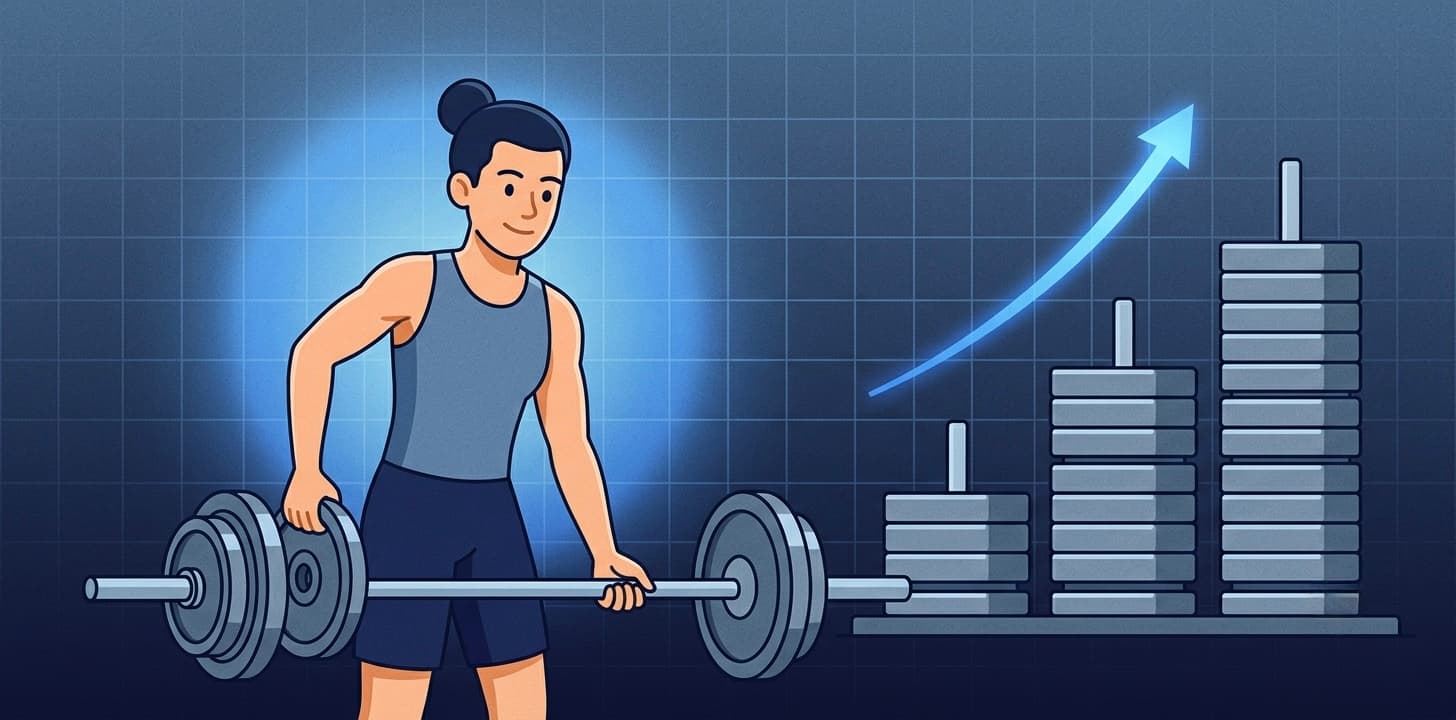
The original German approach was straightforward: pick one compound exercise for a muscle group, perform 10 sets of 10 reps with 60 seconds of rest between sets, using a load that is approximately 60% of your one-rep maximum. The weight stays the same across all ten sets. You will not complete all 10 reps on every set, and that is the point.
Poliquin refined the method by adding controlled tempo prescriptions (typically 4-0-2-0: four seconds eccentric, no pause at the bottom, two seconds concentric, no pause at the top) and structured accessory work to complement the main 10x10 movement.
How German Volume Training Works
The Physiological Mechanism
GVT works through three primary mechanisms:
Metabolic stress. The combination of high reps, short rest periods, and controlled tempo creates enormous metabolic byproduct accumulation (lactate, hydrogen ions, inorganic phosphate). This metabolic environment triggers an anabolic signaling cascade, including elevated growth hormone and IGF-1 release.
Mechanical tension under fatigue. By the seventh or eighth set, you are recruiting muscle fibers that would normally only activate under much heavier loads. Your fast-twitch fibers, which are the ones with the greatest growth potential, are forced to contribute because the slow-twitch fibers are exhausted.
Muscle damage. The high eccentric volume (100 controlled eccentric reps) creates significant microtrauma in the muscle fibers. While excessive damage is counterproductive, moderate damage is a known trigger for muscle protein synthesis and satellite cell activation.
A 2017 study by Amirthalingam et al. in the Journal of Strength and Conditioning Research compared a modified GVT protocol (10x10) to a 5x10 protocol over six weeks. Interestingly, the 5x10 group achieved similar hypertrophy with less fatigue. This suggests that the full 10x10 may exceed the maximum adaptive volume for some individuals: a critical insight we will return to later.
The Set-by-Set Experience
Here is what a realistic 10x10 squat session looks like with 185 lb (approximately 60% of a 315 lb max):
| Set | Reps Completed | RPE | Notes |
|---|---|---|---|
| 1 | 10 | 5 | Feels easy |
| 2 | 10 | 6 | Still comfortable |
| 3 | 10 | 6 | Warming up mentally |
| 4 | 10 | 7 | Starting to feel it |
| 5 | 10 | 7-8 | Moderate difficulty |
| 6 | 10 | 8 | Legs filling with blood |
| 7 | 10 | 9 | Grinding starts |
| 8 | 9 | 9-10 | First failed rep |
| 9 | 8 | 10 | Significant struggle |
| 10 | 7 | 10 | Survival mode |
Total: 94 reps out of a target 100. When you can complete all 100 reps, increase the weight by 5% at the next session.
The GVT Program Template
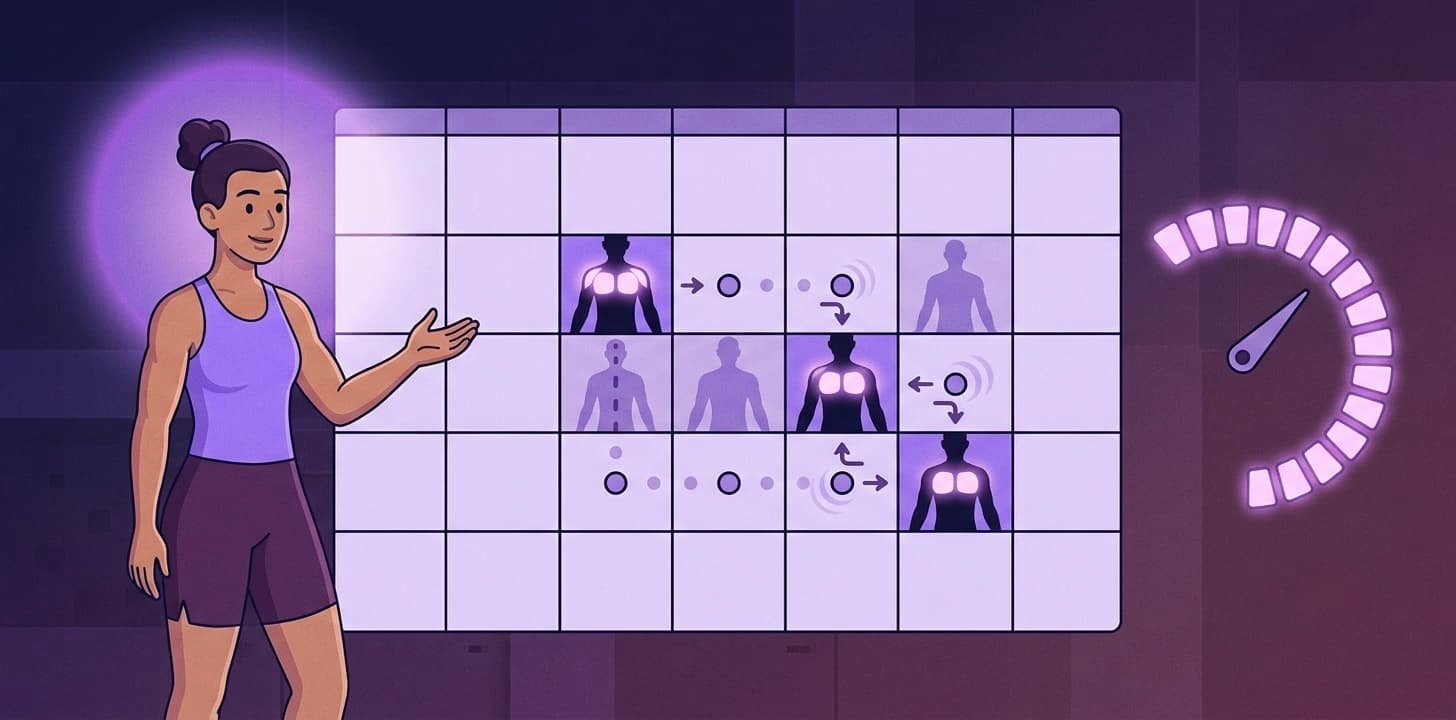
GVT is typically run as a four-day split over a two-week rotation. Each muscle group is trained once every four to five days.
Day 1: Chest and Back
| # | Exercise | Sets x Reps | Rest | Tempo |
|---|---|---|---|---|
| A1 | Barbell bench press | 10 x 10 | 90 sec | 4-0-2-0 |
| A2 | Chin-ups (or lat pulldown) | 10 x 10 | 90 sec | 4-0-2-0 |
| B1 | Incline dumbbell flyes | 3 x 10-12 | 60 sec | 3-0-2-0 |
| B2 | Seated cable row | 3 x 10-12 | 60 sec | 3-0-2-0 |
The A1/A2 pairing is an antagonist superset. You perform a set of bench press, rest 90 seconds, perform a set of chin-ups, rest 90 seconds, and repeat for all 10 sets. This approach reduces total session time and may actually improve performance on each exercise through reciprocal inhibition.
Day 2: Legs
| # | Exercise | Sets x Reps | Rest | Tempo |
|---|---|---|---|---|
| A1 | Barbell back squat | 10 x 10 | 90 sec | 4-0-2-0 |
| A2 | Lying leg curl | 10 x 10 | 90 sec | 4-0-2-0 |
| B1 | Leg extension | 3 x 10-12 | 60 sec | 3-0-2-0 |
| B2 | Seated calf raises | 3 x 15-20 | 60 sec | 2-0-2-0 |
Day 3: Rest
Day 4: Shoulders and Arms
| # | Exercise | Sets x Reps | Rest | Tempo |
|---|---|---|---|---|
| A1 | Seated dumbbell overhead press | 10 x 10 | 90 sec | 4-0-2-0 |
| A2 | Barbell curls | 10 x 10 | 90 sec | 4-0-2-0 |
| B1 | Lateral raises | 3 x 10-12 | 60 sec | 3-0-2-0 |
| B2 | Overhead tricep extension | 3 x 10-12 | 60 sec | 3-0-2-0 |
Day 5: Rest
Then repeat the cycle starting with Day 1.
Exercise Selection Rules
Not every exercise belongs in a 10x10 format. The primary movement for each muscle group should follow these criteria:
-
Compound, multi-joint movements. Squats, bench press, rows, and overhead presses are ideal. They recruit the most muscle mass and allow heavy enough loading to drive adaptation.
-
Stable movement patterns. After seven sets, your stabilizers will be fatigued. Barbell movements or machines with fixed paths (Smith machine, leg press) are safer than free-weight exercises that demand high balance and coordination.
-
Low technical complexity. Olympic lifts (cleans, snatches) are poor choices for 10x10. Technique degrades severely under fatigue, and the injury risk is unacceptable at these volumes.
-
Exercises you can perform with perfect form at RPE 5-6. If the first three sets feel hard, the weight is too heavy.
Who Should Use German Volume Training
Good Candidates
- Intermediate lifters (1-3 years of consistent training) who have stalled on moderate-volume programs and want a dedicated hypertrophy block
- Lifters in a caloric surplus: GVT's recovery demands are extreme, and attempting it in a caloric deficit is a recipe for overtraining
- Anyone who can dedicate 4-6 weeks exclusively to this program before returning to a more balanced approach
Who Should Avoid It
- Beginners. The volume will exceed your recovery capacity and your technique will break down dangerously under fatigue.
- Lifters in a caloric deficit. You will not recover from 100 reps per exercise while eating below maintenance. The result will be excessive muscle damage, systemic fatigue, and potential muscle loss.
- Anyone with joint issues. One hundred repetitions of any movement, even with controlled tempo, places significant repetitive stress on connective tissue. If your shoulders, knees, or elbows are already problematic, GVT will make them worse.
- Lifters over 40 who have not run high-volume programs before: connective tissue recovery slows with age, and the tendon demands of 10x10 are significant.
Recovery Demands
GVT demands more recovery resources than almost any other program. Non-negotiable recovery practices include:
Sleep: Eight hours minimum. Growth hormone release occurs primarily during deep sleep, and GVT's recovery demands make sleep deprivation particularly costly.
Nutrition: Caloric surplus of 300-500 calories above maintenance. Protein intake of at least 1.0 g per pound of body weight. Carbohydrate intake should be high to replenish glycogen stores depleted by the enormous training volume.
Deloading: GVT cycles should last no more than six weeks. After six weeks, switch to a lower-volume program (3-4 sets of 6-8 reps) for at least three weeks before considering another GVT block.
Soreness management: Expect severe delayed-onset muscle soreness (DOMS) during the first two weeks. Active recovery (light walking, foam rolling, contrast showers) helps, but nothing eliminates it entirely. This is normal and subsides as your body adapts.
GVT Quick Reference
| Parameter | Value |
|---|---|
| Primary sets x reps | 10 x 10 |
| Starting load | 60% of 1RM |
| Rest between sets | 60-90 seconds |
| Tempo | 4-0-2-0 (4 sec eccentric) |
| Accessory work | 3 sets of 10-12, 2 exercises per session |
| Training frequency | Each muscle every 4-5 days |
| Recommended cycle length | 4-6 weeks maximum |
| Progression | Increase load by 5% when all 100 reps completed |
| Caloric requirements | Surplus of 300-500 kcal |
| Minimum protein | 1.0 g per lb body weight |