The Bro Split: Complete Guide to the Classic Bodybuilding Split
9 min read · May 2025 · by Manikanta Sirumalla

The Bro Split: Complete Guide to the Classic Bodybuilding Split
Walk into any commercial gym on a Monday evening and you will find the bench press stations packed. It is International Chest Day, the unofficial start of the bro split, the most popular training format in bodybuilding history. One muscle group per day, five days per week, every muscle trained once per week. Simple, satisfying, and heavily debated.
This guide breaks down exactly how the bro split works, what the research says about its effectiveness, and how to build the best possible version if you decide to run one.
What Is a Bro Split?
A bro split (sometimes called a body-part split) assigns one major muscle group to each training day. The classic five-day rotation looks like this:
| Day | Muscle Group | Key Exercises |
|---|---|---|
| Monday | Chest | Bench press, incline press, flyes |
| Tuesday | Back | Deadlifts, rows, pulldowns |
| Wednesday | Shoulders | Overhead press, lateral raises, face pulls |
| Thursday | Arms | Barbell curls, skull crushers, hammer curls |
| Friday | Legs | Squats, leg press, leg curls |
| Saturday | Rest | - |
| Sunday | Rest | - |
Each session can include 16-24 sets for a single muscle group, allowing enormous volume concentration in one workout. You then have a full week of recovery before training that muscle again.
The Frequency Debate
The biggest criticism of the bro split is its once-per-week frequency. A 2016 meta-analysis by Schoenfeld, Ogborn, and Krieger published in Sports Medicine found that training a muscle group twice per week produced significantly greater hypertrophy than once per week when total weekly volume was equated. This finding has been replicated in subsequent research.
However, the story is more nuanced than "bro splits don't work." Several important caveats exist:
Volume distribution matters more than frequency alone. If you perform 20 sets for chest in a single session on the bro split versus 10 sets across two sessions in a PPL split, the total weekly volume is identical. The question becomes whether your body can productively use all 20 sets in a single session, and for many people, especially those using performance-enhancing drugs, the answer is yes.
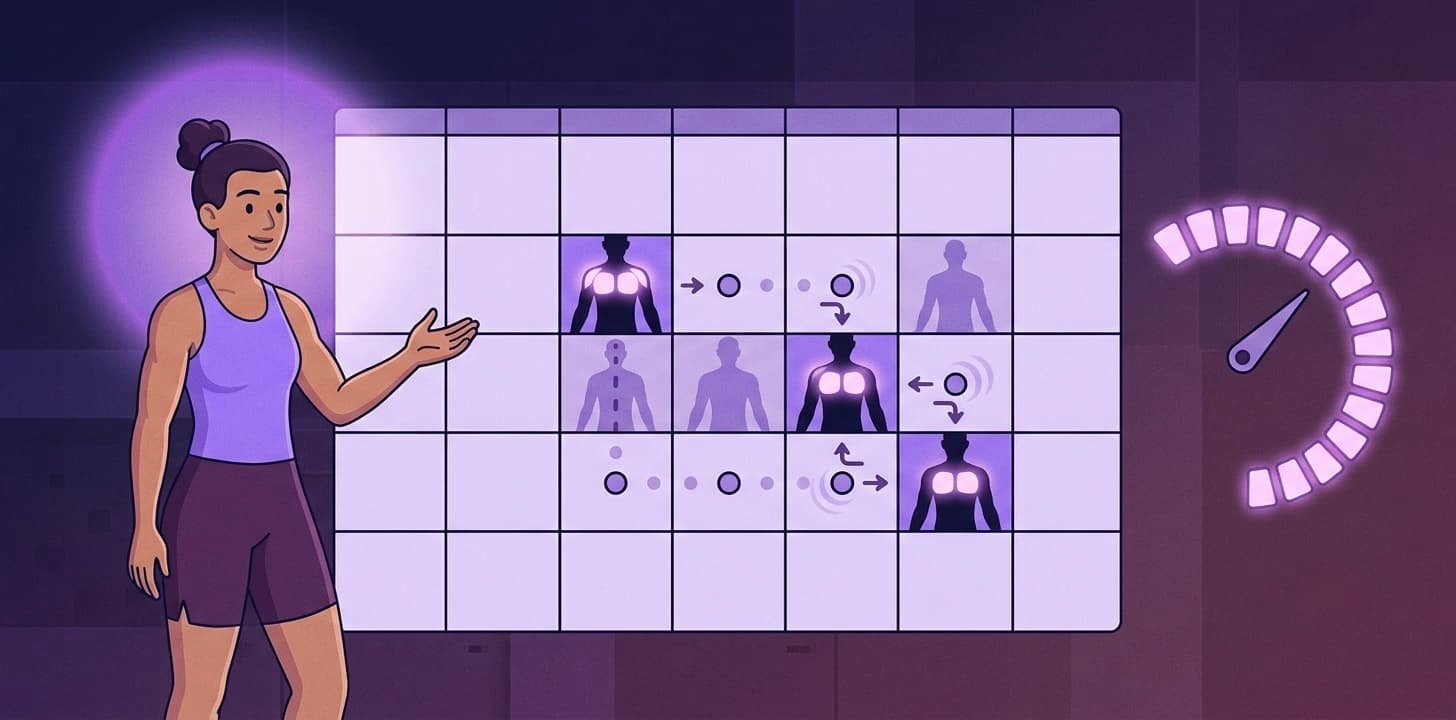
Muscle protein synthesis (MPS) has a limited elevation window. After a training stimulus, MPS remains elevated for roughly 24-72 hours in trained individuals. Training a muscle once per week means MPS returns to baseline by Wednesday, and no further growth stimulus occurs until the following Monday. This is the strongest physiological argument against the bro split for natural lifters.
Practical adherence trumps theoretical optimization. A five-day bro split that someone follows consistently will outperform a theoretically superior program that they find boring or unsustainable.
Who Should Use a Bro Split?
The bro split is best suited for a specific population:
Good Candidates
- Advanced bodybuilders who need high per-session volume (15-25 sets per muscle group) that would be impractical to split across multiple sessions
- Lifters using pharmacological assistance, where muscle protein synthesis dynamics differ significantly from natural trainees
- Anyone who genuinely prefers this format and will train more consistently because of it
- Lifters with specific weak points who want to dedicate entire sessions to lagging body parts
Poor Candidates
- Beginners who lack the work capacity for 20+ sets on a single muscle group
- Natural intermediate lifters who would benefit from the higher frequency stimulus of PPL or upper/lower splits
- Anyone training fewer than five days per week: the split simply does not fit into three or four training days
How to Build an Effective Bro Split
If you are going to run a bro split, build the best possible version. That means structuring each session with intelligent exercise selection and logical ordering.
Chest Day
| # | Exercise | Sets x Reps | Notes |
|---|---|---|---|
| 1 | Barbell bench press | 4 x 6-8 | Primary compound, strength focus |
| 2 | Incline dumbbell press | 3 x 8-10 | Upper chest emphasis |
| 3 | Machine chest press | 3 x 10-12 | Stable platform, higher reps |
| 4 | Cable flyes (low to high) | 3 x 12-15 | Full ROM stretch and contraction |
| 5 | Pec deck or flat dumbbell flyes | 3 x 12-15 | Isolation finisher |
Back Day
| # | Exercise | Sets x Reps | Notes |
|---|---|---|---|
| 1 | Barbell row or conventional deadlift | 4 x 5-6 | Heavy compound |
| 2 | Weighted pull-ups or lat pulldowns | 3 x 6-8 | Vertical pull |
| 3 | Chest-supported row | 3 x 10-12 | Removes lower back fatigue |
| 4 | Single-arm dumbbell row | 3 x 10-12 | Unilateral balance |
| 5 | Straight-arm cable pulldowns | 3 x 12-15 | Lat isolation |
| 6 | Face pulls | 3 x 15-20 | Rear delt and rotator cuff health |
Shoulder Day
| # | Exercise | Sets x Reps | Notes |
|---|---|---|---|
| 1 | Seated barbell overhead press | 4 x 6-8 | Primary compound |
| 2 | Dumbbell lateral raises | 4 x 12-15 | Lateral delt growth driver |
| 3 | Cable lateral raises | 3 x 15-20 | Constant tension variation |
| 4 | Reverse pec deck | 3 x 12-15 | Rear delt isolation |
| 5 | Dumbbell front raises | 2 x 12-15 | Optional; front delts get heavy pressing stimulus already |
Arm Day
| # | Exercise | Sets x Reps | Notes |
|---|---|---|---|
| 1 | Barbell curls | 3 x 8-10 | Heavy bicep compound |
| 2 | Close-grip bench press | 3 x 8-10 | Heavy tricep compound |
| 3 | Incline dumbbell curls | 3 x 10-12 | Stretched position for long head |
| 4 | Overhead cable tricep extension | 3 x 10-12 | Stretched position for long head |
| 5 | Hammer curls | 3 x 12-15 | Brachialis and brachioradialis |
| 6 | Tricep pushdowns | 3 x 12-15 | Lateral head emphasis |
Leg Day
| # | Exercise | Sets x Reps | Notes |
|---|---|---|---|
| 1 | Barbell back squat | 4 x 6-8 | Primary compound |
| 2 | Romanian deadlift | 3 x 8-10 | Posterior chain |
| 3 | Leg press | 3 x 10-12 | Quad volume without spinal loading |
| 4 | Walking lunges | 3 x 12 each leg | Unilateral stability |
| 5 | Leg curls | 3 x 12-15 | Hamstring isolation |
| 6 | Standing calf raises | 4 x 10-12 | Gastrocnemius emphasis |
| 7 | Seated calf raises | 3 x 15-20 | Soleus emphasis |
Progression Strategy
Since the bro split concentrates all volume into one session per week, you need a clear progression model to avoid stagnation. Use double progression for most exercises:
- Select a rep range (e.g., 3 x 8-12).
- Use the same load until you can hit the top of the range on every set.
- Increase the weight by the smallest available increment.
- Reset to the bottom of the range and repeat.
For the primary compounds (bench, overhead press, barbell row, squat), consider a weekly linear progression model where you add 2.5-5 lb each week until you stall, then deload by 10% and rebuild.
Optimizing the Bro Split for Natural Lifters
If you insist on running a bro split as a natural lifter, these modifications improve outcomes:
Add secondary muscle hits. Tack on 3-4 sets of a secondary muscle group at the end of each session. Chest day could end with rear delt work. Back day could include 3 sets of bicep curls. This effectively doubles frequency for selected muscles without adding training days.
Place arms after a rest day. Arms recover quickly and benefit from being trained fresh. Scheduling arm day after a rest day, rather than after three consecutive training days, improves performance.
Prioritize weak points early in the week. If your legs are lagging, move leg day to Monday when motivation and energy are highest. The traditional "legs on Friday" approach often leads to skipped sessions.
Implement mesocycle structure. Run four to five weeks of progressive overload, then take a deload week where volume drops by 40-50%. This prevents the accumulated fatigue from 20+ sets per session from catching up with you.
Bro Split vs. Alternatives: Quick Comparison
| Factor | Bro Split | PPL | Upper/Lower |
|---|---|---|---|
| Frequency per muscle | 1x/week | 2x/week | 2x/week |
| Days per week | 5 | 6 | 4 |
| Volume per session | Very high | Moderate | Moderate-high |
| Session duration | 60-90 min | 60-75 min | 60-90 min |
| Best for | Advanced bodybuilders | Intermediates | Intermediates |
| Recovery demand | Low-moderate | Moderate | Moderate |
For a deeper comparison of all available splits and how to choose the right one for your goals, read our choosing a training split guide.