Menstrual Cycle and Training: What the Evidence Really Says
10 min read · April 2025 · by Manikanta Sirumalla
Menstrual Cycle and Training: What the Evidence Really Says
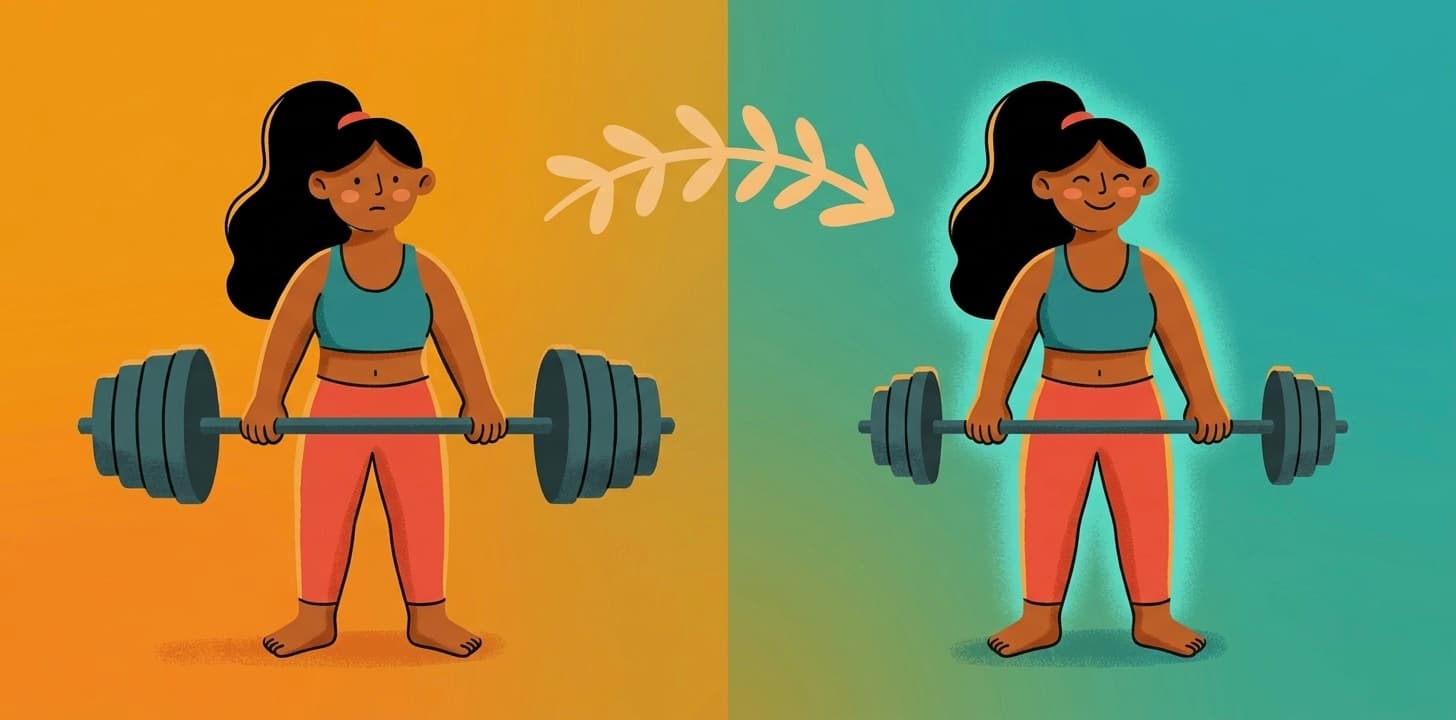
For decades, most exercise science research was conducted exclusively on male subjects. Training programs, recovery protocols, and nutrition guidelines were built on data that ignored the hormonal fluctuations roughly half the population experiences every month. That is starting to change — but the picture the newest research paints is more nuanced than the popular "train with your cycle" advice suggests. The strongest current synthesis of the evidence — an umbrella review by Colenso-Semple and colleagues (2023), echoed by the ACSM's 2026 guidance — finds that menstrual-cycle phase does not appreciably change how much force you can produce, how hard you can train, or how much muscle you build over time. What varies enormously is how you feel — energy, cramps, sleep, mood — and that variation is far more individual than any calendar-based rule can capture. This guide walks through the physiology honestly, separates what the evidence supports from what it doesn't, and shows how to adjust training by the symptoms you actually log rather than by the day of your cycle.
The Four Phases at a Glance
The menstrual cycle averages 28 days but ranges from 21 to 35 days in healthy individuals. It is divided into four phases, each driven by different hormonal profiles:
| Phase | Typical Days | Key Hormones | What Some People Notice |
|---|---|---|---|
| Menstrual | Days 1-5 | Estrogen and progesterone are at their lowest | Cramps or fatigue for some; many feel normal |
| Follicular | Days 6-13 | Estrogen rises steadily, FSH increases | Energy often climbing day to day |
| Ovulatory | Days 14-16 | Estrogen peaks, LH surges, testosterone spikes | Many report feeling their best |
| Luteal | Days 17-28 | Progesterone dominates, estrogen has a secondary rise then falls | PMS symptoms for some, nothing for others |
These day ranges are averages — your own cycle length and phase duration may differ. And here is the part most cycle-training advice skips: the hormones in the middle column are well documented, but the newest and strongest synthesis of the evidence (Colenso-Semple et al., 2023) finds that phase does not reliably change how much force you can produce or how much muscle you build over time. The far bigger variable is the right-hand column — how you feel — which is highly individual. That is why tracking your own symptoms beats applying a population-average calendar.
Phase 1: Menstrual Phase (Days 1-5)
What Is Happening Hormonally
Day 1 is the first day of menstruation. Both estrogen and progesterone are at their lowest levels after dropping sharply at the end of the previous luteal phase. Follicle-stimulating hormone (FSH) begins to rise slightly, signaling the ovaries to start developing a new follicle.
How It Affects Training
The hormonal low point means most women experience reduced energy, increased fatigue, and sometimes pain from uterine cramps. However — and this is important — strength is not significantly impaired in most studies. A 2020 review by McNulty et al. in Sports Medicine found that while perceived exertion increases during menstruation, actual force production is not consistently lower.
What may change for some people is how recovered they feel. Low estrogen (which has anti-inflammatory properties) plus the physiological stress of menstruation can leave some individuals feeling like high-volume sessions hit harder — but this varies a lot from person to person, and it is something you notice by logging how you feel, not something to assume from the calendar.
Practical Recommendations
- Training: Keep your normal training schedule. If cramps or fatigue genuinely bite on a given day, that is your cue to ease back — a few fewer sets, or an extra rep left in reserve, while keeping the loads you can handle. Let how you feel that day drive it, not the fact that it is day 2. Plenty of people train hard, and even hit PRs, during their period.
- Exercise selection: No phase changes what belongs in your program. If you do choose to trim a session because you feel rough, cutting isolation volume while keeping your main compound work is a reasonable way to do less without losing the important stimulus.
- Nutrition: This is the one nutrition shift the evidence clearly supports. Iron needs rise with blood loss, so lean on iron-rich foods (red meat, lentils, spinach, fortified cereals) paired with vitamin C for absorption. Anti-inflammatory foods — omega-3s from fatty fish, turmeric, ginger — may help with cramp severity.
Phase 2: Follicular Phase (Days 6-13)
What Is Happening Hormonally
After menstruation ends, estrogen begins a steady climb as the developing follicle produces more estradiol. This is the phase where you will feel progressively better each day. Insulin sensitivity is higher during this phase, meaning your body handles carbohydrates more efficiently.
How It Affects Training
Rising estrogen has several effects that, on paper, look performance-enhancing. It is worth understanding them as physiology — even though they do not translate into a reliable real-world training advantage:
- Muscle protein synthesis signaling. In mechanistic studies, estrogen upregulates the mTOR pathway involved in muscle repair. Whether this produces measurably greater hypertrophy when you actually train in the follicular phase, though, is not borne out — controlled comparisons find no dependable difference.
- Pain perception. Estrogen modulates how pain is processed, and some people report tolerating hard sets a little better when it is high. This is subjective and inconsistent across individuals.
- Anti-inflammatory effects. Estrogen can lower some muscle-damage markers, but this has not translated into a reproducible recovery advantage in training studies.
- Carbohydrate utilization. The body leans somewhat more on glycogen in this phase — a genuine but modest metabolic shift, not a reason to overhaul your nutrition.
You may have read about a 2014 study by Wikstrom-Frisen et al. in which a group that concentrated leg-training volume in the follicular phase gained more strength and lean mass. It is an interesting early finding — but it is a single small study that has not been replicated, and larger, better-controlled syntheses (notably Colenso-Semple et al., 2023) find any follicular advantage small or inconsistent. Treat "follicular-phase training makes you gain faster" as an unproven hypothesis, not an established rule.
Practical Recommendations
- Training: If you feel good this week, train hard — chase progressive overload and enjoy it. Just know that feeling good is the reason to push, not the calendar: your capacity to lift heavy does not reliably spike because it is the follicular phase. If you are running a program like Push Pull Legs, keep its structure the same all cycle long rather than reshuffling hard days into this window.
- Progressive overload: Attempt PRs whenever you feel primed for them. Many people feel good here, so it can be a fine time to try — but there is no need to reserve your PR attempts for it.
- Nutrition: Eat to your normal targets. Insulin sensitivity is a bit higher, but that is not a reason to re-jig your macros by the calendar — your daily protein, fat, and carb targets already have you covered.
Phase 3: Ovulatory Phase (Days 14-16)
What Is Happening Hormonally
Estrogen hits its peak. Luteinizing hormone (LH) surges, triggering ovulation. Testosterone also spikes briefly — this is the only point in the cycle where women experience a meaningful testosterone elevation.
How It Affects Training
This is often described as the window where you are "at your absolute strongest," and many people do report standout sessions around ovulation. But the objective picture is weaker than the reputation: controlled measurements of force output do not show a dependable ovulatory peak, and the strongest current synthesis puts any phase effect on strength as small or absent. If you feel great and set a PR here, wonderful — just don't count on the calendar to deliver it.
One physiological note that does hold up: estrogen increases ligament laxity. At peak estrogen, the anterior cruciate ligament (ACL) and other connective tissues may be slightly more lax, and a meta-analysis by Hewett et al. reported more ACL injuries around the ovulatory phase. The practical takeaway is about warming up well, not about avoiding hard training.
Practical Recommendations
- Training: Train the session your program calls for. If you feel strong, go for that heavy top set or PR attempt — but do that whenever you feel primed, not because a tracker says you are ovulating.
- Injury prevention: Warm up thoroughly, especially for knee-dominant movements, and stay controlled through the lowering (eccentric) phase. This is good practice year-round; the laxity note just underlines why skipping warm-up sets is a bad idea.
- Nutrition: Nothing to change. Eat to your targets — calorie and macro needs do not meaningfully shift here.
Phase 4: Luteal Phase (Days 17-28)
What Is Happening Hormonally
After ovulation, the ruptured follicle becomes the corpus luteum and begins producing progesterone, which rises steadily and becomes the dominant hormone. Estrogen has a secondary, smaller peak around days 21-23 before both hormones drop sharply in the final days of the phase (days 25-28), triggering menstruation.
Progesterone is thermogenic — it raises your core body temperature by 0.3-0.5 degrees Celsius. It also shifts fuel metabolism away from carbohydrate oxidation and toward fat oxidation.
How It Affects Training
The luteal phase has a reputation for a "clear performance decline," but the evidence is more mixed than that reputation — and most of what is real here is about symptoms and sensation rather than raw capacity:
- Strength does not reliably drop. You will often see a "5-10% reduction in maximal strength" quoted from some early studies. It has not held up: better-controlled work and the Colenso-Semple (2023) synthesis find no dependable luteal strength loss on average. Some individuals do feel weaker; many do not. Log your own lifts rather than assuming a deficit.
- Higher resting heart rate. Elevated core temperature can nudge resting heart rate up a few beats per minute, so steady cardio may feel harder at the same pace for some people.
- Higher perceived exertion — for some. The same weights can feel subjectively harder in the back half of the cycle for certain individuals. It is worth noticing, but it is not universal, and it is not a signal that you have actually lost strength.
- Thermoregulation. A slightly higher baseline temperature means some people overheat faster during hard efforts, which makes hydration worth extra attention.
- Increased water retention. Progesterone promotes fluid retention that can add 2-5 lb on the scale. This is water, not fat — do not make dietary changes based on luteal-phase scale readings.
Practical Recommendations
- Training: Do not pre-schedule a "luteal deload." Keep training as usual, and ease off only when logged symptoms or a low-readiness day actually call for it — that might mean a few fewer working sets or leaving an extra rep in reserve on a rough day. Drive it off how you feel, not off the day number. On the days you feel fine, train fully.
- Cardio: There is a modest shift toward fat oxidation in this phase, so if steady-state cardio feels more comfortable than intervals on a given day, follow that. But this is a preference, not a prescription — do the conditioning you feel like doing.
- Nutrition: Here is the correction that matters most. A systematic luteal calorie increase is not supported — despite the popular "your metabolism speeds up, eat +100-300 calories" claim, measured changes in energy expenditure are small and inconsistent, and there is no evidence-based reason to add calories by the calendar. Eat to your targets and honor genuine hunger when it shows up; if you are legitimately hungrier some days, eating a bit more is fine. Just don't build a scheduled surplus into the phase, and don't add a phase-driven protein bump either — your normal protein target already covers you.
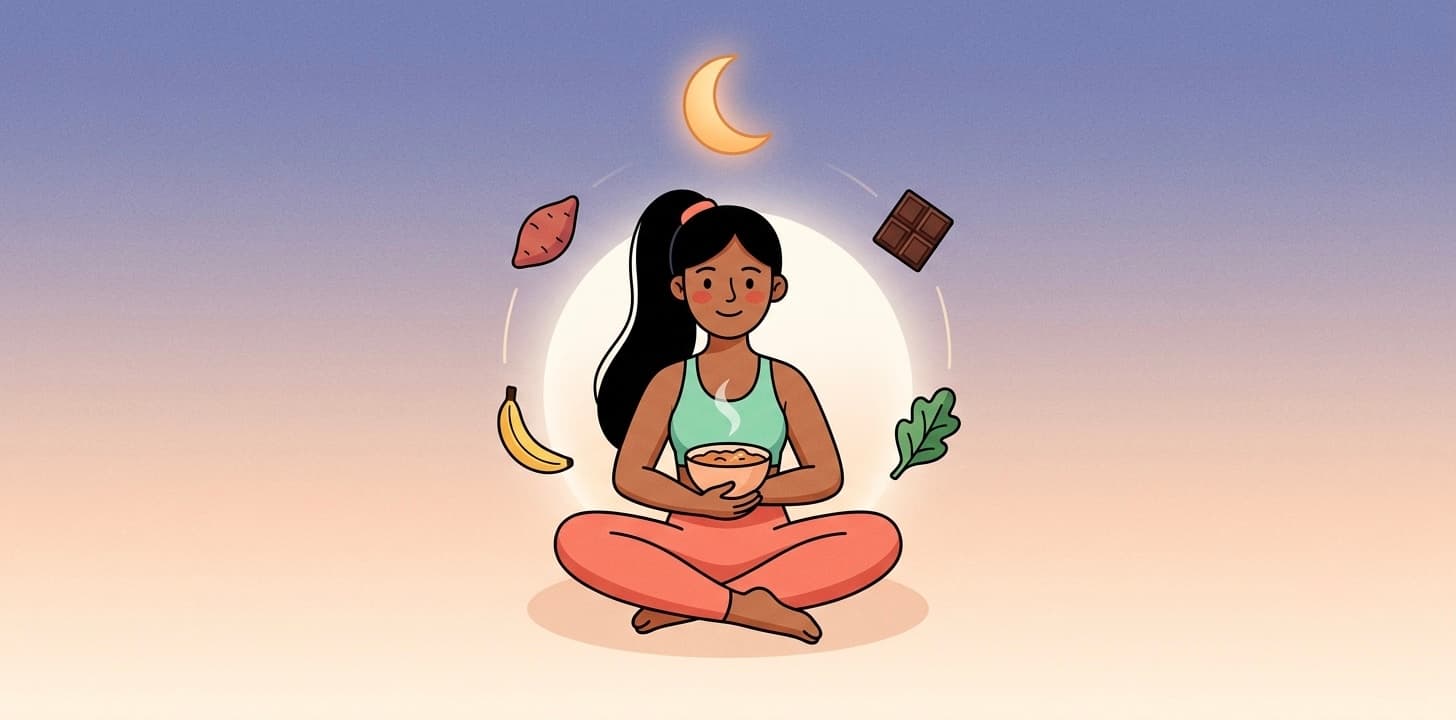
Cravings are real and worth planning for — but they are a cue to work with, not a mandate to overeat. For setting sensible targets you can hold all cycle long, see our macro calculation guide.
An Honest Cycle-Training Summary
Rather than a "do this on these days" schedule, here is what actually holds up versus what to ignore:
| Phase | What the evidence supports | What to ignore | Sensible approach |
|---|---|---|---|
| Menstrual (1-5) | Iron needs rise with blood loss | "You must go light on your period" | Train normally; emphasize iron; ease only if cramps/fatigue bite |
| Follicular (6-13) | Estrogen rises (mechanistic) | "Peak phase — schedule your hardest training here" | Train hard when you feel good; keep your program's structure |
| Ovulatory (14-16) | Ligament laxity rises slightly | "Guaranteed strongest days" | Warm up well; PR when you feel primed, any phase |
| Luteal (17-28) | Modest glycogen-to-fat fuel shift; PMS symptoms for some | "-5-10% strength, +100-300 calories" | Keep targets; ease by logged symptoms, not the calendar |
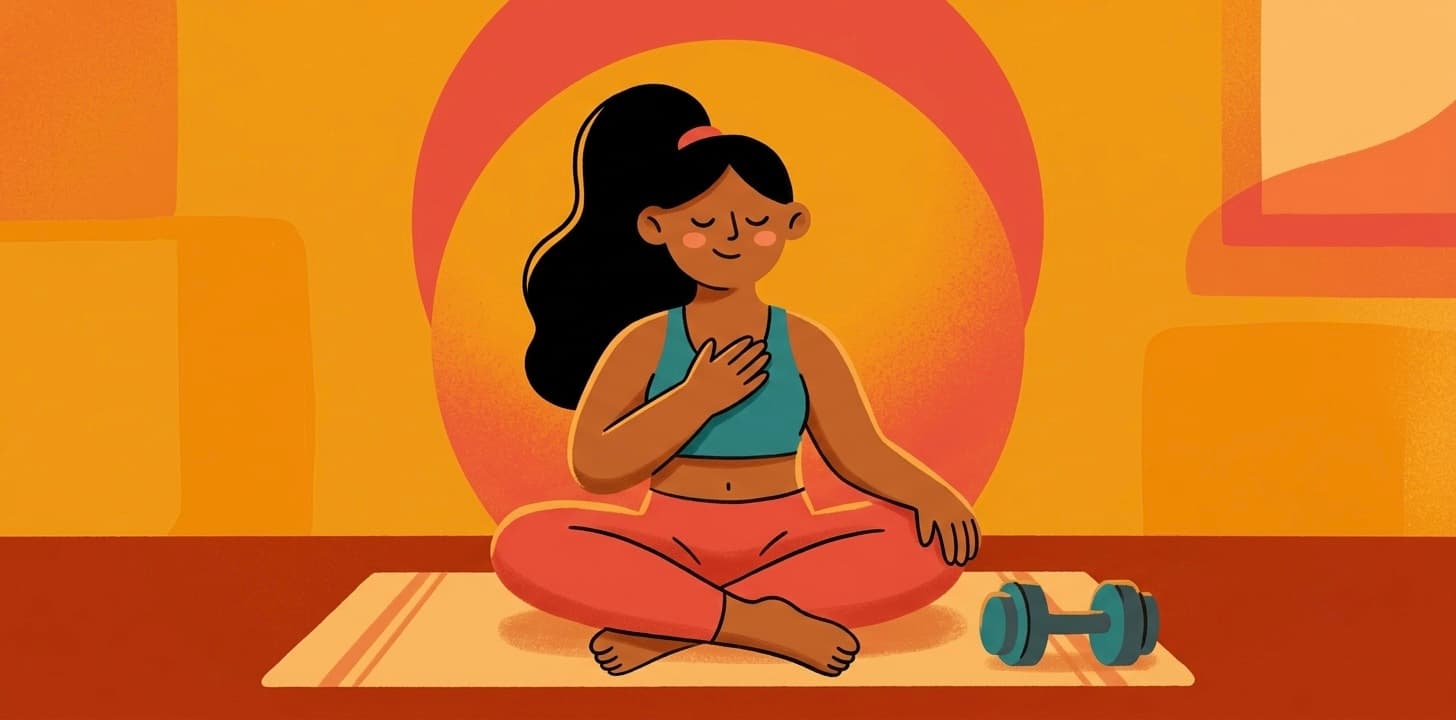
The through-line: program by the symptoms you log, not by the day of your cycle. Your own data — how you actually feel and lift, tracked over several cycles — beats any population-average rule.
What About Hormonal Contraceptives?
Hormonal birth control (the pill, patch, ring, hormonal IUD) suppresses the natural hormonal fluctuations described above and replaces them with synthetic hormones at relatively steady levels. This means:
- The hormonal swings across the cycle are largely flattened.
- Because those swings do not reliably drive performance in the first place, this mostly changes your symptom experience rather than your strength.
- The "period" during the placebo week is a withdrawal bleed, not a true menstruation.
If you are on hormonal contraceptives, there is even less reason to think about training by phase. What still matters is the same thing that matters for everyone: tracking your energy, mood, and performance to spot your own patterns. Some people on the pill still report a low-energy week during the placebo phase — that is worth logging.
Why Tracking Beats the Calendar
The phase durations and day ranges in this article are population averages. Your cycle may be 25 days or 33 days. Your follicular phase might be longer or shorter than average. Stress, travel, sleep disruption, and undereating can all shift cycle timing. This is exactly why a fixed, calendar-based program fails: it prescribes for an "average" person who does not exist.
What is useful is tracking your own cycle and symptoms consistently. Log the start of each period, note daily symptoms (energy, mood, sleep quality, workout performance), and look for patterns over three or more cycles. Over time you will learn your own tendencies — the weeks cramps tend to hit, the days you tend to feel flat — and you can adjust by that individual signal instead of by a textbook day range. Individual data beats population averages, every time.
For structuring your training week to week regardless of cycle, see our progressive overload guide. Consistent logging is what turns "how I actually respond" into something you can act on.